A Punjabi wedding is a magnificent tapestry of love, energy, and deep-rooted traditions. Spanning several days, the celebrations are a beautiful mix of solemn religious rites and exuberant social gatherings. To help you navigate this joyous journey, we have mapped out the essential timeline of Punjabi wedding functions, from the initial commitment to the final grand celebration.
Pre-Wedding Rituals: From Roka to Sangeet
The wedding journey officially begins with the Roka, a simple ceremony where the two families agree to the alliance and secure the bond with gifts and sweets. This is followed by the Sagai or engagement, which often includes the exchange of rings and the formal reading of the wedding invitation card. In many families, this also includes the Chunni Charana, where the groom’s mother drapes a red scarf over the bride's head, welcoming her. As the wedding day approaches, the energy rises with the Sangeet and Mehendi night. Traditionally hosted separately but now often combined, this function involves energetic Gidha and Bhangra performances, traditional dhol beats, and the application of intricate henna designs on the bride's hands.
The Sacred Day: Haldi, Choora, and Anand Karaj
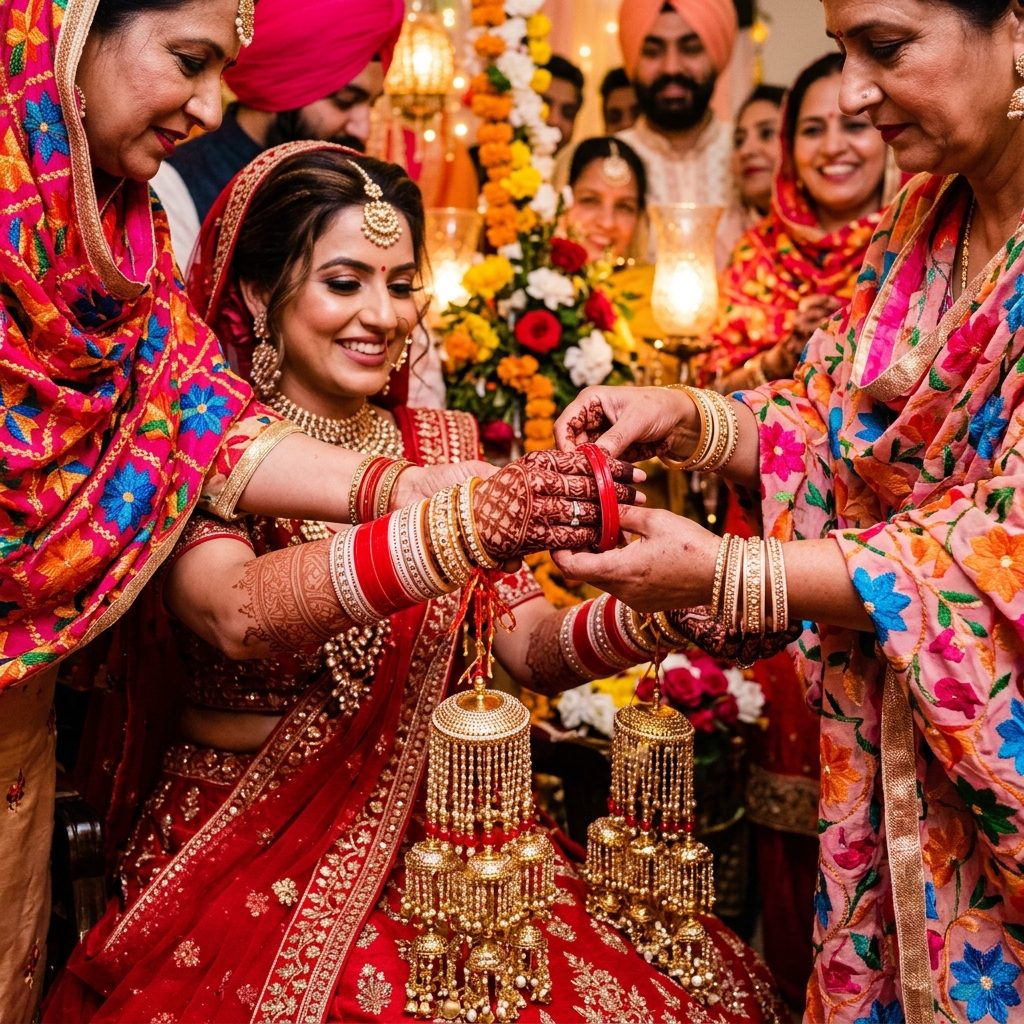
The wedding day itself starts early with the Maiyan (Haldi) ceremony, where paste made of turmeric, chickpea flour, and mustard oil is applied to the bride and groom for a natural glow. Following this, the bride participates in the emotional Choora and Kalire ceremony, where her maternal uncles gift her the traditional red and white bangles, and friends tie dangling golden ornaments to her wrists. The main wedding ceremony, the Anand Karaj (Ceremony of Bliss), takes place at the Gurdwara, typically before noon. The couple circumambulates the Guru Granth Sahib four times during the recitation of the Lavan hymns by the Granthi, sealing their spiritual union in a serene, peaceful atmosphere.
A Punjabi wedding is not just a union of two individuals, but a joyous merging of two families, celebrated with open hearts, high energy, and timeless traditions that honor our heritage.
Post-Wedding Joy: Doli and the Reception
After the wedding ceremony and a lavish lunch, the emotional Doli takes place, marking the bride's departure from her parental home. The celebrations culminate in the grand Reception, a high-spirited party hosted by the groom's family to welcome the newlyweds into their social circle. To manage this extensive sequence of events smoothly, planning is key. Here are a few vital tips to keep in mind:
- Coordinate outfits well in advance to match the vibe of each distinct event, from pastel shades for the Gurdwara to vibrant hues for the Sangeet.
- Plan the transits between the Gurdwara and the reception venue carefully, keeping typical city traffic in mind.
- Keep a dedicated coordinator or family member in charge of the shagun envelopes and ritual items.
To ensure your guests are updated about every single function from the Roka to the Reception, you can design beautiful digital invitations using the Shubh Muhrat Invite Studio, making it simple to share schedules and RSVP details with your loved ones.