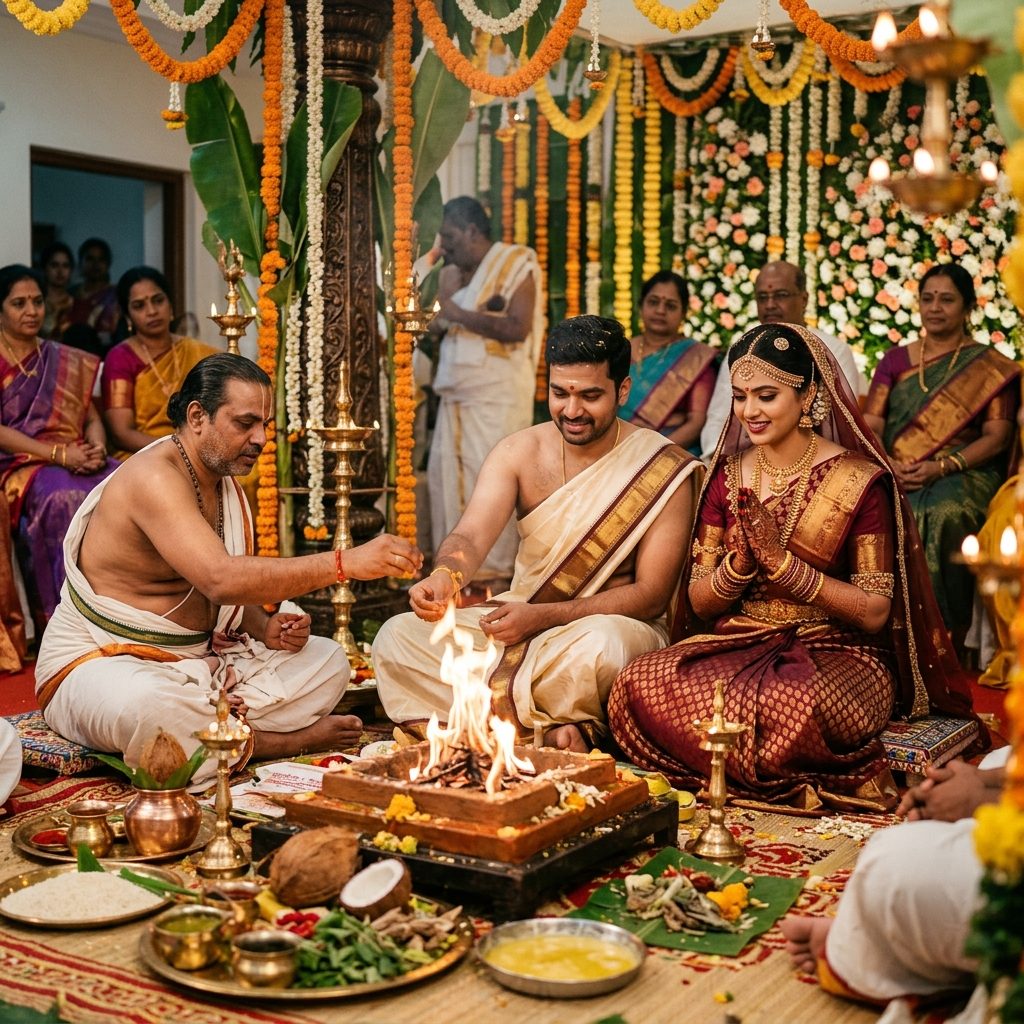
A Tamil Brahmin wedding, traditionally known as Brahacharanam or Iyer Kalyanam, is a soulful blend of ancient Vedic rituals, musical joy, and deep-rooted family traditions. Spanning over two to three days, each custom carries a profound symbolic meaning aimed at uniting not just two individuals, but two families for a lifetime of togetherness.
Pre-Wedding Foundations: Panda Kaal and Vratham
The ceremonial journey begins long before the actual wedding day with the Panda Kaal Muhurtham. Families pray to the family deity (Kula Devatha) to bless the venue and ensure the event proceeds smoothly without obstacles. Bamboo poles decorated with turmeric, kumkum, and mango leaves are planted as an auspicious herald of the upcoming celebrations.
On the morning before the wedding, the groom and bride undergo separate Vratham rituals in their respective homes or at the wedding hall. Fasting, sacred thread rituals for the groom, and prayers to the Vedic gods evoke spiritual blessings, symbolizing purification and readiness for householder life (Grihastha Ashrama).
Joyous Welcoming Rituals: Janavasam, Kasi Yatra, and Oonjal
The festivities pick up pace with the Janavasam (or Baraat), where the groom traditionally arrives amidst Nadaswaram music, welcomed by the bride's brother with a garland and sweet treats. This leads into one of the most culturally unique rituals: the Kasi Yatra.
In the Kasi Yatra, the groom pretends to set off for Kasi (Varanasi) to lead an ascetic life of renunciation. The bride's father intervenes, requesting him to accept his daughter's hand and fulfill his duties as a householder. Once convinced, the groom moves to the Oonjal (swing ceremony), where the couple sits on a decorated wooden swing while women sing auspicious songs (Oonjal Pattu) and circle balls of colored rice around them to ward off the evil eye.
"A Tamil Brahmin wedding seamlessly merges sacred Vedic mantras with warm, laughter-filled family rituals, reminding us that marriage is a harmonious union of duty, devotion, and joy."
The Sacred Union: Kanyadaanam and Mangalya Dharanam
The heart of the wedding ceremony takes place under the decorated mandapam. Key rituals include:
- Kanyadaanam: The bride sits on her father's lap while he hands her over to the groom, symbolizing profound trust and fatherly devotion. A ring of dried grass (Dharba) is placed on her head, along with a sacred wooden yoke.
- Nine-Yard Sarees (Koora Pudavai): The groom presents the bride with a rich 9-yard Kanjeevaram silk saree, which she wears for the most auspicious moment of the union.
- Mangalya Dharanam: Accompanied by intense Nadaswaram music (Ketti Melam), the groom ties the sacred Thali (Mangalsutra) around the bride's neck with three knots, representing mind, speech, and action.
- Saptapadi: The couple takes seven steps together around the sacred fire (Agni), exchanging seven solemn vows of love, fidelity, health, and mutual respect.
Planning Your Sacred Wedding Seamlessly
While honoring these ancient rituals is deeply fulfilling, managing the intricate logistics, guest coordination, and muhurats can be overwhelming for families. To simplify your wedding journey while preserving tradition, explore Shubh Muhrat's Kundli Match tool to evaluate horoscope compatibility, ensuring alignment with Vedic traditions before embarking on your lifelong celebration.