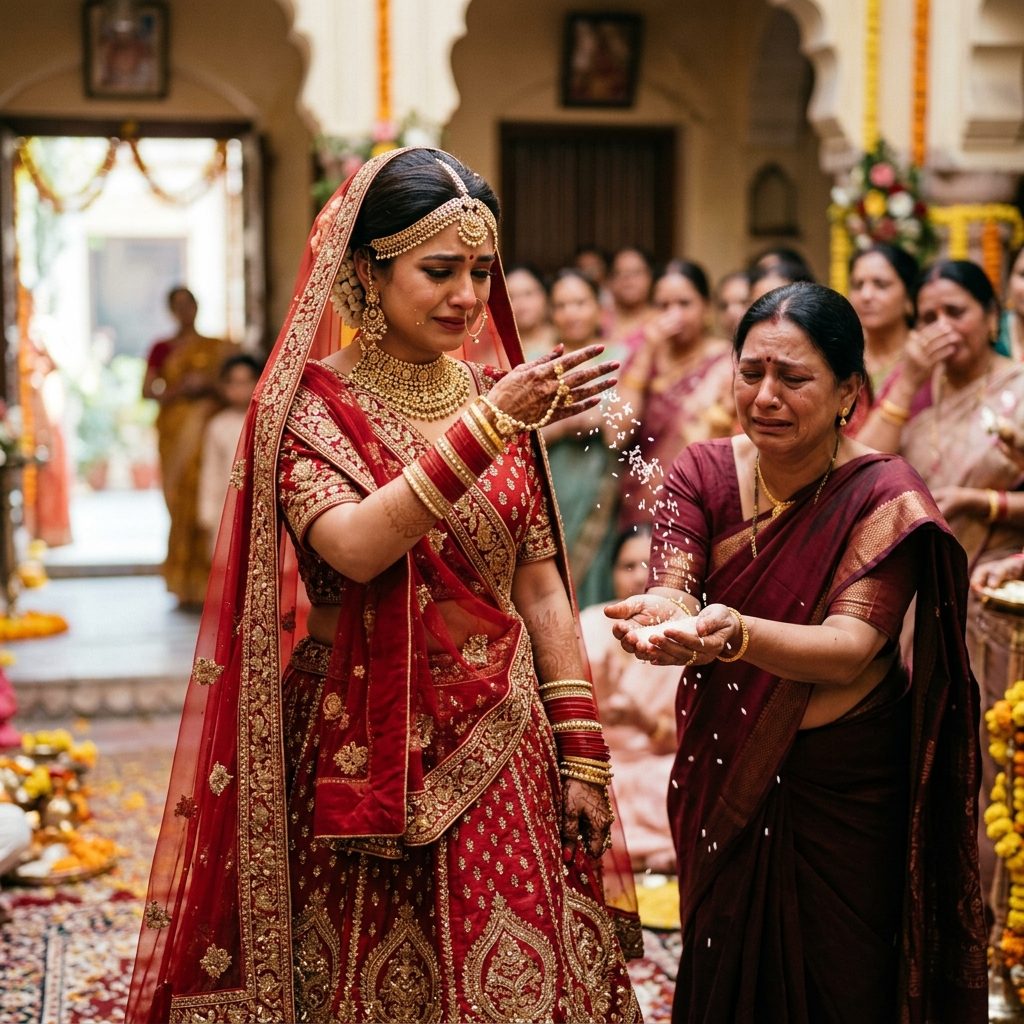
Vidaai is arguably the most poignant and emotionally charged milestone of an Indian wedding. Derived from the Sanskrit word for departure, Vidaai marks the moment when the bride steps away from her maternal home to embark on her new journey as a married woman. While tears are natural, this ancient ritual is rooted in gratitude, blessings, and deep love, honoring the cherished memories of childhood while stepping courageously into a shared future.
The Symbolism and Sacred Rituals of Vidaai
Far from being just a tearful goodbye, every gesture during Vidaai carries profound spiritual and cultural significance across various Indian regions:
- The Throwing of Rice (Phaank): As the bride walks forward out of her home or venue, she throws handfuls of rice or puffed grains over her head into her mother's outstretched saree pallu. This gesture signifies that she is symbolically repaying her debt to her parents for raising her, while wishing endless prosperity and abundance upon the home she is leaving behind.
- Leaving Footprints of Gratitude: In many traditions, such as Bengali or Maharashtrian customs, the bride dips her feet in red vermilion (alta) or turmeric paste, leaving distinct footprints on a white cloth before stepping into the wedding vehicle. These footprints serve as a treasured keepsake for her parents.
- Brother's Role in Escorting: Traditionally, the bride's brothers and male cousins push the doli or vehicle forward for a few yards. This ritual represents their commitment to supporting her transition and ensuring a safe journey to her new life.
Vidaai is not the end of a daughter's relationship with her parental home; it is the sacred expansion of family love across two homes.
Practical Tips for Emotional and Graceful Preparation
Because emotional farewells can feel overwhelming amidst wedding exhaustion, thoughtful preparation helps families savor every tender moment without unnecessary stress:
- Carve Out a Quiet Moment: Schedule ten private minutes before the Vidaai ceremony for the bride and her immediate family to sit together without photographers or guests present.
- Prepare a Comfort Kit: Keep tissues, facial mist, water bottles, and touch-up makeup readily accessible in the exit vehicle so the bride feels comfortable immediately following the heavy emotional rituals.
- Communicate with Your Photography Team: Ask your photo-cinematography team to maintain a respectful distance, capturing candid emotions without feeling intrusive or creating staged poses during authentic family moments.
Ensuring a Seamless Transition into New Celebrations
Once Vidaai concludes, the focus shifts quickly to the warm welcome at the groom's home, known as Griha Pravesh. Coordinating transportation, vehicle escorts, and guest logistics ahead of time prevents last-minute chaos from disrupting these tender rituals. When logistics run smoothly behind the scenes, both families can remain completely present in the emotional beauty of the day.
To keep your family stress-free during major ritual transitions and track guest arrivals smoothly, coordinate your wedding day itinerary with the Guest Manager on Shubh Muhrat.