
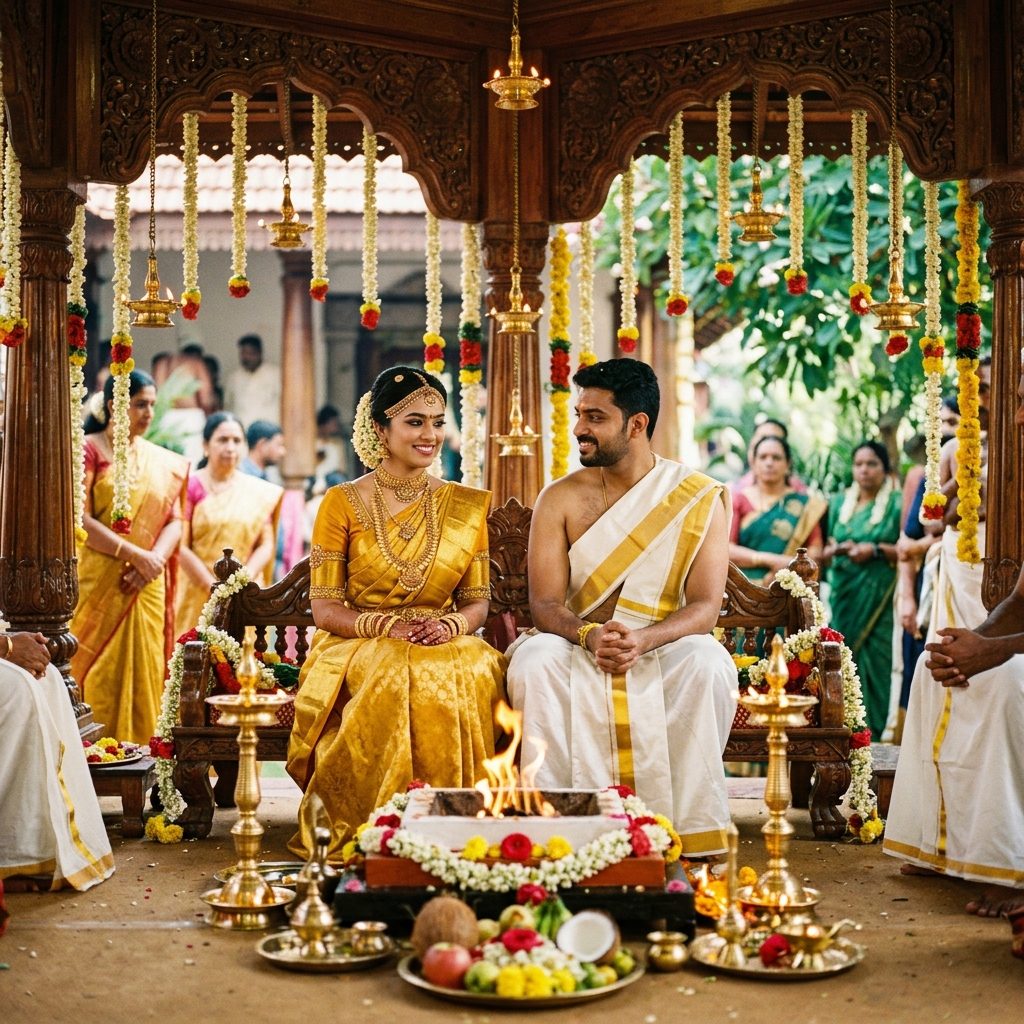
A South Indian wedding morning, or the Muhurtham, is a soul-stirring symphony of classical Nadaswaram notes, the soothing fragrance of fresh jasmine blossoms, rich Kanchipuram silk sarees, and solemn Vedic chants. Unlike evening wedding celebrations, traditional South Indian nuptials take place during highly auspicious morning hours, often commencing well before dawn. Ensuring this sacred window proceeds with serenity and grace requires precise coordination, deep cultural awareness, and seamless preparation of ceremonial essentials.
1. Calculating and Honoring the Auspicious Muhurtham Window
In South Indian traditions—spanning Tamil, Telugu, Kannada, and Malayali cultures—the wedding timing is fixed down to the exact minute by family astrologers based on the bride and groom’s horoscopes. The most sacred ritual, the Mangalya Dharanam (the tying of the Thali or Maangalyam), must take place within this precise timeframe. To honor this sacred window, both families must align morning schedules perfectly, managing early dawn bath rituals (Abhyangana Snanam) alongside makeup styling and draping nine-yard Kanjivaram silk sarees.
2. The Ceremonial Puja Essentials List
The Mandap (or Manavarai) requires an array of specific sacred items prepared well before the priests begin their chants. Missing even one small element can delay crucial morning rituals. Ensure your family designates a dedicated custodian for the ritual basket containing:
- Fresh Flowers and Garlands: Strings of fragrant jasmine, tube roses, and fresh lotus, alongside twin Muhurtham garlands (Maalai).
- Sacred Offerings: Betel leaves, betel nuts, whole coconuts, turmeric roots (Pasupu), natural kumkum, and unpolished rice mixed with turmeric (Akshata).
- The Auspicious Thread: The sacred yellow thread or gold chain carrying the Thali, blessed by elders and purified with turmeric paste.
- Ceremonial Utensils: Brass oil lamps (Kuthuvilakku), camphor, pure ghee for the holy fire (Homan), and banana leaves for traditional feasting.
"The divine melody of the Nadaswaram combined with the shower of golden Akshata rice signifies not just a union of two individuals, but the cosmic alignment of two families."
3. Sacred Key Ritual Milestones
The Muhurtham sequence is steeped in deep Vedic symbolism. It begins with the bride’s entry accompanied by her maternal uncle, leading into the Kanyadaan (or Dhareherdu), where parents entrust their daughter’s happiness to the groom. This leads to the emotional crescendo of the ceremony: the tying of the three knots of the Thali while elders shower Akshata as blessings. Following this, the couple performs the Saptapadi (seven steps around the sacred fire) and views the constant Arundhati star, symbolizing eternal fidelity.
4. Harmonizing Your Sacred Celebrations
Managing early morning logistics, notifying extended family of exact auspicious hours, and ensuring seamless guest arrivals can feel overwhelming during the quiet pre-dawn hours. To make your wedding planning as effortless as your sacred rituals, leverage intelligent tools designed for modern Indian families. Simplify your guest communications and morning schedules using the Shubh Muhrat Guest Manager, allowing you and your loved ones to focus fully on the divine sanctity of your Muhurtham.