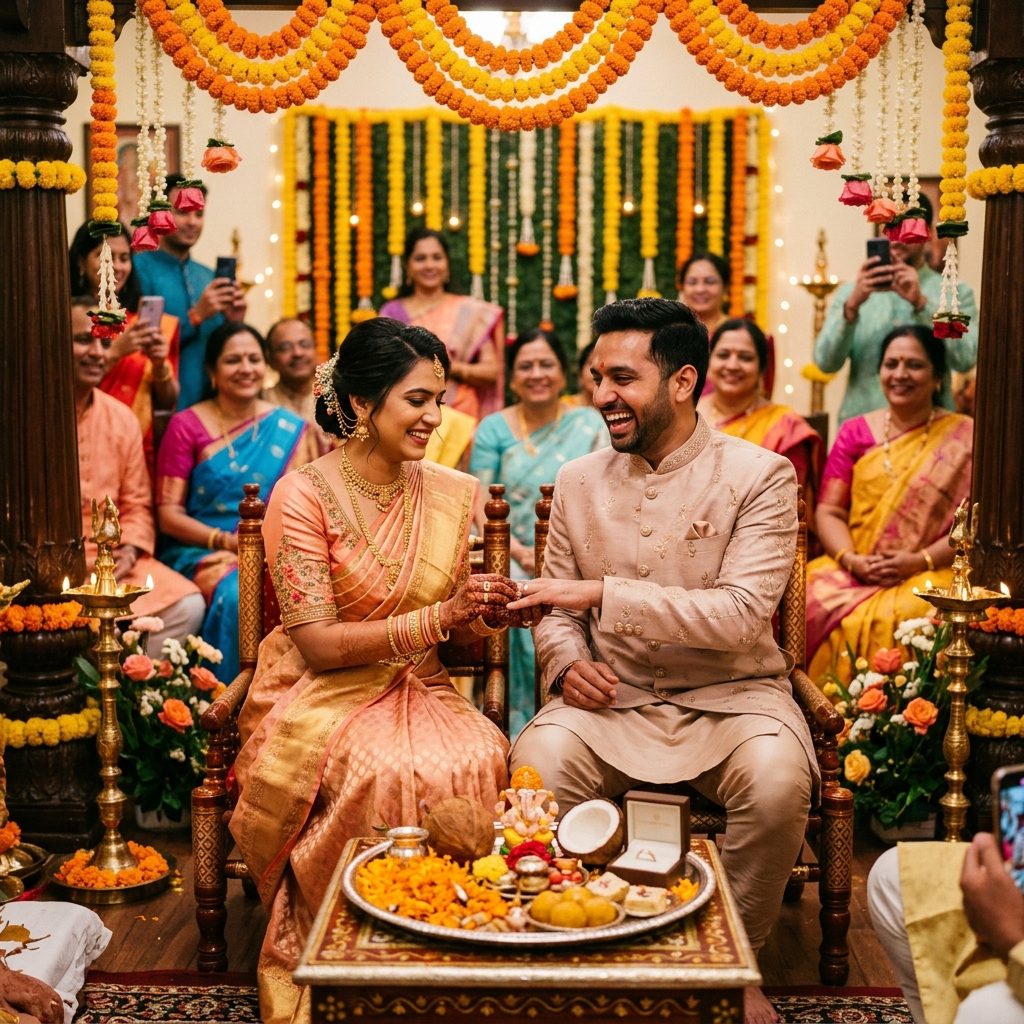
The engagement ceremony, known variously as Sagai, Roka, Nishchayam, or Ring Ceremony across India, marks the formal announcement of two families coming together. Far more than a modern ring exchange, it is an auspicious prelude rooted in sacred traditions, warm hospitality, and joyous celebration. Planning a Sagai that respects traditional customs while remaining stress-free for both families requires thoughtful coordination and attention to regional nuances.
Understanding Regional Sagai Customs and Rituals
While the essence of engagement remains uniform—seeking blessings for a union—customs vary beautifully across Indian states. In North India, the journey often begins with an intimate Roka, followed by a formal Sagai where gifts, dry fruits, and sweets are exchanged. In Punjabi families, the Chunni Chadana ceremony sees the groom's mother placing a red chunni over the bride's head, symbolizing her acceptance into the family.
In South Indian traditions like the Telugu Sagatam or Tamil Nishchayathartham, families exchange formal written announcements (Lagna Patrikai) confirmed by priests during an auspicious muhrat. In Gujarat, the Sagai involves the Gol Dhana ritual, where coriander seeds and jaggery are distributed to celebrate sweetness and fertility. Embracing these distinct rituals ensures your engagement reflects your heritage authentically.
Choosing the Auspicious Muhrat and Venue
Before locking in dates or booking venues, families consult an astrologer or panchang to identify a Shubh Muhrat for the ring exchange. Choosing an auspicious time sets a harmonious tone for the entire wedding journey. Once the timing is finalized, select a venue that comfortably accommodates both sides without feeling overwhelming.
For intimate gatherings of 50 to 100 close relatives, a cozy banquet hall, traditional heritage courtyard, or an elegant home setting works best. If you plan a grand celebration combining the ring ceremony with a cocktail evening, opt for an open-air lawn or hotel ballroom that allows seamless movement between solemn rituals and music.
Step-by-Step Engagement Planning Checklist
To ensure no detail is overlooked during the festivities, keep this practical planning roadmap in mind:
- Finalize the Guest List: Decide whether the event will include only immediate family or extended social circles from both sides.
- Coordinate Ritual Essentials: Prepare ceremonial items early, including thalis for rings, sweets, auspicious fruits, lighting lamps, and floral garlands.
- Curate the Feast: Plan a menu featuring traditional celebratory sweets alongside regional delicacies that cater to diverse age groups.
- Design Outfits Cohesively: Coordinate bridal sarees or lehengas with the groom's sherwani or bandhgala to create aesthetic harmony for photos.
The ring exchange is not merely a modern gesture; it symbolizes the sacred trust and formal commitment witnessed and blessed by elders from both lineages.
Streamlining Invitations and Guest Hospitality
Because the Sagai is often the first formal event where both extended families meet, warm communication is key. Sending timely, elegant invitations helps set the right tone for the celebrations ahead. To seamlessly organize guest lists, track dietary preferences, and coordinate seating for relatives arriving from different cities, simplify your workflow with the Shubh Muhrat Guest Manager tool. Taking care of logistics early allows both families to relax and immerse themselves fully in the sacred joy of the ceremony.