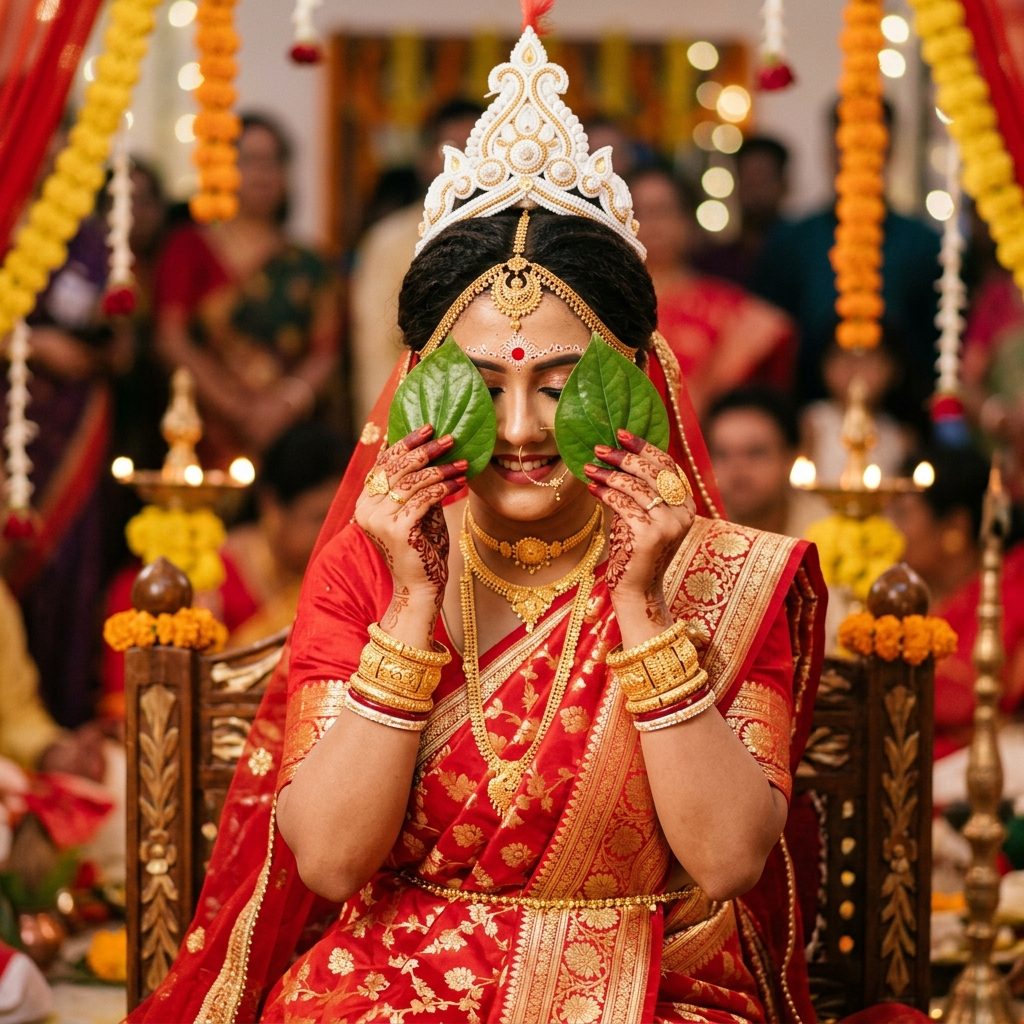
A Bengali wedding, or 'Biye', is a sensory masterpiece. The fragrance of tuberose, the vibrant red of the Banarasi saree, the sound of the conch shell (shankha), and the ululation (ulu-dhwani) create an atmosphere of pure sanctity. Beyond the visual splendor, Bengali wedding rituals are steeped in profound Vedic philosophy and cultural symbolism that date back centuries.
For families planning a traditional wedding, understanding these rituals transforms them from mere custom to deeply spiritual milestones. Here is a guide to the key ceremonies of a Bengali wedding and their timeless significance.
The Auspicious Welcoming: Bor Boron and Saat Paak
The wedding day rituals formally begin with the arrival of the groom. During the Bor Boron, the bride's mother welcomes the groom by performing an aarti with a brass platter (baran dala) containing rice, turmeric, betel nuts, and a diya. She touches the groom's forehead with these auspicious elements to bless him.
This is followed by the highly anticipated Saat Paak. The bride, seated on a low wooden stool called a piri, is carried around the groom seven times by her brothers. Throughout this procession, she hides her face behind two betel leaves (paan pata). This ritual symbolizes the bride being cocooned within her family's love until she is ready to unite with her husband.
"The high-pitched sound of the ulu-dhwani combined with the deep resonance of the shankha is not just music; it is a sacred announcement to the cosmos that two souls are embarking on a lifelong journey together."
The Union of Souls: Shubho Drishti and Mala Bodol
Once the seven rounds are complete, the moment of Shubho Drishti arrives. The bride lowers the betel leaves, and the couple exchanges their first direct look under the watchful eyes of their family. This moment represents the visual acceptance of each other as partners for life.
Immediately after, the couple participates in the Mala Bodol (exchange of garlands). This is done three times, often accompanied by playful competition as the bride's brothers lift her higher to make it difficult for the groom to reach, symbolizing the effort required to win a partner's heart.
Sacred Pledges: Sampradan and Saptapadi
The core of the wedding ceremony involves the Sampradan, where the bride's father or an elder male relative places the bride's hand in the groom's, tying them together with a sacred thread. This signifies the transition of guardianship and the formal union of the two families.
Finally, the couple performs the Saptapadi (seven steps). Unlike in other regions where couples walk around the fire, in a Bengali wedding, they step on seven betel leaves laid out on the floor, gently kicking a grinding stone (nora) with their feet as they progress. This symbolizes overcoming life’s obstacles together, step by step.
Planning these intricate ceremonies requires meticulous organization and communication with your guests. As you prepare to host your traditional Bengali wedding, you can easily design beautiful, culturally authentic digital invitations using the Shubh Muhrat Invite Studio, ensuring your guests are welcomed in style.