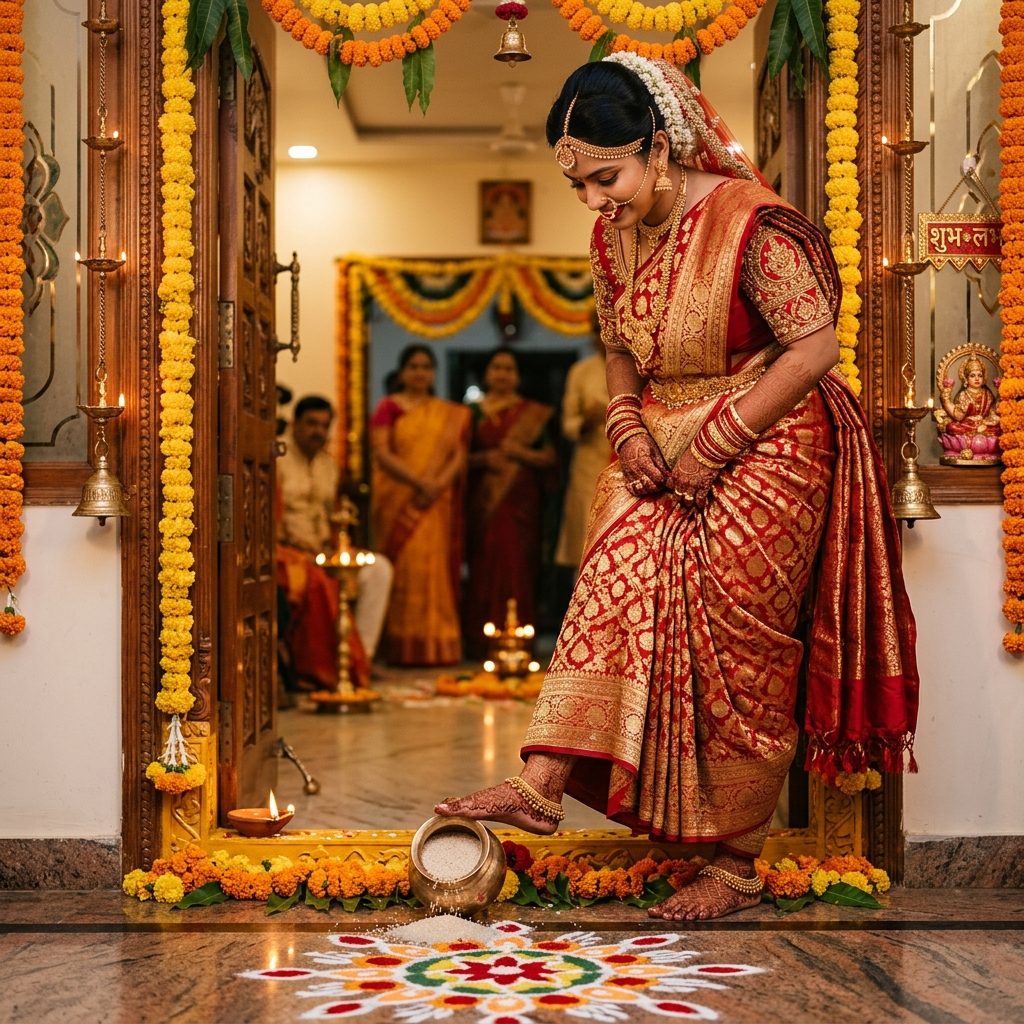
The Griha Pravesh of a new bride, traditionally known as Vadhu Pravesh in many parts of India, is one of the most emotionally charged and culturally significant post-wedding rituals. It marks the formal transition of the bride from her maternal home to her husband’s household. Beyond the ancient customs, it is a heartfelt gesture of welcoming her not just as a new family member, but as the direct embodiment of domestic prosperity, harmony, and joy. Understanding the steps and planning ahead ensures this milestone is warm, respectful, and stress-free for both the bride and her new family.
Essential Rituals and Their Devotional Meanings
Every small act during the bride's welcome has a profound symbolic meaning rooted in Indian heritage. Before the bride steps across the threshold, she is greeted at the main entrance by her mother-in-law or senior female relatives who perform a welcoming aarti. This ritual is meant to ward off negative energies and wrap the couple in protective, warm vibrations before they step inside.
- The Rice Pot (Kalash): A small copper or brass pot filled to the brim with raw grain is placed at the entrance. The bride gently nudges it with her right foot, spilling the grain inward. This symbolizes the abundant flow of wealth and food security into the home.
- The Vermilion Footprints (Alta): The bride steps into a brass tray filled with a mixture of vermilion (kumkum) and milk. She then walks onto a white path of fabric or paper, leaving bright red footprints. This represents the physical entry of Goddess Lakshmi, bringing divine light.
- The Sweet Welcome: Feeding the bride a spoonful of curd and sugar or a traditional sweet immediately upon entry. This classic gesture ensures that her first taste in her new home is sweet, symbolizing sweet speech and relationship harmony.
"As the bride crosses the threshold, she is not merely entering a new physical space; she is weaving her destiny with a new family, bringing light, wisdom, and the blessing of Lakshmi into her new home."
Regional Customs and Playful Icebreakers
India is a land of beautiful regional diversities, and this is reflected in how different communities welcome the bride. In Maharashtra, the groom changes the bride's name during the Griha Pravesh by writing it on a plate of rice. In North Indian households, the couple is made to play games like searching for a ring hidden in a vessel filled with milk, water, and rose petals. These lighthearted games serve as excellent icebreakers, helping the bride ease into her new surroundings and share a laugh with her new relatives.
Practical Tips for a Stress-Free Homecoming
The wedding day is physically exhausting, and the bride is likely tired from the long ceremonies, heavy attire, and the emotional farewell from her parents. Keep the welcoming ceremony focused yet comfortable. Designate a close family member to oversee the preparation of the entrance path, the mixing of the alta, and arranging the aarti plate well in advance. Ensure a quiet, comfortable room is ready where the bride can change into lighter clothing and rest immediately after the rituals are completed.
Timing is critical for the Griha Pravesh. In Indian tradition, entering the home during a specific shubh muhurat ensures that the planetary alignments favor the couple’s new beginning. If you are inviting extended family and close neighbors to witness this beautiful homecoming ceremony, you can easily design and send elegant digital invitations using the Shubh Muhrat Invite Studio, ensuring everyone arrives on time to bless the couple.