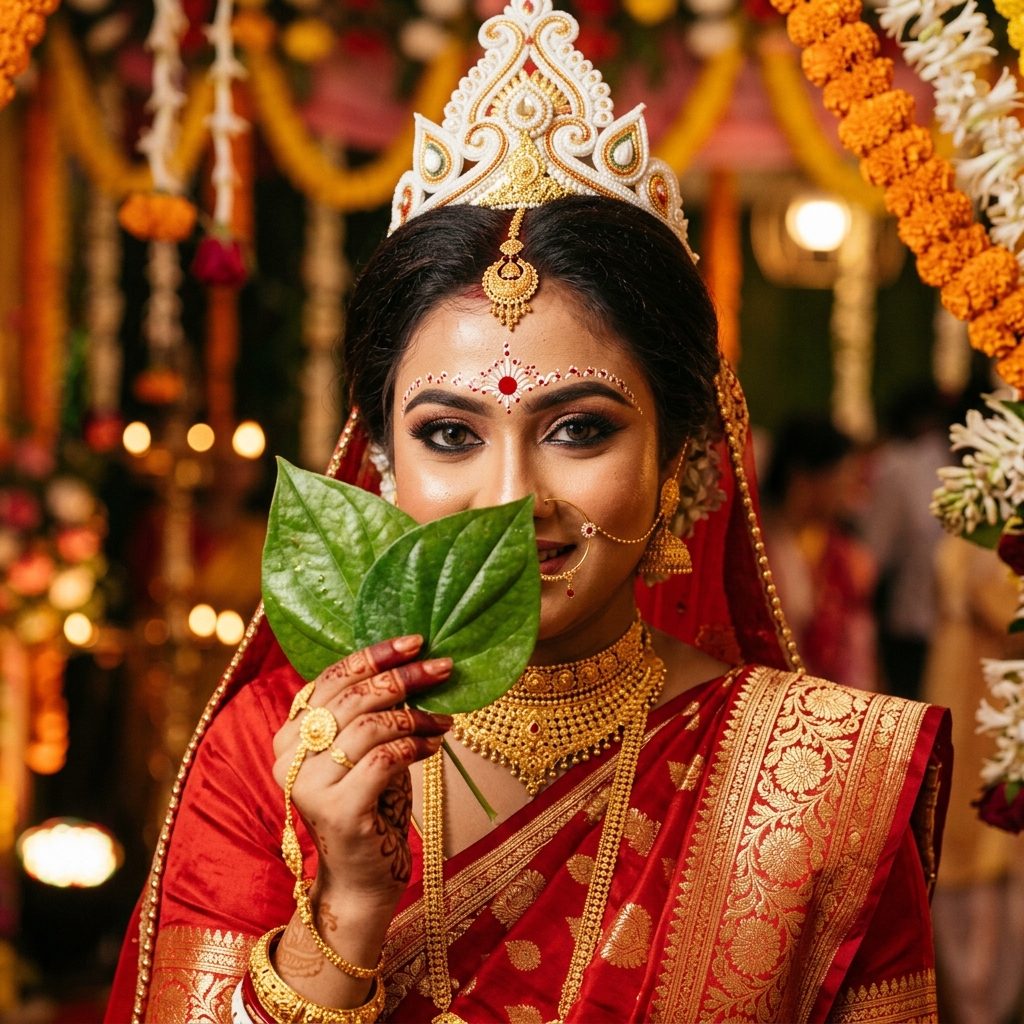
A traditional Bengali wedding, known locally as Biye, is a breathtaking tapestry of vibrant colors, soulful chants, melodic ululations, and deep Vedic solemnity. Far beyond the visual splendor of red silk sarees, white topors, and intricate forehead chandan art lies an ancient spiritual symbolism. Every single custom performed throughout a Bengali marriage ceremony serves a profound purpose—uniting two families, honoring ancestors, and cementing a lifelong pledge of mutual respect and devotion.
Sacred Pre-Wedding Preparations: Aiburobhat and Bor Jatri
Before the main mandap rites begin, the wedding journey honors the bride and groom's transition into household life. The Aiburobhat marks the final meal the bride or groom enjoys as a bachelor or bachelorette in their maternal home. Prepared lovingly by family members, this feast features traditional delicacies like fish head curry, payesh, and fried savories, symbolizing abundance and parental blessings before embarking on married life.
On the wedding evening, the groom arrives accompanied by his family in the Bor Jatri procession. He is warmly received at the venue by the bride's mother and elders through the Baran Dala ceremony, where a decorated brass tray containing lamps, betel leaves, and grains is offered to ward off negative energies and welcome the groom with honor.
The Heart of the Mandap: Saat Paak, Shubho Drishti, and Mala Badal
The core wedding rituals take place under a beautifully decorated pavilion adorned with fresh tuberoses and marigolds. The bride enters seated on a traditional wooden stool called a pidi, carried entirely by her brothers and male cousins. Her face remains hidden behind two fresh green betel leaves as her brothers carry her around the groom seven times in a sacred ritual called Saat Paak.
Following this circular journey comes one of the most romantic and iconic moments in Indian matrimony—the Shubho Drishti. As the blowing of conch shells and high-pitched uludhoni reverberate through the air, the bride lowers the betel leaves to look directly into her groom's eyes for the very first time on their wedding day.
The moment betel leaves part during Shubho Drishti, time stands still—it is not merely two individuals meeting, but two lineages binding their destinies together under divine grace.
Immediately after this magical glance, the couple performs the Mala Badal, exchanging floral garlands three times to symbolize complete mutual acceptance and shared spiritual vows. This leads into the Sampradan, where the bride's father or elder uncle formally places her hand in the groom's hand while sacred mantras are chanted over sacred fire, binding them in holy matrimony.
- Saat Paak: Seven clockwise rounds around the groom signifying eternal companionship across all dimensions of life.
- Shubho Drishti: The auspicious first eye contact sealing silent emotional commitment and heartfelt acceptance.
- Sampradan: The formal handover of guardianship, signifying trust, respect, and responsibility.
- Yajna & Saptapadi: Sacred fire offerings invoking Agni Dev to witness their lifelong vows.
Post-Wedding Ceremonies: Bhaat Kapor and Bou Bhat
The day following the wedding brings deeply touching domestic rituals at the groom's home. During the Bhaat Kapor ceremony, the groom presents his new bride with a brass plate filled with rice, sweets, fish, and a new saree, taking a formal pledge to provide for her basic needs, food, and clothing throughout her life. This quiet, emotional pledge is followed by Bou Bhat, a grand reception where the bride serves rice to her new family members, formally assuming her place as the lady of the household.
Understanding the symbolism behind every Bengali ritual allows families to celebrate with deeper mindfulness and joy. If you are planning your own traditional Bengali wedding, share the charm of these timeless customs with your guests from the very start. Use our Invite Studio to design elegant, culturally rich digital wedding invitations complete with traditional Alpona motifs and personalized event itineraries.