
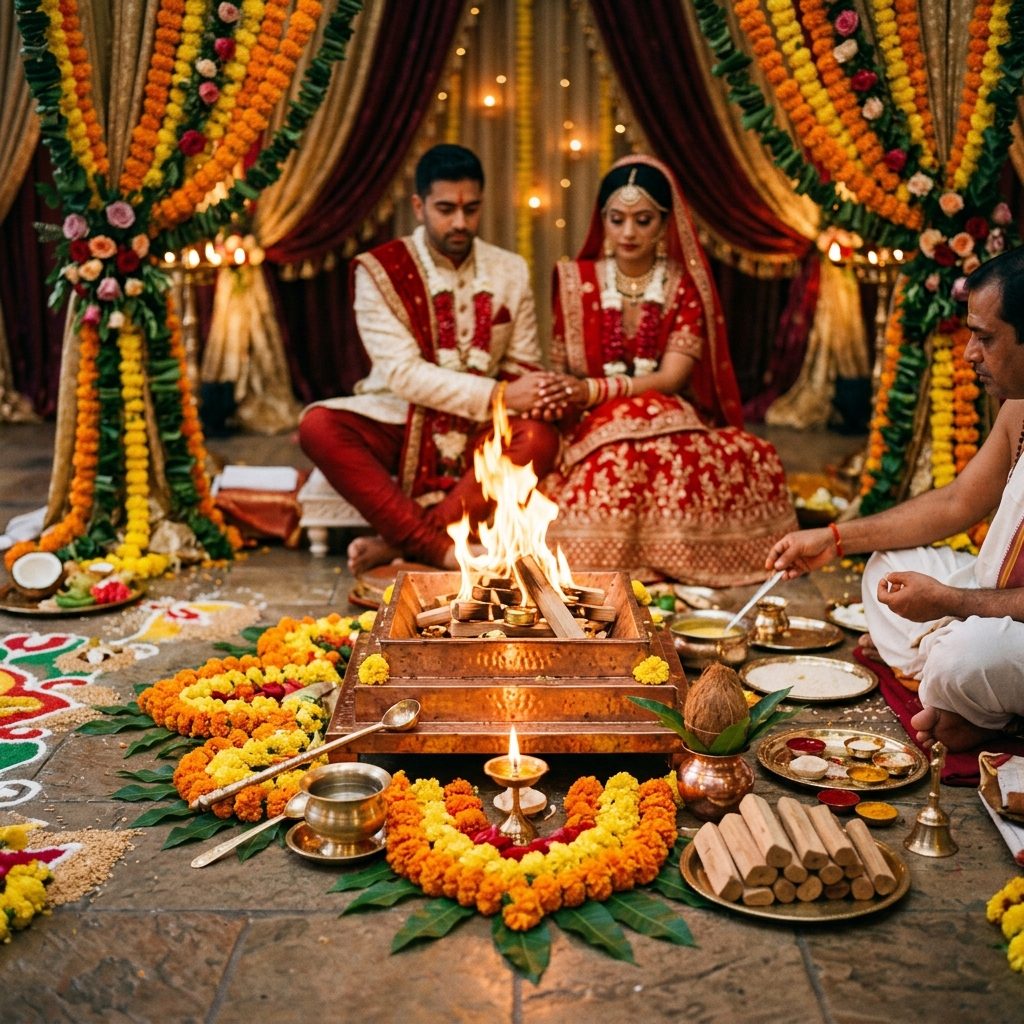
The Agni Sakshi ritual forms the spiritual core of a traditional Hindu wedding ceremony. As the bride and groom prepare to take their sacred vows around the holy fire, the environment around the havan kund must reflect purity, reverence, and functional safety. Preparing the mandap fire requires meticulous attention to traditional samagri selection, proper wood preparation, and seamless coordination between the wedding hosts and the officiating priest.
Selecting Sacred Firewood and Ritual Ingredients
The sacred fire requires authentic natural elements that yield a steady, fragrant flame without producing dense, irritating smoke. Vedic traditions specify dry, clean woods known for their purificatory qualities during sacred offerings.
- Mango Wood (Aam ki Lakdi): The primary traditional choice for Hindu vivah havans due to its clean burning nature and steady heat. Ensure wood pieces are fully seasoned and cut into uniform small lengths.
- Sandalwood (Chandan) and Palash: Small sticks of fragrant sandalwood added periodically release a divine scent throughout the mandap, setting a contemplative tone during mantra recitation.
- Pure Desi Cow Ghee: High-grade clarified butter acts as the principal offering, sustaining a bright yellow flame without creating harsh soot.
- Natural Havan Samagri Blend: A classic mixture containing jau (barley), til (black sesame), guggul, bhimseni camphor, nagarmotha, and dry rose petals ensures complete combustion during ahuti.
Managing Mandap Smoke and Venue Airflow
Modern wedding venues, particularly air-conditioned indoor banquet halls, velvet-canopied mandaps, and covered glass structures, introduce unique physical challenges for traditional fire rituals. Managing the Agni Sakshi fire properly ensures comfort for the wedding couple, the priest, and close elders seated near the vedi.
Collaborate with your venue manager and floral designer to install a concealed exhaust duct or overhead smoke extraction canopy directly above the havan kund. In addition, place low-decibel exhaust fans along the rear perimeter of the mandap structure to pull smoke away from guest seating areas. Using pure Bhimseni camphor for lighting the fire instead of synthetic chemical starters prevents unpleasant odor and burning eyes during the long pheres.
A carefully constructed havan setup ensures the sacred fire burns bright and clean, allowing the family to immerse fully in the sacred mantras of the wedding vows.
Mandap Etiquette and Priest Coordination
The smooth execution of the Agni Sakshi ceremony depends on proactive communication with your family priest before the wedding day. Appoint a dedicated family member or wedding coordinator as the designated havan assistant so the bride and groom can remain fully present during their vows.
Ensure that all ceremonial implements—such as the wooden sruk and sruva spoons, brass containers for ghee, and copper vessel for water—are inspected and placed next to the priest before the mahurat hour. The havan assistant should quietly monitor ghee reserves and hand over additional samagri or parched rice (laja) for the Laja Homam ritual, preserving the dignity and rhythm of the sacred pheres.
Managing traditional rituals alongside host duties requires thoughtful coordination across every ceremony. As you plan your family wedding timelines, streamline guest lists, digital invites, and hospitality logistics effortlessly using the Shubh Muhrat Guest Manager.