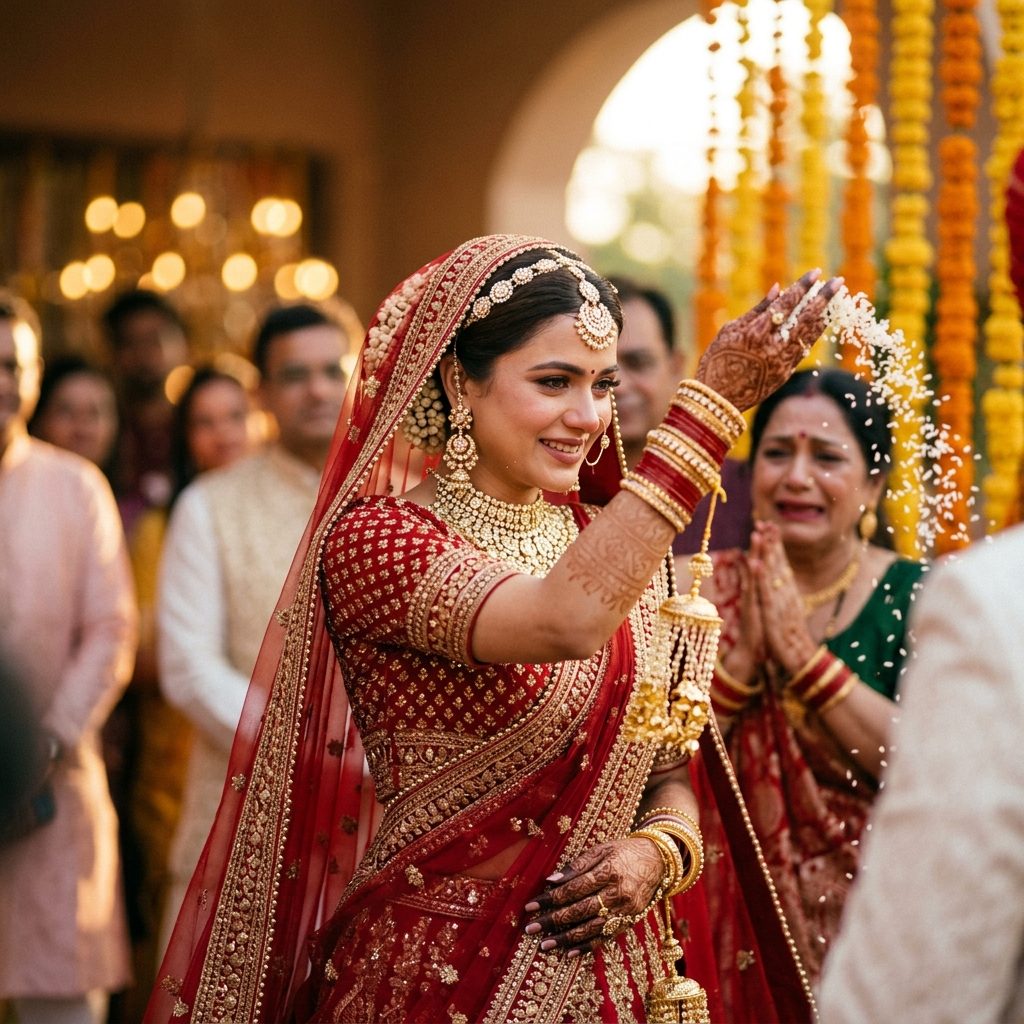
The Emotional Weight and Sacred Roots of Chawal Phenkna
The Vidaai ceremony stands as one of the most emotionally charged and culturally significant moments in an Indian wedding. Amidst the tearful goodbyes, traditional shehnai notes, and tight familial embraces, a deeply symbolic ritual unfolds: Chawal Phenkna, or the ceremonial throwing of rice. As the bride prepares to step across the threshold of her parental home, she turns around and tosses a handful of unbroken rice backward over her head without looking back. This is far more than a simple goodbye gesture; it is an ancient Vedic practice rooted in profound gratitude, spiritual balance, and the acknowledgment of the life she received from her parents.
In traditional Indian households, rice has always symbolized wealth, sustenance, fertility, and Goddess Annapurna. By tossing the rice backward into her childhood home, the bride performs an act of loving reciprocation. She is symbolically returning the physical and emotional nourishment, care, and abundance she consumed growing up under her parents' roof. This ritual ensures that the parental home remains prosperous, joyful, and untouched by scarcity, even as the daughter departs to build her own home.
Regional Variations of the Farewell Tradition
While the underlying essence of gratitude and blessing remains universal across India, the specific execution and nuances of the Vidaai and threshold rituals vary beautifully across different communities and linguistic traditions:
- North Indian traditions: The bride typically tosses three handfuls of rice backward over her head into her mother's outstretched pallu or onto the floor, wishing endless prosperity for her family.
- Gujarati customs: The ritual emphasizes the concept of clearing life debts, where parents lovingly catch the tossed rice in their garments, accepting their daughter's parting blessing.
- South Indian nuances: Communities often incorporate specific threshold-crossing rituals where the bride drops rice mixed with coins or turmeric before stepping permanently into her new chapter.
- Bengali and Eastern traditions: While the Vidaai involves emotional farewells, the emphasis on parting prosperity and accepting new familial bonds mirrors the universal ethos of familial devotion.
Bridging Generations During Modern Weddings
Planning a modern Indian wedding involves balancing cherished ancestral customs with contemporary logistics, sprawling guest lists, and multi-venue celebrations. While the emotional core of the Vidaai remains beautifully unchanged, coordinating how family members gather for these intimate moments requires thoughtful planning. Families often appreciate digital assistance to streamline wedding coordination so that elders and parents can focus entirely on emotional milestones rather than logistical stress.
"The Vidaai is not an ending of a chapter, but a sacred bridge where a daughter steps into her new role as a matriarch, carrying her family's eternal blessings."
As you curate your wedding journey, honoring these sacred traditions while organizing seamless celebrations ensures your family creates lifelong memories. From designing elegant digital wedding invitations using the Shubh Muhrat Invite Studio to coordinating every traditional ritual with ease, keeping your cultural roots intact makes your wedding truly unforgettable.