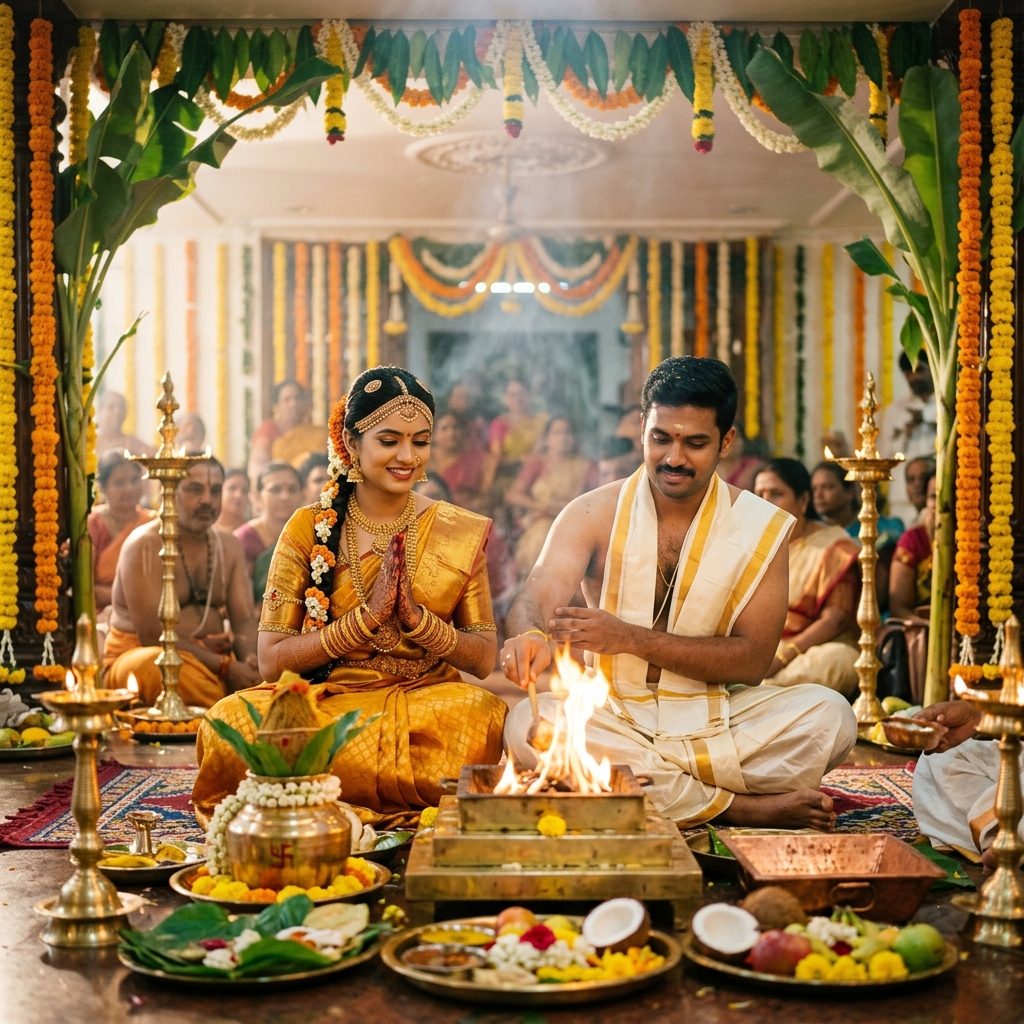
A traditional Tamil Brahmin (Tambrahm) wedding is a grand yet deeply spiritual celebration rooted in ancient Vedic traditions. Spread over two days, every ritual has a psychological, cultural, and spiritual reason behind it. From the vibrant evening rituals to the sacred morning Muhurtham, understanding these customs adds rich meaning to the union of two families.
The Prelude: Vratham and Janavasam
The ceremonies usually commence with the Vratham, performed separately by the bride and groom's families. The groom's family seeks blessings to transition him from his bachelorhood (Brahmacharya) to householder status (Grihastha), while the bride's family performs sacred thread rituals for her protection and family prosperity.
Later in the evening comes the Janavasam, a joyous procession where the groom arrives at the wedding venue. Traditionally conducted in a decorated car or chariot accompanied by music, this event serves to announce the wedding to the local community before formalizing the commitment through the Nischayathartham (engagement ceremony).
Morning Traditions: Kasi Yatra and Oonjal
The actual wedding day begins early with one of the most beloved and lighthearted rituals: the Kasi Yatra. Armed with an umbrella, a walking stick, a handheld fan, and a book of scriptures, the groom pretends to abandon worldly affairs for a spiritual journey to Kasi (Varanasi).
- The Persuasion: The bride's father steps in, gently advising the groom about the virtues of married life (Grihastha Ashrama) and offering his daughter's hand in marriage.
- The Oonjal (Swing Ritual): Once the groom accepts, the couple sits together on a heavy wooden swing (Oonjal) decorated with flowers. Eldest female relatives sing classic Carnatic melodies while waving colored rice balls (Pidi Suthuthal) around the couple to ward off negative energy and symbolize stability through life's ups and downs.
Ancient Vedic wedding rituals remind us that marriage is not merely a legal contract, but a sacred spiritual union that balances duty, devotion, and community harmony.
The Sacred Climax: Kanyadaanam and Mangalya Dharanam
During the Kanyadaanam, the bride sits on her father's lap, holding a coconut representing her surrender of lineage to her new family. Sacred water is poured over the coconut while Vedic mantras reverberate through the hall, signaling the father's emotional gift of his daughter.
This leads directly to the core moment: the Mangalya Dharanam. At the exact auspicious Shubh Muhurtham, as the traditional Nadaswaram music reaches its crescendo with the powerful Ketti Melam, the groom ties the yellow thread of the Thirumangalyam around the bride's neck. He ties the first knot, while his sisters tie the remaining two knots, symbolizing the union of mind, speech, and body.
Sacred Vows: Saptapadi
Following the string of sacred threads, the couple undertakes the Saptapadi (seven steps around the sacred fire, Agni). With each step, the groom holds the bride's right hand and guides her, reciting ancient Sanskrit vows for sustenance, strength, wealth, happiness, progeny, long life, and lifelong friendship.
Planning a multi-event Tamil Brahmin wedding requires clear communication with guests about rituals, locations, and dress codes. You can effortlessly share every sacred detail with your loved ones using the Shubh Muhrat Invite Studio to design elegant digital invitations tailored to your cultural traditions.