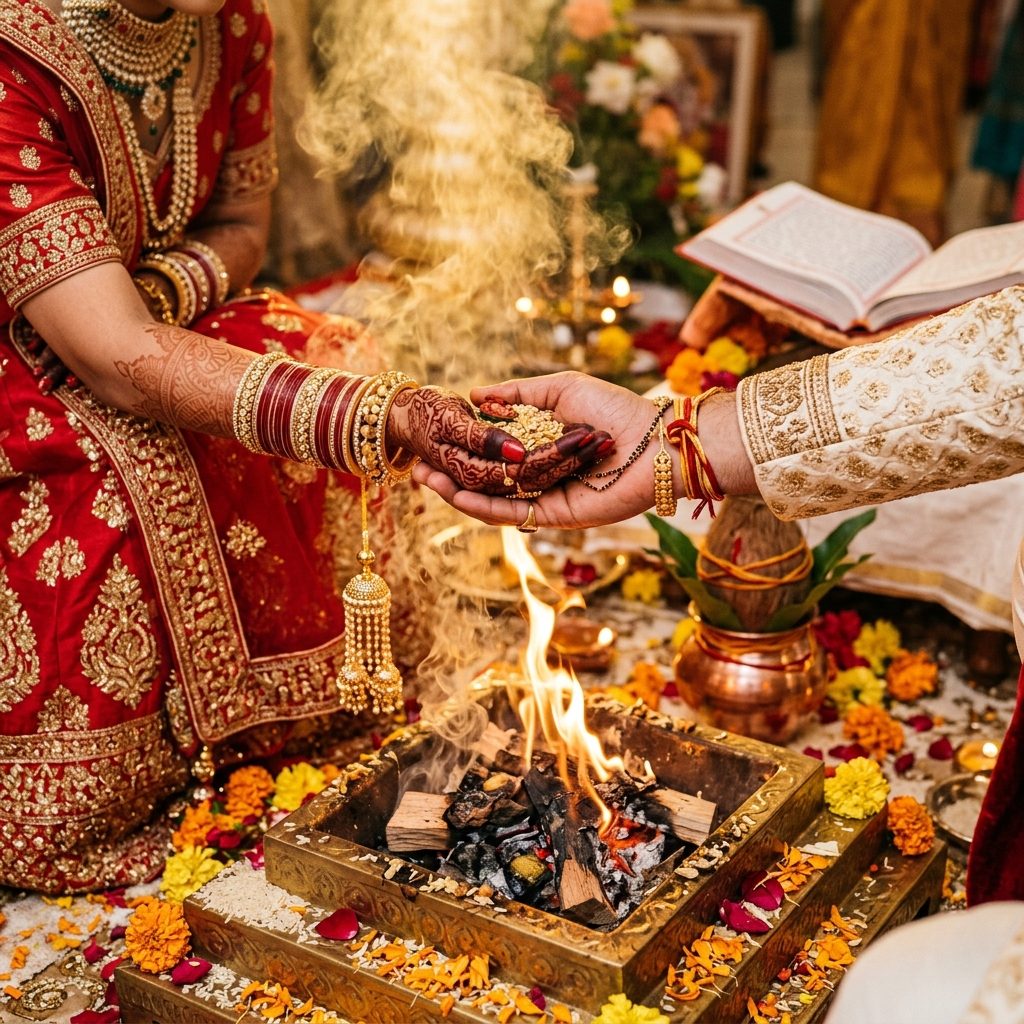
In Indian culture, a wedding is not merely a social contract; it is a sacred transition where two souls are bound across lifetimes. This spiritual union relies heavily on cosmic alignment. Choosing a Shubh Muhurat—the most auspicious time window for the wedding rituals—is the foundational step in planning an Indian wedding. It is believed that initiating the wedding rituals during a positive planetary alignment helps ward off obstacles and ensures a lifetime of prosperity, harmony, and mutual understanding.
The Five Pillars of the Hindu Panchang
A Hindu calendar, or Panchang, determines the auspiciousness of any given day based on five key astronomical elements. Astrologers analyze these components to find a window free from malefic planetary influences:
- Tithi (Lunar Day): Certain lunar days, like Dwitiya, Tritiya, Panchami, Saptami, Dashami, and Ekadashi, are considered highly favorable for marriages.
- Nakshatra (Lunar Mansion): The moon's position in specific stars, such as Rohini, Mrigashirsha, Uttaraphalguni, Uttarashadha, Uttarabhadrapada, Anuradha, Revati, and Shravana, is deemed auspicious.
- Vara (Day of the Week): Monday, Wednesday, Thursday, and Friday are generally preferred for wedding ceremonies.
- Yoga and Karana: These represent specialized divisions of the lunar day that must be auspicious to ensure the ceremony proceeds without hindrance.
Navigating Regional and Seasonal Variations
India’s rich diversity means that Muhurat calculations vary significantly across regions. In North India, weddings are strictly avoided during certain periods like Kharmas (when the Sun enters Sagittarius or Pisces) and Chaturmas (the four holy months of monsoon when Lord Vishnu is believed to be in cosmic sleep). Conversely, South Indian weddings often favor morning hours, sometimes aligning with the highly auspicious Brahma Muhurtham just before sunrise, regardless of the broader season. For Bengali weddings, the 'Panjika' dictates specific hours, sometimes late into the night, known as 'Lagna', which must be strictly adhered to during the varmala and sampradan rituals.
In addition to solar transits, lunar phases play a vital role. For instance, the Shukla Paksha (waxing phase of the moon) is generally preferred over the Krishna Paksha (waning phase) because the growing moon symbolizes growth, health, and expanding prosperity. Regional calendars like the Gujarati Vikram Samvat, Punjab's Nanakshahi calendar, or the Tamil Panchangam each have distinct parameters, ensuring that the local culture's spiritual essence is preserved during the wedding rituals.
A marriage initiated at the right astronomical hour invites positive cosmic energies, aligning the couple's destiny with the rhythm of the universe.
Common Pitfalls to Avoid
When selecting your wedding date, it is crucial to consult a trusted family priest or astrologer to identify and avoid unfavorable periods. These include Rahu Kaal (a daily period of inauspicious planetary influence), Solar and Lunar eclipses, and periods when Venus (Shukra) or Jupiter (Guru) are combust (Tara Doobna). Since Venus governs love and harmony and Jupiter governs wisdom and duty, their strong positioning in the couple's birth charts is essential for a successful marriage. Astrologers calculate the Ashtama Lagnas (eighth house transit) and avoid it to ensure the safety and longevity of the couple.
Selecting the perfect date begins with aligning the birth charts of the bride and the groom. Before you finalize your wedding date and venue, ensure your stars are aligned. Use our Kundli Match tool to check your compatibility and consult detailed astrological reports to find the most harmonious path forward for your union.