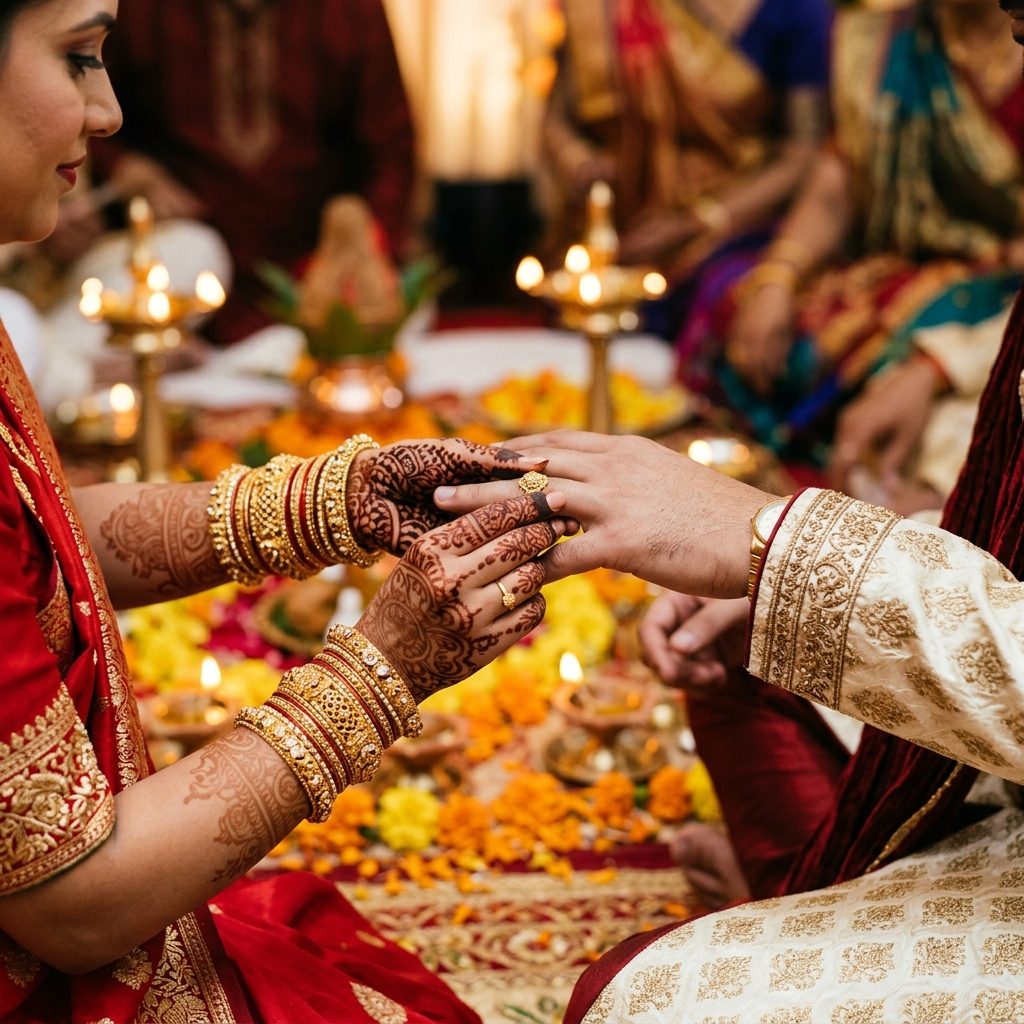
The Sagai, known variously as Tilak, Kurmai, Nishchayatham, or Ring Ceremony across India, marks the official beginning of a couple's journey toward marriage. While the wedding day is the grand culmination, the engagement is an intimate yet significant milestone. It is the formal announcement of the union, where two families come together to pledge their commitment to one another in the presence of elders and loved ones.
Sacred Rituals Across Indian Regions
The beauty of an Indian engagement lies in its regional diversity. In Northern India, the ceremony often centers around the Tilak, where the bride’s brother applies a vermilion mark on the groom’s forehead, signifying acceptance and respect. Warm gifts of sweets, dry fruits, and clothing, known as shagun, are exchanged. In Sikh traditions, this is celebrated as the Kurmai, involving prayers at the Gurdwara and the offering of a Kara to the groom.
Down South, the ritual is often called Nishchayatham or Muhurtham, where the alignment of stars is formally accepted, and the wedding date is announced. A key highlight here is the exchange of the Lagna Patrika, a written formal agreement detailing the wedding date and time, read aloud in front of the community. In Gujarati families, the Gol Dhana (literally translating to jaggery and coriander seeds) is performed, symbolizing the sweet and nourishing bond being formed. Regardless of the region, the ceremony almost always begins with a prayer to Lord Ganesha, the remover of obstacles, ensuring a smooth path ahead for the couple.
"The Sagai is not just the union of two individuals, but a sacred covenant where two families promise to walk the path of life together, witnessed by the divine."
Essential Steps for Planning Your Sagai
Planning a Sagai requires a delicate balance between religious protocols and contemporary hosting. Here are the key planning phases every family should consider:
- Consulting the Panchang: The first step is always consulting a family priest or using digital tools to find an auspicious Shubh Muhurat. A date chosen under favorable planetary alignments brings peace and prosperity.
- Curating the Shagun: The preparation of gift platters (thaalis) is an art form. These typically include traditional sweets, dry fruits, coconuts, silver coins, and the engagement outfits.
- Venue and Decor: Keep the setting warm and inviting. Traditional decor elements like marigold garlands, brass lamps, and traditional seating create an authentic, festive atmosphere.
- The Ring Exchange: Position the ring exchange at a time when all elders are present to shower their blessings (Aashirwad) immediately after the rings are slipped onto the fingers.
Inviting Loved Ones to Share the Joy
Once the date and venue are set, communicating the details to your guest list is the next priority. Since the engagement sets the tone for the entire wedding saga, your invitation should reflect the warmth and tradition of the occasion. To help you design the perfect announcement, you can craft beautiful, culturally resonant digital cards using the Shubh Muhrat Invite Studio. This tool allows you to personalize templates with traditional motifs, ensuring your guests receive a warm and formal invitation that honours your family's customs.