
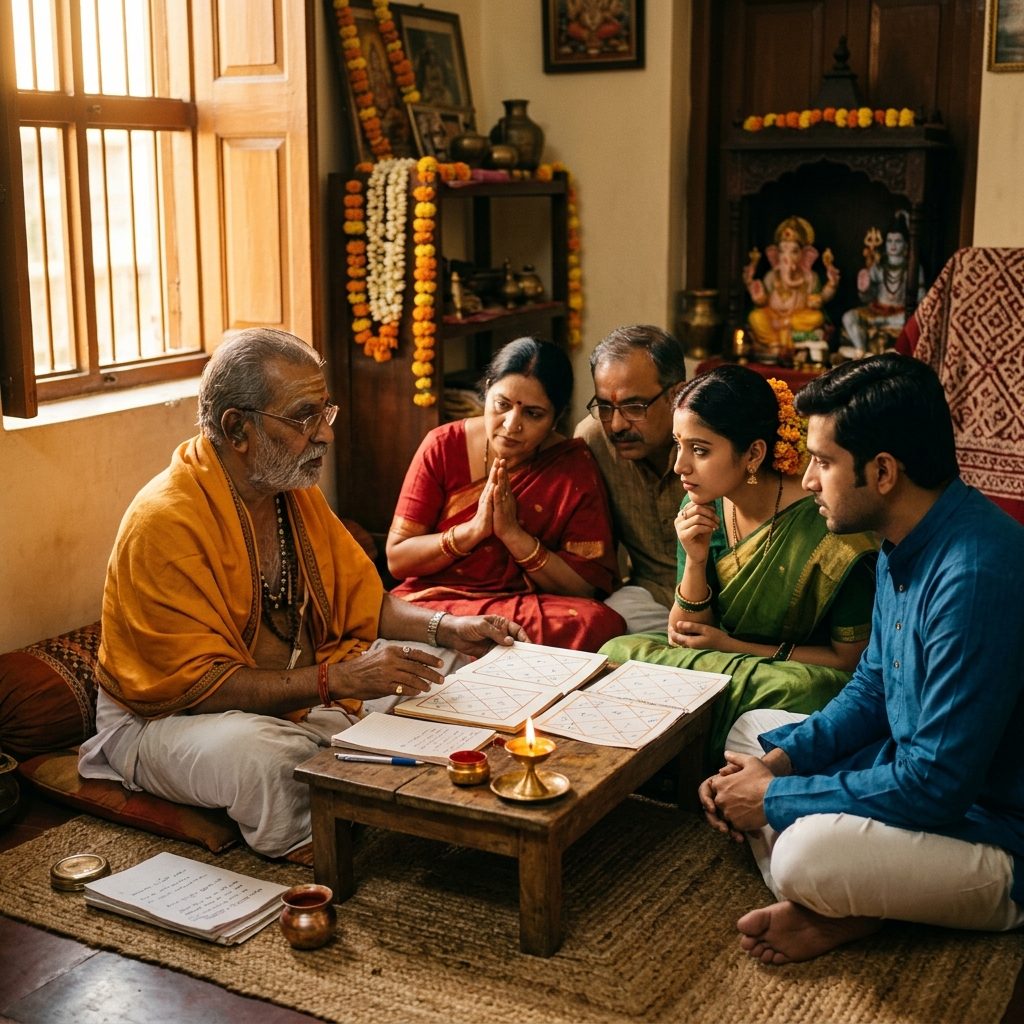
Eighteen out of thirty-six. The pandit reads it out, your mother's face falls, and somewhere a perfectly good rishta starts to wobble. Here is the blunt truth most families miss: a low Guna Milan score is not a verdict, and it is almost never the reason a marriage works or breaks. The 36-point Ashtakoot system measures eight kinds of compatibility - mind, temperament, health, progeny - but it was never designed to be a pass-or-fail gate. Before you walk away from someone you actually like, understand what those gunas are really telling you.
What counts as a low Guna Milan score, really?
Short answer: lower than most people think. The standard reading is that 18 and above out of 36 is considered acceptable for marriage. Below 18 raises questions; above 25 is treated as strong. But these are convention, not commandment.
The eight koots carry unequal weight. Nadi alone is worth 8 points and relates to health and genetics. Bhakoot is worth 7 and touches finances and emotional pull. Gana is worth 6 and maps temperament. So you can score a respectable 22 and still have a wobble in one heavyweight koot, or score a nervous 16 where every small point is balanced and nothing is genuinely broken. A bare number hides all of that.
This is why a careful free online kundli matching report that breaks the score down koot by koot tells you ten times more than the single figure your relative quoted on the phone. The total is a headline. The breakdown is the story.
So what does a low score actually mean for the marriage?
Short answer: less than you fear. Guna Milan flags areas to be aware of - it does not predict divorce, infertility, or financial ruin. A 12/36 means the planetary temperaments of two birth charts differ in several categories. That is information, not a sentence.
Think of it like a doctor saying your cholesterol is borderline. Useful to know. Worth managing. Not a reason to cancel your life. Plenty of couples with sky-high 32/36 scores fight bitterly, and plenty with a modest 16 build calm, loving homes - because daily marriage runs on respect, money habits, in-laws, and whether one of you leaves the wet towel on the bed. Astrology names tendencies. You and your partner decide what to do with them.
A kundli tells you the weather forecast. It does not fly the plane - the two of you do that, every single day.
My score is low because of Nadi or Bhakoot Dosha - is it over?
Short answer: no, and a real astrologer will tell you so. The two doshas families panic about most are Nadi Dosha (0 of 8 points, linked to health and children) and Bhakoot Dosha (0 of 7, linked to emotional and financial harmony). Both have classical exceptions and remedies that have been used for generations.
Nadi Dosha is considered cancelled - this is called Nadi parihar - in several recognised situations: when both have the same rashi but different nakshatras, when the nakshatra is the same but the charan (pada) differs, and a few others depending on the lineage your astrologer follows. Bhakoot Dosha similarly has cancellations when certain planetary lords are friends or the same. A Marwari family in Jaipur and an Iyer family in Chennai may weight these doshas differently, and that is normal - tradition is regional, not uniform. The point is simple: before you treat a dosha as final, ask specifically whether a parihar applies to this exact pair of charts.
Should we just look for a higher-scoring match instead?
Here is my one honest opinion, and some families won't like it: chasing a high Guna Milan number while ignoring the actual person is how good matches get thrown away and shallow ones get celebrated. The score is a filter, not the destination.
If the family vibe is warm, the values line up, and you genuinely enjoy talking to each other, a 17 is not a reason to stop. And if you are still early in the search and weighing options, it is far healthier to meet several compatible people - look at backgrounds, education, expectations, the way they treat their parents - than to crown the candidate with the prettiest astrology report. Tools that help you find compatible profiles by community and values let you shortlist on the things that actually predict a happy home, then run the kundli as a final check rather than the first cut.
What should you practically do when the score comes back low?
Short answer: slow down, verify, and decide with your head and heart, not just the math. Here is the order that saves families the most heartache:
- Verify the birth data first. A wrong birth time by even fifteen minutes can shift nakshatra and rashi and quietly wreck the score. Confirm the exact time, date, and place for both charts before believing any number.
- Ask for the koot-by-koot breakdown. Find out which gunas you lost and whether they are the heavy ones (Nadi, Bhakoot, Gana) or the lighter ones. Losing 4 light points is very different from losing Nadi.
- Specifically ask about parihar and remedies. Get a clear answer on whether any classical cancellation applies to these two charts, rather than a vague "it's not good."
- Get a second reading. Astrologers vary in method and strictness. One careful second opinion often dissolves a panic the first reading created.
- Weigh the non-astrological factors honestly. Shared values, financial outlook, family temperament, mutual respect - these carry the marriage long after the muhurat is over.
- Talk to each other. If you can, have an honest conversation with the person. How they react to a low score tells you more about the marriage than the score itself.
Does any of this change the wedding or the biodata?
Not much, and that is reassuring. A low score is settled long before the cards go out. If the families agree to proceed - with or without a small remedy - the process continues exactly as normal. When you reach the stage of formally presenting the match, a clean, honest marriage biodata with the right photos and details does far more to win confidence than any guna count, because it shows the real person behind the chart.
So when your Guna Milan score comes back low, breathe. Check the birth data, read the koots one by one, ask about cancellations, and then judge the human being in front of you - their kindness, their plans, the way they laugh with your family. The number gave you something to think about. What you do next is entirely, wonderfully, in your hands.