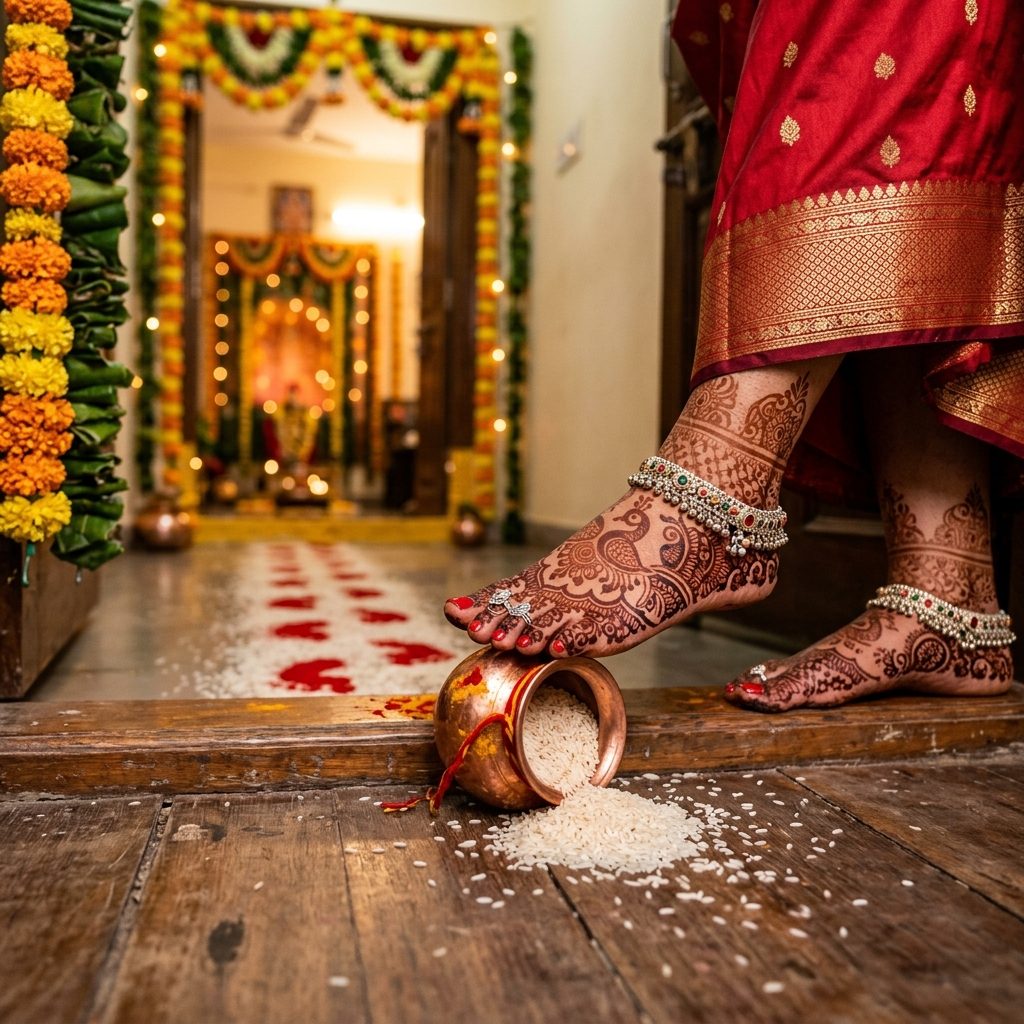
The journey of a Hindu wedding reaches its emotional and spiritual peak not just at the mandap, but at the threshold of the groom’s ancestral home. The Griha Pravesh, also known as the Vadhu Pravesh, is the formal welcoming of the newlywed bride into her new household. In Indian culture, a bride is not merely regarded as a new family member; she is welcomed as the living embodiment of Goddess Lakshmi, bringing prosperity, wisdom, and auspiciousness to the home she enters.
This transition is marked by ancient Vedic customs that ease her transition from a daughter to a daughter-in-law. While modern weddings have evolved, these post-wedding rituals remain deeply rooted in sentiment and tradition, creating an unforgettable bond between the bride and her new family.
The Symbolic Tipping of the Rice Kalash
As the bride arrives at the threshold of her new home, she is met with a copper or brass pot (kalash) filled to the brim with raw grain or rice, placed at the entrance. Before stepping inside, she must gently nudge the kalash with her right foot, spilling the rice inward. The right foot is associated with auspiciousness and positive energy (pingala nadi).
This symbolic act represents the overflowing wealth and sustenance she brings to the household. The spilling of rice signifies that the home will never run dry of food, joy, or resources. It is a moment of pure emotion, often accompanied by tears of joy and the sounding of traditional conch shells or local wedding songs.
Kanku Pagla: The Sacred Red Footprints
Following the tipping of the kalash, the bride steps into a brass tray filled with vermilion paste (alta or kanku) mixed with water or milk. She then walks slowly onto a white cloth laid across the floor, leaving bright red footprints behind her. In Gujarat, this is famously called Kanku Pagla, while in other regions, it is known as the Alta steps.
"A bride’s first steps into her matrimonial home are treated as a sacred imprint of divinity. These red footprints signify that Laxmi, the goddess of fortune, has permanently walked into the household to stay."
This cloth with the red footprints is often preserved as a cherished family heirloom, symbolizing the exact moment the family's destiny aligned with the bride's arrival.
Regional Customs and Playful Icebreakers
Across India, communities add their own unique cultural flavors to the Griha Pravesh. In Maharashtra, the groom must announce his wife’s new name in a poetic verse called an Ukhana before she enters. In Punjab, the bride’s mother-in-law performs a warm aarti and offers her sweet water (pani varna) to ward off the evil eye.
Once inside, families organize playful icebreaker games to help the bride feel comfortable. The most common game involves finding a gold ring hidden in a vessel filled with milk, rose petals, and vermilion. The one who finds the ring first is playfully said to rule the household, easing the tension and inviting laughter into the home.
Preparing for a Seamless Transition
To ensure this ritual goes smoothly amidst the exhaustion of the wedding day, the groom's family should prepare in advance. Here are a few essential tips:
- Prepare the entrance: Clear the pathway and lay down a clean white runner cloth beforehand for the footprints.
- Keep the ingredients ready: Ensure the kalash, fresh rice, alta paste, and aarti plate are arranged near the door before the couple arrives.
- Assign a coordinator: Designate a close relative to manage the arriving guests so the immediate family can focus on welcoming the couple.
- Plan the post-arrival meal: The bride's first meal should be sweet, often Kheer or Kansar, prepared by the family to sweeten her new journey.
Welcoming the bride is a beautiful culmination of the wedding celebrations. Managing the arrival of relatives and coordinating these rituals can get overwhelming after days of ceremonies. To keep your guest lists, arrival schedules, and post-wedding functions organized, use the Shubh Muhrat Guest Manager to effortlessly track everyone attending this sacred homecoming.