
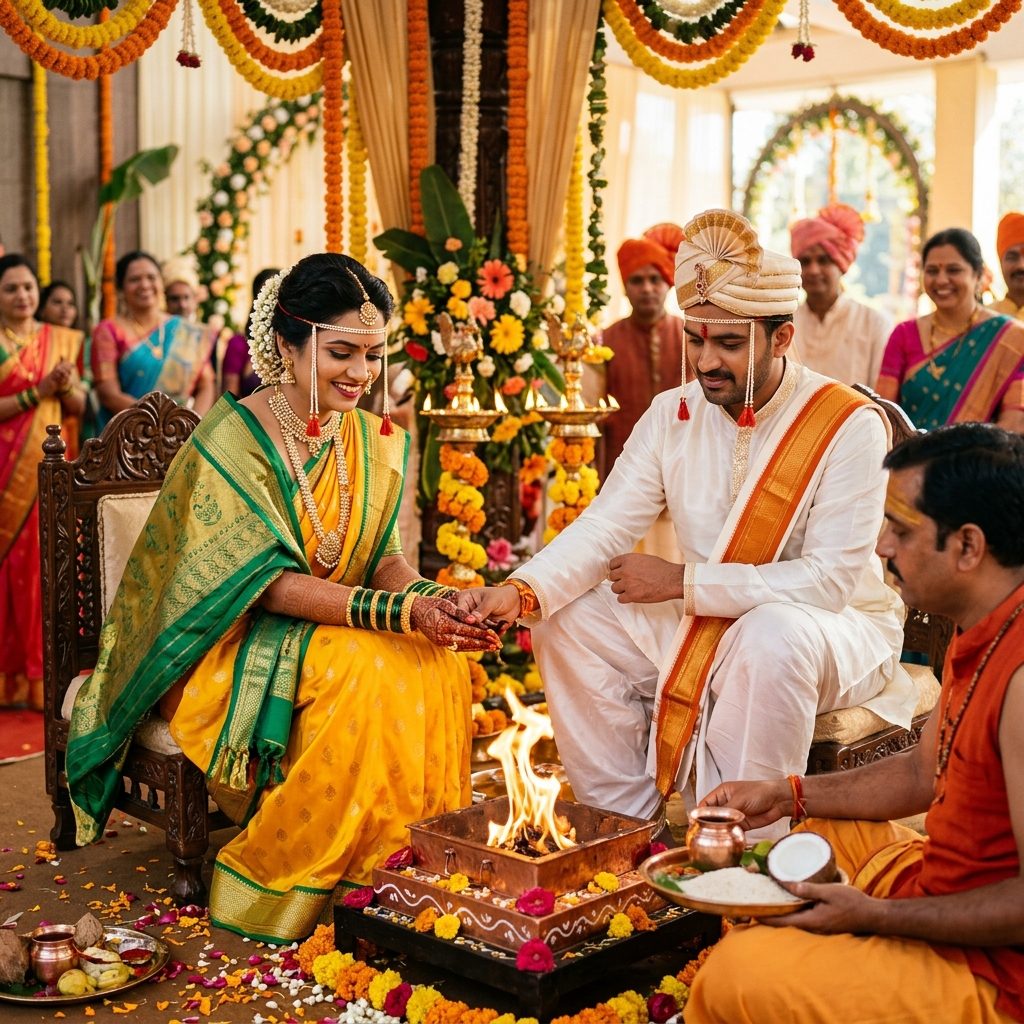
A Maharashtrian wedding, traditionally known as a Marathi Lagna, is celebrated for its graceful simplicity, spiritual warmth, and deep respect for Vedic customs. While modern celebrations have incorporated contemporary event management, the core rituals remain anchored in centuries-old traditions. Every ceremony, from the initial engagement to the joyous reception, holds distinct cultural and spiritual significance for both families.
Pre-Wedding Customs: Sakharpuda and Kelvan
The wedding journey begins with Sakharpuda, the official engagement ceremony. The groom's family presents the bride with a silk saree, traditional gold jewelry, and a decorative packet of sugar (sakhar), symbolizing the sweet beginning of their alliance. In return, the bride's family offers gifts and sweets to the groom. Sakharpuda formally seals the matrimonial agreement between both households.
In the days leading up to the main ceremony, both families host Kelvan—a series of warm hostings where close relatives invite the bride, groom, and their immediate families for lavish homemade feasts. Beyond delicious traditional food, Kelvan provides an intimate space for extended relatives to offer blessings and present personal gifts before the bustling wedding day arrives.
Sacred Wedding Rituals: Antarpat and Mangalashtak
On the morning of the wedding, the bride performs Gaurihar Puja in a quiet room, worshipping a small idol of Goddess Parvati for a prosperous married life. Meanwhile, the groom arrives at the wedding venue and is welcomed during Seeman Puja, where the bride's parents wash his feet and offer traditional hospitalities.
The main ceremony commences behind an Antarpat—a sacred silk screen held between the bride and groom so they cannot see each other before the auspicious moment. Family priests chant traditional Mangalashtak stanzas, invoking divine blessings. As the final stanza concludes, the Antarpat is lowered, and guests shower akshata (colored rice grains) on the couple while traditional sanai music fills the mandap.
The beauty of a Marathi wedding lies not in lavish displays, but in the sanctity of Vedic chants, the vibrant elegance of Paithani sarees, and the timeless warmth of family blessings.
Core Rituals and Welcoming the Bride
Following the Antarpat, the priest conducts the principal Vedic ceremonies that unite the bride and groom for life:
- Mundavalya: Both bride and groom wear strings of pearls or flowers tied across their foreheads, signifying their sacred status as bride and groom.
- Kanyadaan: The bride's parents formally entrust their daughter to the groom, asking him to respect and protect her throughout their shared journey.
- Saptapadi: The couple takes seven steps around the holy fire, taking sacred vows for devotion, health, prosperity, and lifelong companionship.
- Varat and Laxmi Pujan: The wedding concludes with Varat, the bridal procession to the groom's home. Upon arrival, the bride performs Laxmi Pujan, gently knocking over a small pot filled with rice at the threshold to signify prosperity entering the household.
Planning Your Marathi Wedding Seamlessly
Understanding the sacred order of these rituals ensures that families celebrate every function with joy and devotion. Coordinating events across Sakharpuda, Kelvan, and the main Lagna requires smooth communication with guests and vendors. If you are preparing invitations for your Maharashtrian ceremonies, discover Shubh Muhrat Invite Studio to craft traditional digital invites tailored for every function.