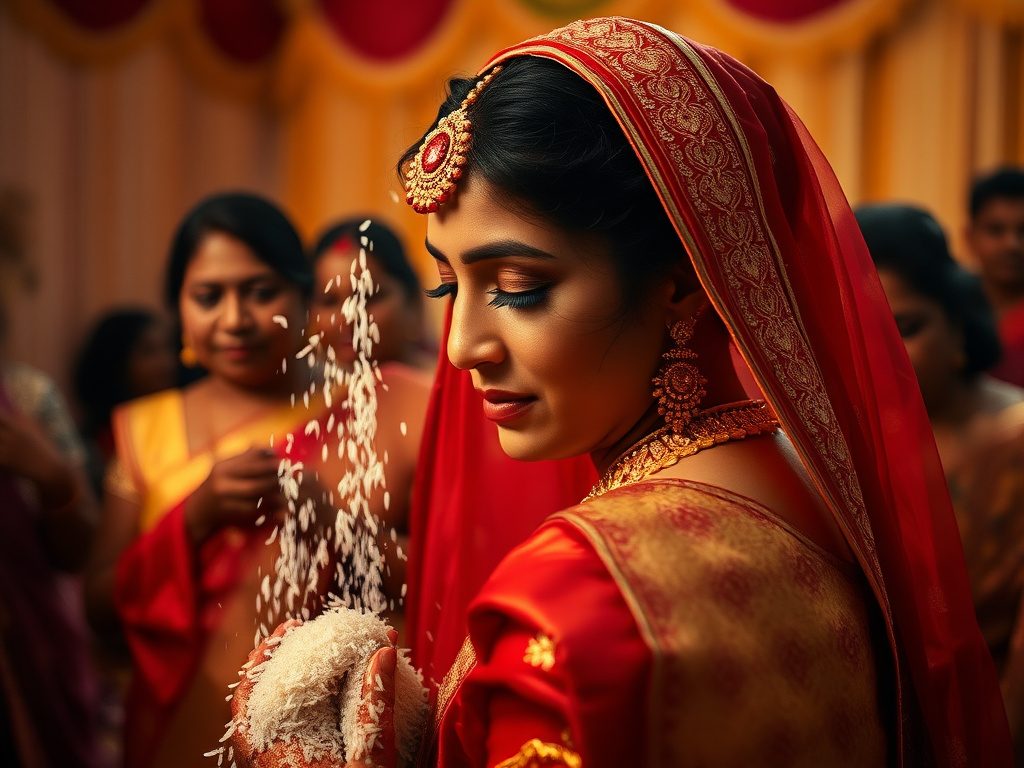
Among the myriad ceremonies that define a traditional Indian wedding, the Vidaai is arguably the most emotionally charged. Marking the formal departure of the bride from her parental home, this ritual is a poignant transition from daughter to wife and daughter-in-law. While the preceding ceremonies are filled with dynamic celebration, music, and laughter, the Vidaai is a quiet, reflective space where families acknowledge the bittersweet reality of a daughter embarking on a new chapter of her life.
The Symbolic Throwing of Rice
As the bride walks out of her parental home, she performs one of the most iconic rituals of the Vidaai: throwing handfuls of rice and coins backward over her shoulder. This gesture is deeply symbolic. In Indian culture, daughters are considered the embodiment of Goddess Lakshmi, bringing prosperity and abundance to their homes. By throwing rice back toward her parents, the bride symbolically repays her debt of upbringing and wishes that her parental home remains filled with wealth, happiness, and food security even in her absence. It is an act of gratitude and a quiet promise that her blessings will always remain with her family.
Regional Nuances of the Farewell
While the core emotion of the Vidaai remains constant across India, different communities infuse the ritual with unique cultural practices:
- North India: The bride throws puffed rice or raw rice over her head. She then steps into a decorated car or doli, with her brothers and father pushing the vehicle to symbolize sending her off on her journey.
- West Bengal: Known as Kanakanjali, the bride places a handful of rice in her mother's hands, declaring that she has repaid all her debts, a highly emotional moment of acknowledgement.
- Gujarat: Before stepping out, the bride and groom feed each other Kansar, a sweet mix of wheat flour, ghee, and sugar, ensuring that their new life begins on a sweet note.
- South India: In Tamil and Telugu weddings, the farewell is closely tied to the final blessings where the bride touches the feet of all elder relatives in a sequence, receiving gifts and wisdom.
"The Vidaai is not a severing of old ties, but the expansion of a family's love. It is a moment where tears of separation mingle with the joy of a new beginning."
Managing the Emotional Transition
For parents, letting go of a daughter they have nurtured is an incomparable emotional milestone. Modern Indian families approach Vidaai with a blend of tradition and contemporary understanding. While tears are natural and expected, many families now focus on celebrating the bride's independence and her choice to build a new life. Rituals like applying a tilak on the groom’s forehead during this time also reinforce the trust the bride's parents place in him to cherish and protect their daughter.
Planning these delicate moments requires careful coordination so that the family can focus entirely on the emotional presence of the day rather than logistical worries. To ensure all your close family members and friends are present to witness and support you through these moving moments, you can organize your guest list seamlessly using the Shubh Muhrat Guest Manager. By handling RSVPs and seating arrangements beforehand, you can dedicate your energy to the heartfelt hugs and blessings during the Vidaai.