
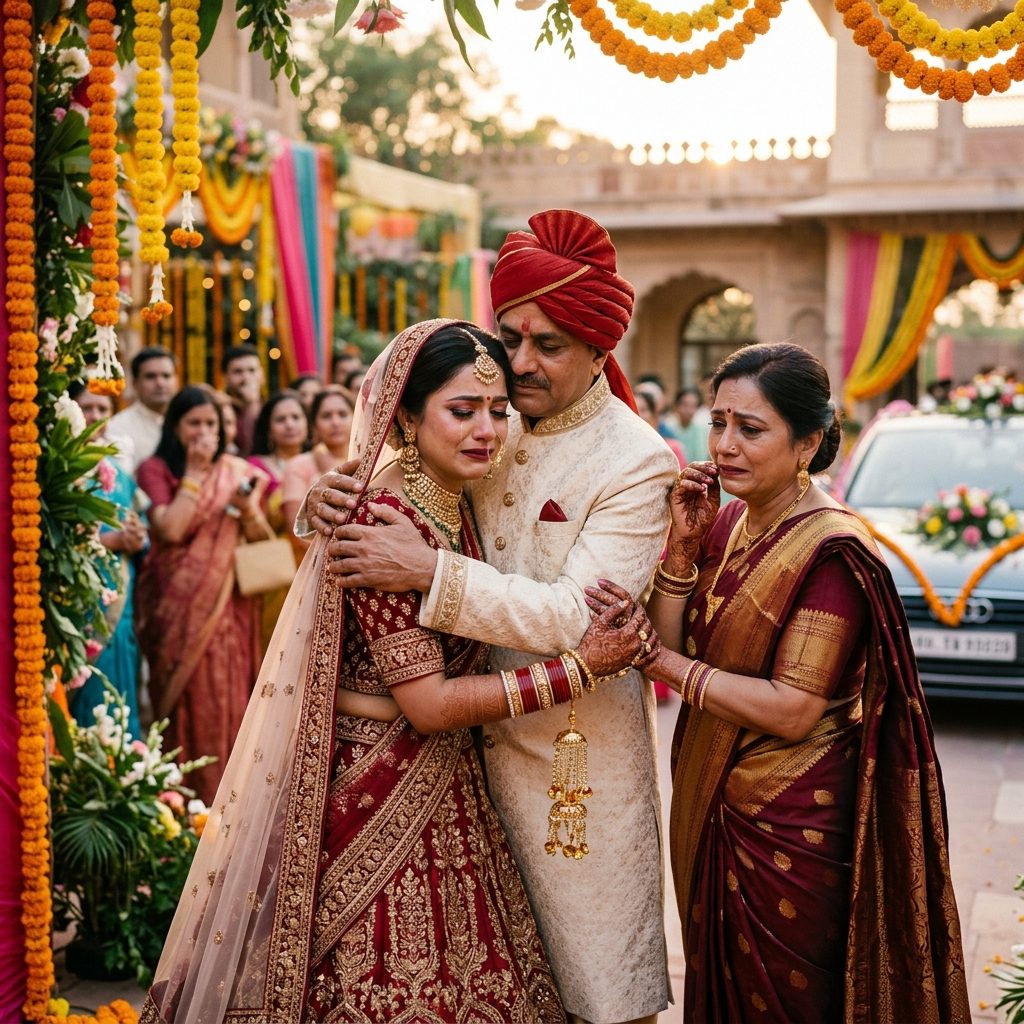
The Vidaai is perhaps the most emotionally charged moment of any Indian wedding. Marking the official departure of the bride from her parental home to start her new journey, this ritual is a beautiful blend of grief, gratitude, and hope. While it signifies a physical parting, it deeply reinforces the enduring bonds between a daughter and her family. Understanding the cultural depth of these rituals can help families embrace the emotional weight of the moment with grace.
The Sacred Rituals of the Sending-Off
The Vidaai consists of several deeply symbolic customs that vary across regions but share a core sentiment. In North Indian traditions, the bride throws handfuls of puffed rice or barley over her head back toward her parents. This ceremony, known as Laje, symbolizes her returning the debt of her upbringing and wishing prosperity upon her childhood home. In Bengali weddings, this is called Kanakanjali, where the bride offers rice to her mother, symbolizing the completion of her childhood duties.
In South Indian weddings, the farewell is often marked by the Kanyadaan, where the father formally places his daughter's hand in the groom's, followed by heartfelt blessings. As the bride walks toward her new life, her brothers and cousins often push the decorated vehicle, representing their support for her journey ahead. Each of these acts reinforces community solidarity and the family's blessing on the couple's new beginning.
Navigating the Emotional Transition
The emotional transition of Vidaai affects everyone, especially the parents and the bride. It is natural to feel a deep sense of loss alongside the joy of the union. Psychologically, acknowledging these feelings rather than suppressing them allows for a healthier transition. The groom also plays a vital role here, offering reassurance to his new in-laws that their daughter will be cherished and respected in her new home. Families can prepare by scheduling quiet, private moments together a day before the wedding, away from the hustle of guest management.
"The Vidaai is not the end of a daughter's relationship with her parental home, but the expansion of her world to encompass another family."
Practical Tips for a Graceful Vidaai
To ensure this poignant ritual proceeds smoothly without added stress, consider these practical steps:
- Designate a Ritual Coordinator: Assign a close relative to keep the necessary ritual items, like rice, coins, and the thali, ready in advance.
- Keep Tissues and Touch-up Kits Handy: Ensure the maid of honor or a sibling has waterproof makeup touch-ups and tissues ready for the bride and her mother.
- Coordinate the Exit Vehicle: Arrange for the decorated getaway car and the driver to be stationed at the exit at least thirty minutes before the scheduled Muhurat.
- Prepare the Groom's Family: Ensure the groom's side is ready to receive the bride with warmth, keeping the transition seamless and welcoming.
As you plan these deeply personal moments, managing the logistics of your guest list should not distract you from the emotions that matter. Using the Guest Manager tool by Shubh Muhrat helps you streamline RSVPs and seating arrangements, allowing you to focus entirely on cherishing these irreplaceable family milestones.