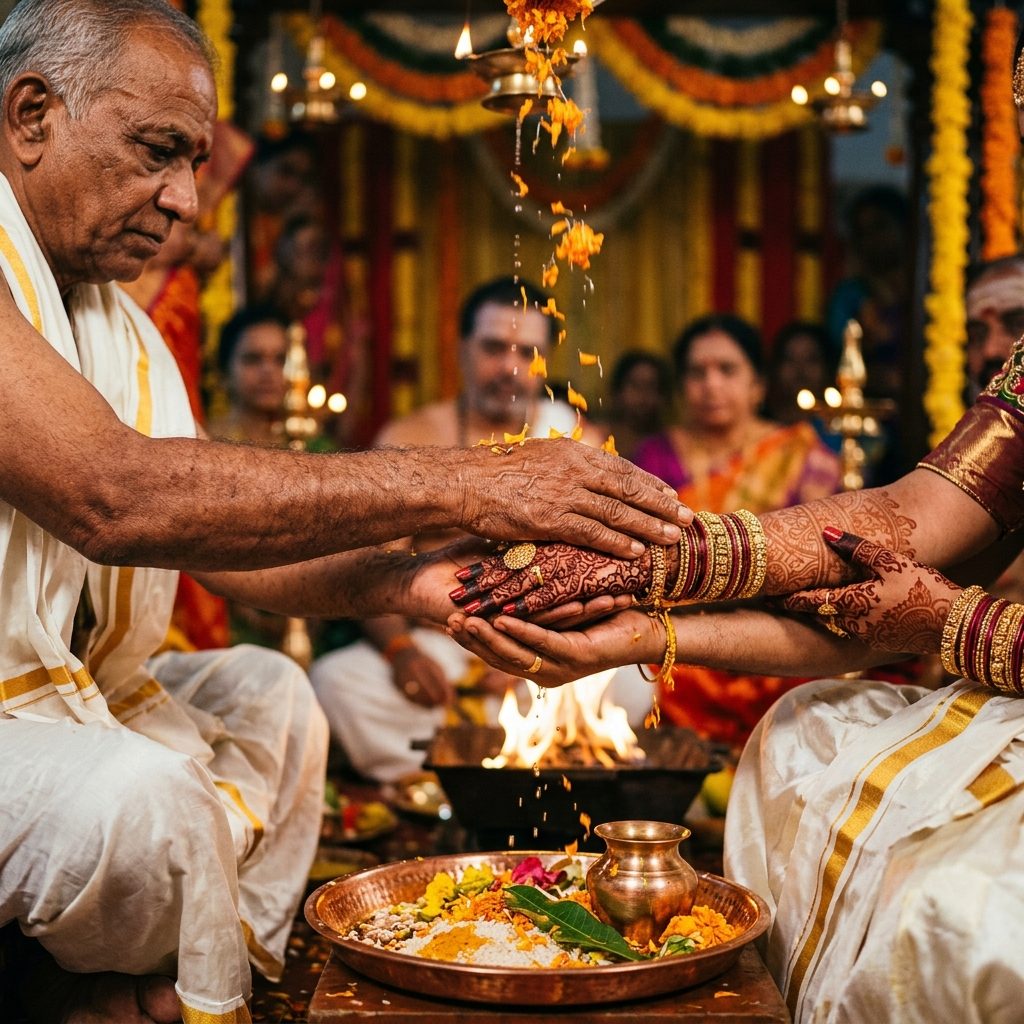
Few moments in a Hindu wedding are as emotionally charged and spiritually significant as the Kanyadaan. As the bride’s father places his daughter’s hand into the groom’s hands, accompanied by the chanting of sacred Vedic mantras, there is rarely a dry eye in the mandap. Translated literally from Sanskrit, Kanya means daughter, and Daan means donation or giving away. However, reducing this profound ritual to a simple transaction misses its deep spiritual essence. In Hindu philosophy, Kanyadaan is considered the highest form of offering a householder can make, bringing immense spiritual merit to the bride's parents.
The Spiritual Significance of the Ritual
At its core, Kanyadaan is not about treating a daughter as property; rather, it is about acknowledging her as the ultimate treasure of the household. By performing this ritual, the parents offer their most precious joy to another family to ensure the continuity of humanity and dharma. Historically, the ritual marks the transition of the bride’s lineage (gotra) from her father's family to her husband's family. It symbolizes the entrustment of the daughter’s well-being, happiness, and protection to her new partner in life. During the ritual, the groom is treated as a manifestation of Lord Vishnu, the preserver, while the bride is viewed as Goddess Lakshmi, making the union a divine event.
The act of Kanyadaan is the highest honor for a father, symbolizing the ultimate trust in his new son-in-law to cherish and protect his daughter.
The Ritual Steps and Symbolisms
The ceremony is rich with symbolic gestures that emphasize the gravity of the commitments being made. Every small act performed under the mandap has a historical and spiritual meaning that binds the couple together. Here are the key steps involved in a traditional ceremony:
- Hastamelap: The bride’s father places his daughter's right hand onto the groom's right hand. This physical locking of hands signifies union. It is often accompanied by placing a betel leaf, betel nut, and a coin on the palms.
- The Sacred Water Pouring: The bride's mother pours holy water or milk over the joined hands of the couple, letting it flow into a vessel beneath. Water represents purification, life-flow, and the sealing of a cosmic vow.
- The Three Promises: The father asks the groom to promise that he will not fail the bride in his pursuit of Dharma (duty), Artha (wealth), and Kama (desire). The groom responds three times with "Dharmecha Arthecha Kamecha Nati Charami," meaning he will never fail her in these aspects.
A Modern Perspective on a Sacred Bond
In contemporary Indian weddings, the perception of Kanyadaan has evolved. Modern couples and families view the ritual not as a transfer of ownership, but as a mutual merging of two families. Today, many parents choose to perform the ritual together, with both mother and father active in the process, reflecting shared parental responsibility. Some families also adapt the ceremony to focus more on the emotional aspect of welcoming a new son rather than giving away a daughter. Some couples choose to complement the ritual with customized vows that emphasize equality, partnership, and mutual respect, blending age-old tradition with modern values.
Preserving the sanctity of these rituals while stepping into a new phase of life requires careful preparation. If you are preparing for your big day and looking to align your future, start by checking astrological compatibility using the Shubh Muhrat Kundli Match tool to ensure your journey begins on the most auspicious note.