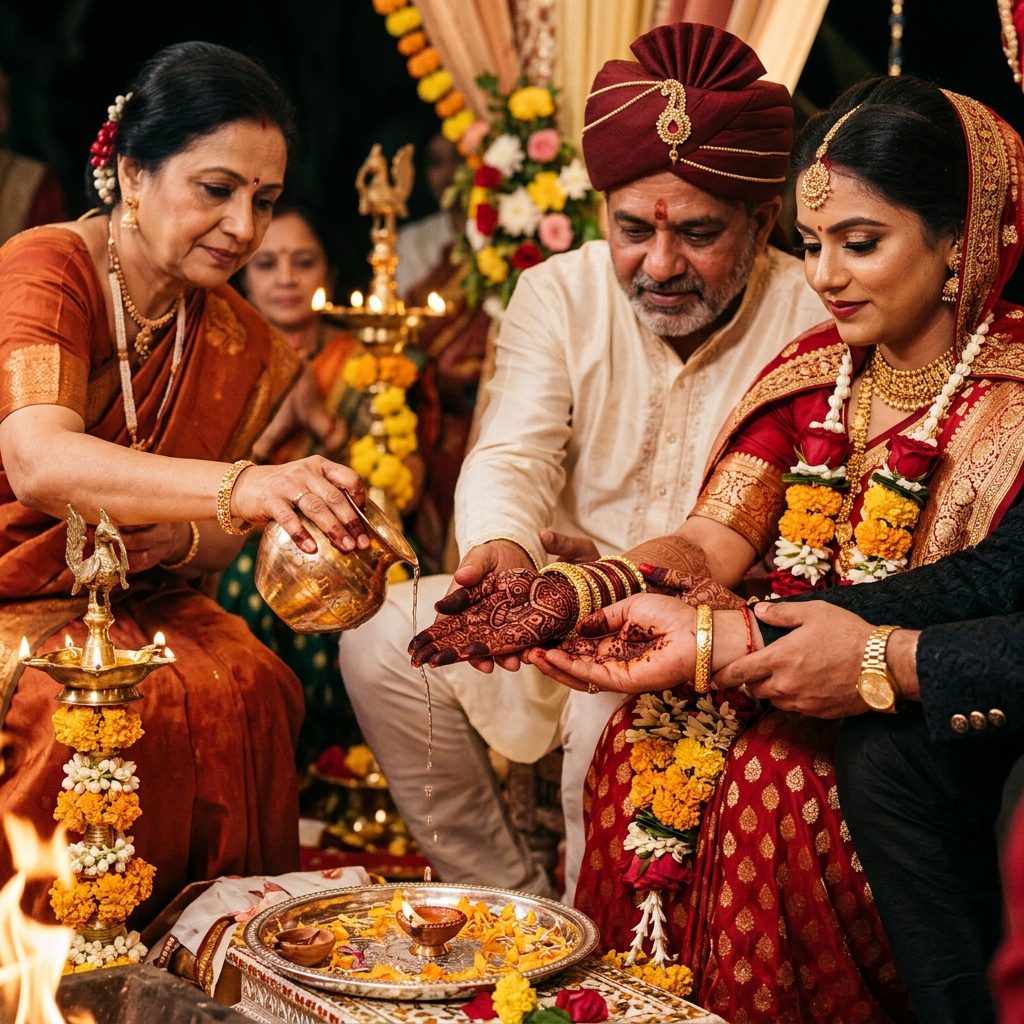
Among the many sacred rituals that define a traditional Hindu wedding, Kanyadaan stands out as one of the most emotionally charged and spiritually significant moments. Literally translating to the "gift of a maiden," this ritual symbolizes the transition of a daughter from her natal home to her husband’s family. While modern interpretations sometimes debate its terminology, the traditional essence of Kanyadaan is rooted in deep respect, parental love, and the ultimate act of trust between two families. It marks the emotional peak of the wedding ceremony, bringing tears to the eyes of parents and guests alike.
The Vedic Roots and Ritual Steps
The ritual of Kanyadaan is traditionally performed just before the Mangal Phere, the circumambulation of the holy fire. The bride’s parents place their daughter’s right hand into the groom’s right hand in a gesture known as Hastamelap. The mother of the bride then pours sacred water, often mixed with milk, gangajal, and flower petals, over their joined hands, which then flows into the groom's hands while the father recites Vedic hymns. During this ceremony, the priest chants Sanskrit mantras that invoke the deities to witness and bless this sacred union.
Historically, the ritual is considered the highest form of offering a householder can make, often referred to as Mahadaan. During this exchange, the groom makes a solemn promise to the father that he will never fail his wife in her pursuit of Dharma (righteousness), Artha (material prosperity), and Kama (love). The elements used in the ritual plate carry deep symbolic meanings:
- Kusha Grass: Represents purification, resilience, and the filtering of negative energies.
- Gold Coin: Symbolizes prosperity and the wealth of values being passed on to the new home.
- Akshata (Sacred Rice): Denotes abundance, fertility, and blessing for the couple's future together.
- Water: Symbolizes the flow of life, purification, and the washing away of past spiritual debts.
The Spiritual Significance of Mahadaan
In Hindu philosophy, a daughter is considered the embodiment of Goddess Lakshmi, the deity of wealth and prosperity. By performing Kanyadaan, the parents are not treating their daughter as a commodity to be given away, but rather offering their most precious joy to the groom, who is viewed at that moment as an incarnation of Lord Vishnu. It is considered an act of supreme detachment and spiritual duty, believed to bring immense spiritual merit to the bride's parents. The ritual honors the role of the householder and acknowledges the pain of separation while celebrating the growth of a new family tree.
"Kanyadaan is not the severance of a daughter's ties with her parental home, but rather the expansion of her universe, uniting two distinct lineages in an eternal bond of mutual respect and love."
Modern Perspectives on a Sacred Bond
In contemporary Indian weddings, the perception of Kanyadaan has beautifully evolved. Modern couples and families view it as a symbolic tradition of mutual respect rather than a literal transfer of guardianship. Many families now choose to involve both the mother and father equally in the ritual, emphasizing that the daughter remains a cherished part of her natal family for life. Some couples even practice a reciprocal ritual to celebrate the equality of both families. Ultimately, it remains a poignant reminder of the sacrifices parents make and the trust they place in the groom to cherish and protect their daughter.
As you prepare to embark on this beautiful journey of marriage and honor these timeless traditions, starting on the right foot is essential. Begin your wedding preparations by creating a beautifully structured profile with our Biodata Maker to find a partner who shares your respect for culture, family values, and sacred Indian rituals.