
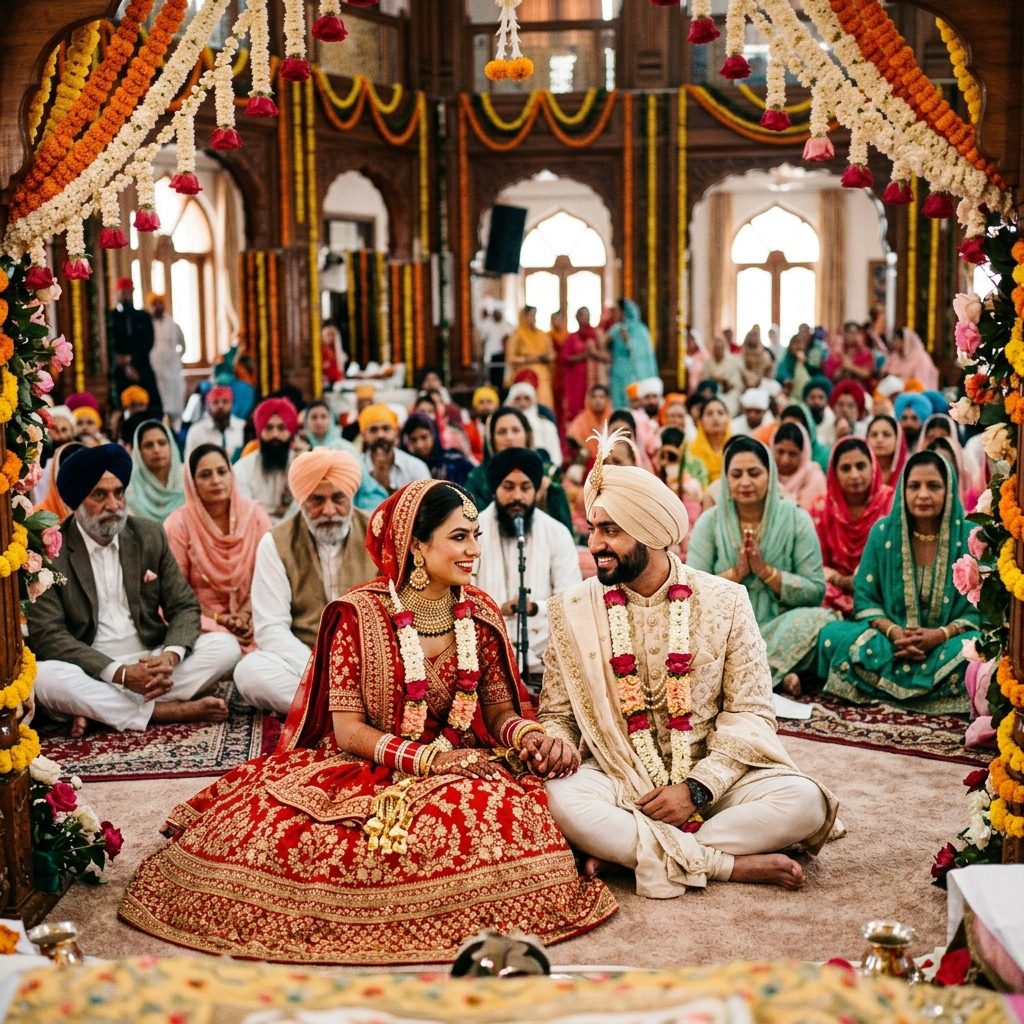
Most people think the Anand Karaj is the Punjabi wedding. It's actually the quiet bit. The real marathon of Punjabi wedding functions starts weeks earlier with the Roka and doesn't stop until the dhol finally dies at the reception - and somewhere in between, your grandmother will cry, an uncle will demand more whisky, and at least one bua will fight over the seating. If you're planning a Punjabi shaadi or marrying into a Punjabi family and quietly Googling "what happens at a Roka," this is your map.
Punjabi weddings run on three things: food, volume, and order. Skip a ritual and someone's mother will notice. So let's walk the whole sequence, from the first yes to the last dance.
What actually happens at a Roka and a Sagai?
Short answer: the Roka is the families saying "stop looking, this is the one." The word literally means "to stop." It's a small, mostly intimate function - the boy's family visits the girl's home (or vice versa), gifts and shagun are exchanged, and the couple is informally locked in. No big stage. Lots of barfi.
The Sagai (engagement) is the louder, ring-on-the-finger version - often a banquet hall, a few hundred guests, and the official announcement. In Punjabi Khatri and Arora families these can blur into one event; in many Jat Sikh families the Roka and Thaka (the formal commitment) carry more weight than the ring ceremony itself. Either way, this is when the wedding date gets fixed and the real spending begins.
This is also the smartest point to send your first formal save-the-date. A lot of couples now skip the printed card and build a digital one - you can put your story, the full function schedule, and a map into a single shareable link using a tool like our Invite Studio, then update it as dates shift (they always shift).
Why does a Punjabi wedding have so many pre-wedding functions?
Short answer: because joy in Punjab is a team sport. Once the date is set, the small functions stack up fast.
The Chunni Chadhana comes first - the groom's mother and female relatives drape a red or pink chunni over the bride, gift her jewellery, and welcome her into the family. Then the Sangeet, which is no longer just an evening of folk boliyan; it's now a full choreographed night with months of rehearsals, the bride's friends versus the groom's cousins, and a giddha circle that always outlasts the DJ.
Then comes the part nobody forgets: the Maiyan (Vatna) and Haldi. A turmeric, mustard oil, and gram-flour paste is rubbed on the bride and groom in their own homes. The catch - once your Maiyan starts, tradition says you shouldn't step out of the house until the wedding. Old aunties take this very seriously.
A Punjabi wedding is not a single day you attend - it's a week you survive, and somehow miss the moment it's over.
The night before the wedding, the bride's Mehndi is applied and her maternal uncle gifts the iconic Chooda - the set of red-and-white ivory bangles - along with the dangling kaleere. There's a sweet superstition here: the bride shakes her kaleere over unmarried friends' heads, and whoever a piece falls on is "next." Watch how fast the single cousins line up.
What's the difference between the Anand Karaj and a Hindu Punjabi wedding?
Short answer: the spiritual core is completely different, even if the parties look identical from outside.
For Sikh families, the wedding ceremony is the Anand Karaj - performed at a gurudwara in the morning, centred on four Laavan (hymns) sung from Guru Granth Sahib. The couple circles the holy book four times. No fire, no pheras, no priest matching horoscopes.
For Hindu Punjabi families, you'll see the classic pheras around the sacred fire, the kanyadaan, and the saat phere with vows. Here, matching the kundli still matters to many parents before the date is even fixed - and if that part of the process feels confusing, running a proper guna milan and kundli compatibility check first saves a lot of awkward last-minute astrologer debates about manglik dosha and rashi alignment. One honest take, though: I've watched families panic over a 22/36 guna score while ignoring whether the two people actually like each other. The horoscope is a tool, not a verdict.
Common to both - the Baraat with the groom on a ghodi, the dhol, the nagada, and the Milni, where matched male relatives from both sides greet each other with garlands and (good-natured) ego.
What happens after the wedding ceremony?
Short answer: the most emotional part of the whole week. After the ceremony comes the Vidaai - the bride throws phulian (puffed rice) over her shoulder as she leaves, a gesture of repaying her parents' home, and there is not a dry eye in the lawn. Then the groom's family welcomes her with the Griha Pravesh, where she gently kicks a pot of rice at the threshold to bring prosperity into her new home.
And finally, the Reception - the grand, polished evening hosted by the groom's side, where everyone arrives dressed to compete, the couple sits on a flower-soaked stage, and the food count crosses fifteen dishes. It's the formal "we're done" - except for the post-wedding lunches and the inevitable cousin sangeet leftovers.
How do you keep all these Punjabi wedding functions organised?
Short answer: a clear schedule, early, shared with everyone. Here's what genuinely helps:
- Lock the date at the Roka, not after. Punjabi guest lists balloon - the earlier the date, the better your venue and pandit availability.
- Make one master function timeline (Roka, Sagai, Chunni, Sangeet, Maiyan, Mehndi, Chooda, Anand Karaj/Pheras, Reception) and share it as a single link, not ten WhatsApp forwards.
- Brief the dhol and halwai a week ahead - both are make-or-break and both get triple-booked in shaadi season.
- Keep separate outfits ready per function - Maiyan ruins clothes, so wear old yellow; save the heavy work for the ceremony and reception.
- Assign a "shagun person" on each side to track gifts and envelopes - nobody remembers who gave what at 1 a.m.
- For inter-community matches, agree early on whose rituals lead which function, so the day itself stays calm.
If you're still at the very start - the looking, the introductions, the first nervous message - finding someone whose family and values actually align with yours makes every one of these functions lighter; that's worth more thought than the menu. You can begin that quietly by exploring compatible profiles and matches before any of the dhol-and-shagun chaos kicks in.
Whether it's a four-Laavan morning at the gurudwara or a fire-lit phere at home, the magic of Punjabi wedding functions isn't in any single ritual - it's in the chaos of a family loving loudly for a week straight. Learn the order, respect the small customs, keep your schedule shared, and let yourself enjoy it. The week goes faster than anyone warns you. Soak it up - and start your own planning, one function at a time.