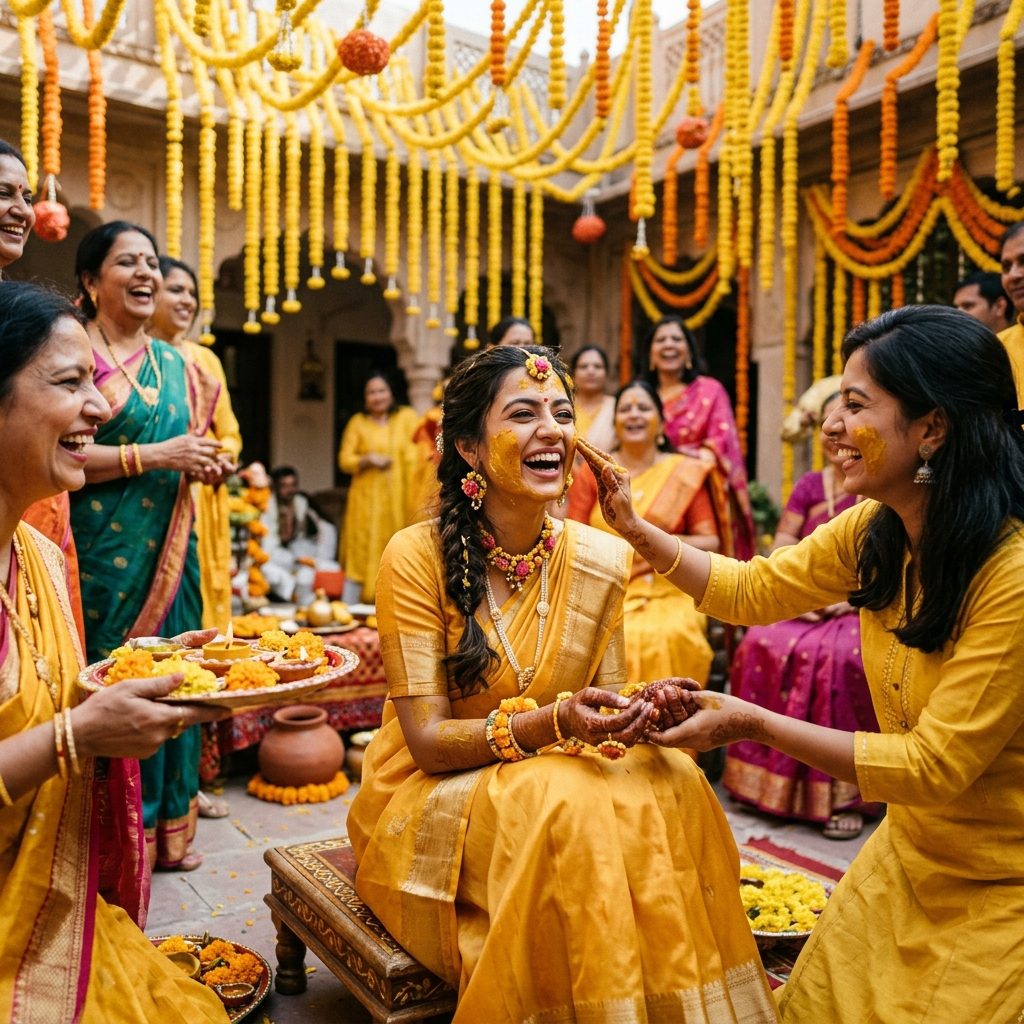
Before the grand decorum of the wedding mandap and the solemn chanting of Vedic mantras, Indian weddings kick off with vibrant, emotion-filled pre-wedding rituals. Among these, few ceremonies match the exuberance, color, and fragrance of the Haldi ceremony. Known variously as Ubtan, Pithi, Tel Baan, or Gaye Holud depending on the region, this bright yellow ritual is far more than a fun photography backdrop—it is an ancient ceremony deeply rooted in Ayurveda, spiritual cleansing, and familial love.
Purification and Spiritual Protection Against Evil Eyes
In traditional Indian culture, turmeric is revered as one of the most sacred spices. It represents divine prosperity, fertility, and new beginnings. During the ceremony, elders and loved ones gather around the bride and groom to lovingly apply a smooth paste crafted from turmeric, sandalwood, rose water, and aromatic oils onto their hands, feet, and face.
Beyond the joy and teasing that usually accompanies the ritual, haldi carries deep spiritual significance. It is believed to cleanse the couple's aura and mind before stepping into marital life. Traditionally, once the haldi paste is applied, the bride and groom are advised not to leave their homes until the wedding day to shield them from Nazar (evil eye) and negative cosmic energies. The radiant yellow color symbolizes the life-giving warmth of the sun, blessing the couple with joy and luck.
The Ayurvedic Science Behind the Golden Glow
Long before modern beauty parlors and bridal facials existed, ancient Indian rishis designed the Haldi ritual as an effective, natural skincare treatment. Turmeric contains active curcumin, a renowned antioxidant and anti-inflammatory compound that revitalizes the skin naturally.
- Natural Antiseptic Shield: Turmeric kills skin bacteria, preventing unexpected acne breakouts or blemishes right before the wedding day.
- Exfoliating Scrub: Combined with chickpea flour (besan) and mustard or coconut oil, the ubtan gently removes dead cells and leaves a radiant glow.
- Stress Relief and Relaxation: The soothing scents of sandalwood and rose water act as aromatherapy, calming pre-wedding nerves and soothing muscular tension.
The Haldi ceremony is where sacred Vedic tradition meets pure family joy—turmeric leaves a golden radiance on the skin and timeless memories in the heart.
Regional Expressions of the Haldi Ritual
While the core sentiment remains uniform across India, diverse regions celebrate this sun-kissed ritual with unique customs:
- Gaye Holud in Bengal: Turmeric paste applied to the groom is sent to the bride's house along with a decorated fresh carp dressed as a bride, symbolizing abundance.
- Tel Baan in North India: Relatives use bundle grass (durva) dipped in mustard oil and turmeric to symbolically touch the knees, shoulders, and head seven times.
- Pithi in Gujarat and Rajasthan: Intricate folk songs are sung by women while applying freshly pounded ubtan paste to prepare the groom and bride for the sacred pheres.
- Roce in Goa and Mangalore: Goan and Mangalorean Christian communities apply pure coconut milk and turmeric to bless the couple before their church wedding.
Planning a Joyful Haldi Event
Modern couples are reinventing the Haldi function into colorful pool parties, flower petal showers (Phoolon ki Haldi), and coordinated marigold aesthetics. Because Haldi is usually a closer, more intimate function than the reception, managing guest lists and sub-events requires careful planning.
To coordinate sub-event RSVPs seamlessly across your inner circle and extended family, use Shubh Muhrat's Guest Manager tool to keep every event organized, stress-free, and delightful.