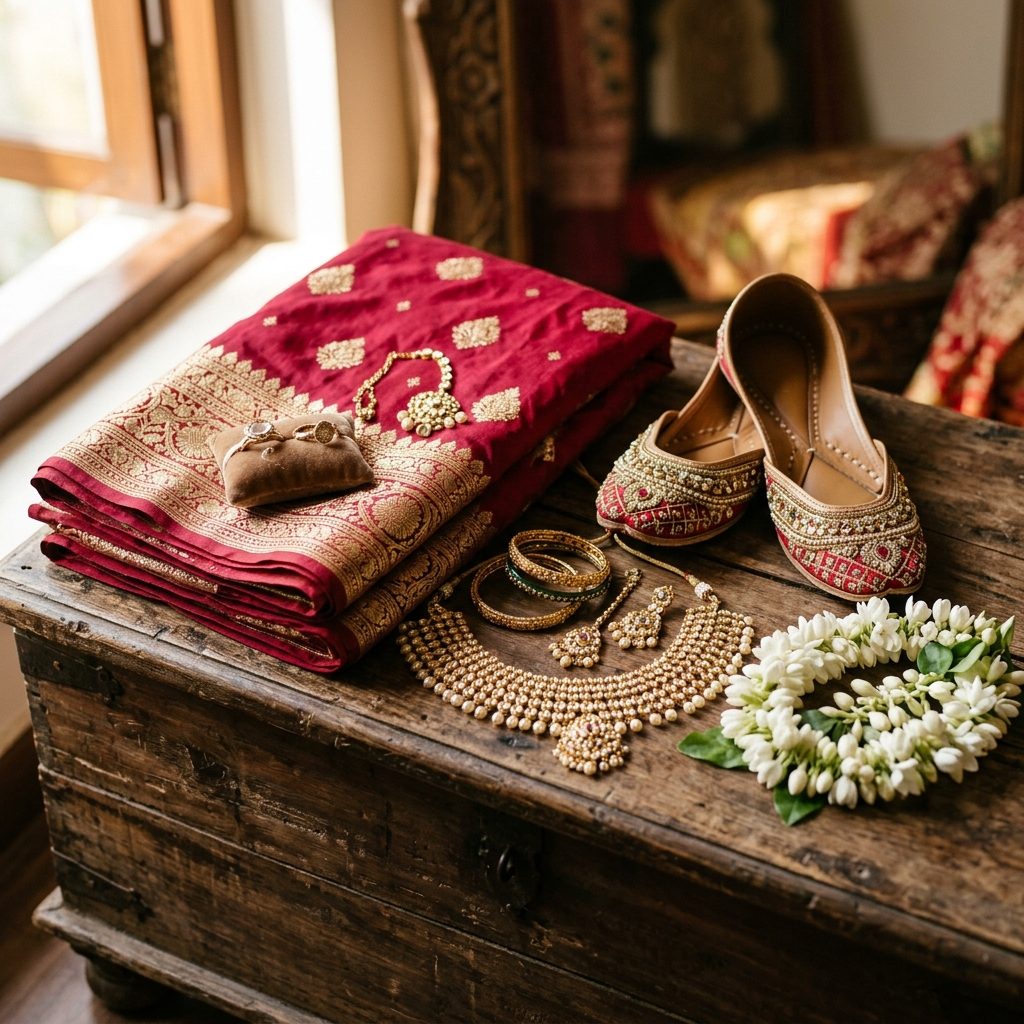
A wedding trousseau, traditionally known across various Indian communities as Daaj, Stri-dhan, or Saman, is far more than a collection of new clothes. It is a carefully curated treasury of family heritage, regional craftsmanship, and personal style meant to ease a bride's transition into her new home. Historically, it represented a woman's financial security and emotional anchor. Today, a well-planned trousseau respects these time-honored rituals while serving your contemporary, fast-paced lifestyle.
Understanding Regional Heritage Weaves
Every Indian community has its signature trousseau heirloom that carries the blessings of ancestors. For a North Indian bride, it is often a heavy Banarasi silk sari or a hand-embroidered Phulkari dupatta passed down through generations. Down South, Kanjeevaram silk saris with real gold zari borders form the cornerstone of the bridal collection, while Gujarati brides cherish their Patola weaves. Incorporating these heirlooms connects you to your roots during auspicious rituals. When selecting these heritage pieces, ensure they are stored in breathable cotton or muslin bags rather than plastic, which helps prevent the delicate metallic zari from oxidizing and turning black over time.
The Essential Wardrobe Checklist
While heavy silks dominate traditional functions, your modern trousseau must strike a balance between grand festive wear and practical, elegant clothing for post-wedding dinners and daily life. You do not want a wardrobe full of clothes you can only wear once. Consider these core categories when packing your trunks:
- Versatile Indo-Western Outfits: Cape sets, pre-draped saris, and long tunics that transition easily from family pujas to formal dinners.
- The Heritage Classics: At least three high-quality handloom saris (like a Paithani, Patola, or Chanderi) for formal post-wedding invites and festivals.
- Statement Dupattas: A couple of versatile Bandhani, Gota Patti, or Chikankari dupattas that can instantly elevate simpler, comfortable kurtas.
- Functional Daily Wear: Breathable cotton-silk sets, modal kurtis, and comfortable linen wear for relaxing at home with family.
A wedding trousseau is not just a wardrobe for the first few months of marriage; it is a physical manifestation of love, blessings, and memories that you carry forward into your new household.
Practical Storage and Organization
Organizing a trousseau requires meticulous planning to avoid last-minute chaos before vital post-wedding rituals like the Grah Pravesh, Pag Phera, or your first kitchen feasts. Start packing at least a month before the wedding dates, using cedar balls, neem leaves, or lavender sachets to protect the premium fabrics from moisture and pests. Label your garment bags clearly and pack a separate, accessible overnight bag so you can easily locate specific ensembles and matching jewelry without unfolding your entire wardrobe on your first day.
As you prepare for this beautiful new chapter, organizing key details early makes all the difference in reducing stress. Whether you are planning your outfits or finding the right partner to share these traditions with, structured preparation is essential. If you are starting your matchmaking journey, you can create an elegant, comprehensive profile using the Shubh Muhrat Biodata Maker to share your family background and expectations beautifully with prospective families.