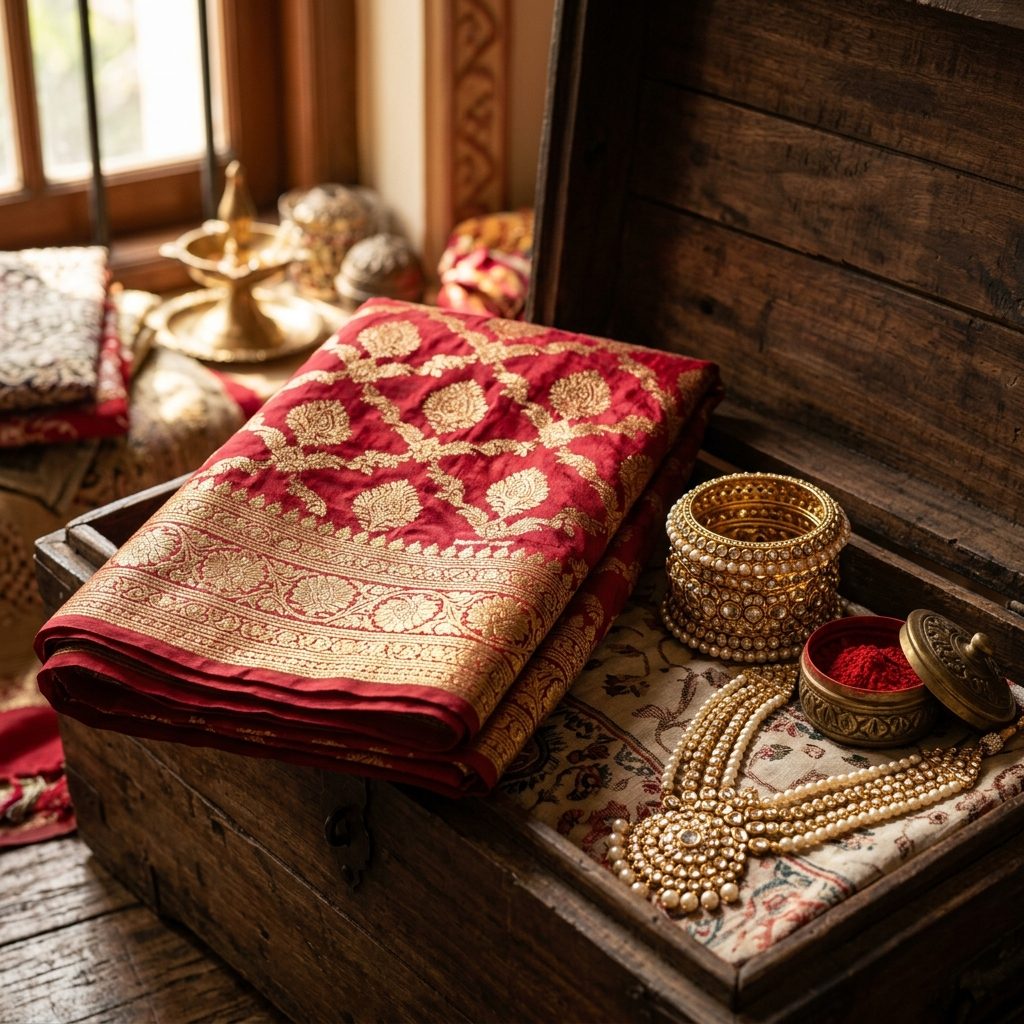
The Indian bridal trousseau, traditionally known as the shringar pitara or daaj, is far more than just a collection of new clothes and accessories. It is a curated treasure chest representing a bride's transition into a new phase of life, carrying the warmth of her parental home and the blessings of her elders. While times have changed, the essence of building a meaningful trousseau remains deeply rooted in Indian wedding traditions.
The Heritage of Handlooms and Heirlooms
A thoughtful trousseau honors regional heritage by incorporating timeless handloom weaves. Historically, mothers and grandmothers would spend years collecting exquisite textiles for the bride. Today, this tradition translates into investing in classic pieces that never go out of style. Whether it is a regal crimson Banarasi silk, a heavy gold-bordered Kanjeevaram, a vibrant Patola, or a delicate Lucknowi Chikankari suit, these handlooms form the core of your wardrobe. They are not merely garments but wearable heritage that can be passed down to future generations.
Beyond the fabrics, the trousseau also carries regional wedding rituals. For instance, in Bengali households, the Gaye Holud gifts include specific cotton sarees, while Kashmiri brides ensure an embroidered pheran is part of the collection. Selecting these pieces is an intimate bonding experience between the bride and her mother, filled with stories of how older generations styled their wedding finery.
The Modern Trousseau Checklist
Unlike the past, where brides packed dozens of heavy, rarely-worn outfits, the modern approach focuses on utility, versatility, and comfort. Your checklist should balance traditional wear with contemporary silhouettes suitable for post-wedding dinners, family pujas, and casual outings.
- Six Yards of Elegance: At least three high-quality handloom sarees in contrasting color palettes.
- Fusion Wear: Pre-draped sarees, capes, and anarkalis that offer maximum style with minimal effort.
- The Puja Wardrobe: A few elegant, breathable cotton-silk or raw silk kurta sets for morning rituals and home ceremonies.
- Essential Accessories: Classic gold or polki jewelry, embellished potli bags, comfortable juttis, and versatile metallic heels.
A bridal trousseau is not just a collection of new clothes; it is a bridge of memories, woven with the blessings of the past and the dreams of a new beginning.
Preservation and Care
High-value silk sarees and heavily embroidered lehengas require special care to last for decades. Traditional wisdom suggests wrapping silk sarees in soft, unbleached mulmul cotton cloth to let the fabric breathe. Avoid using plastic covers, as they trap moisture and can ruin real zari work over time. It is also wise to periodically air out your rich silks in mild sunlight, keeping them away from direct perfume sprays and damp environments.
Additionally, remember to refold your zari sarees every few months to prevent the metal threads from breaking along the creases. By treating these garments with care, you preserve the craftsmanship of Indian artisans and keep the memories of your wedding events alive for years to come.
Step Into Your New Journey Seamlessly
Building your dream wardrobe takes time, much like choosing the right partner to share your life and traditions with. If you are preparing to take the first step towards a traditional Indian wedding, curate your presentation beautifully. Use the Shubh Muhrat Biodata Maker to create an elegant, culturally rich matrimonial profile that reflects your values, heritage, and modern outlook.