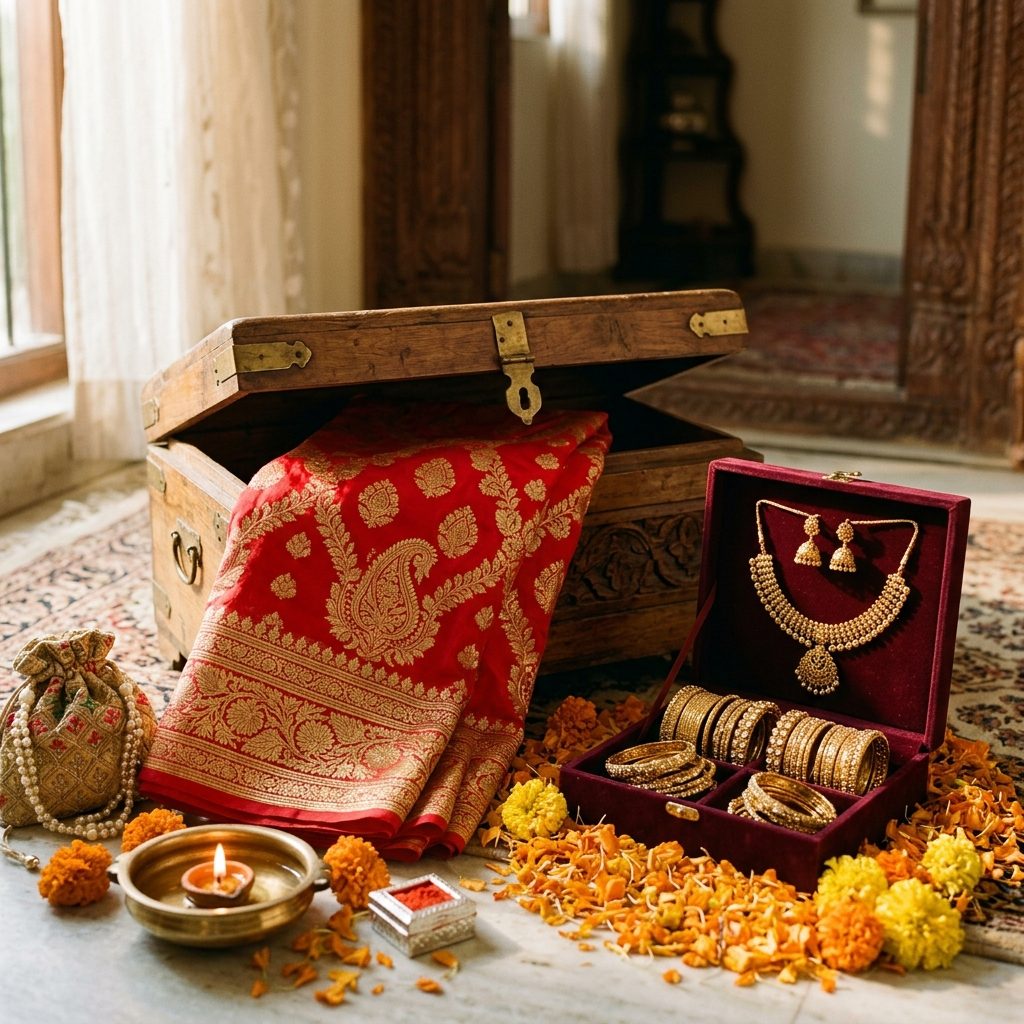
The Indian wedding trousseau, traditionally known as the Paat or Dahej in various communities, has evolved from a mandatory dowry system into a beautiful celebration of a bride's personal style and heritage. Today, building a trousseau is about curating a collection of garments, jewelry, and essentials that reflect both your cultural roots and your modern lifestyle. It is a thoughtful blend of heirloom pieces inherited from mothers and grandmothers, alongside practical, everyday wear that you will actually use after the wedding festivities wind down.
The Heritage Heirlooms: Six Yards of Tradition
No Indian bridal trousseau is complete without the timeless elegance of handloom sarees. Depending on your regional heritage, prioritize investing in at least three to four classic weaves. A Banarasi silk saree with intricate zari work, a vibrant Kanjeevaram from the south, or a delicate Chikankari georgette from Lucknow are absolute essentials. These pieces transcend seasonal trends and can be passed down through generations. When selecting these heirlooms, focus on classic colors like crimson, mustard, emerald green, and royal blue, which remain evergreen for festive occasions and family pujas.
Contemporary Wardrobe Staples
While heavy silks and embroideries are traditional, the modern bride needs a wardrobe that transitions smoothly into everyday life. Budget for versatile fusion wear, such as pre-draped sarees, silk trousers with long capes, and elegant Anarkali suits. These outfits are perfect for post-wedding dinners, formal family gatherings, and festive celebrations where you want to look put-together without the weight of a heavy lehenga. Opt for breathable fabrics like chanderi, raw silk, and modal satin that offer comfort during long hours of socializing.
A bride's trousseau is not just a collection of new clothes; it is a beautiful bridge between her roots and her new beginnings, carrying family stories in every single thread.
Organizing and Preserving Your Trousseau
Packing and preserving these expensive garments is just as important as buying them. Heavy zardosi work can tarnish if exposed to moisture, and delicate silks can tear if folded incorrectly. Invest in high-quality cotton saree bags, muslin wraps, and padded hangers to protect your investments. Avoid using plastic covers, as they trap moisture and can ruin real silver or gold zari. Keep small packets of silica gel inside your trunk or wardrobe to absorb accidental humidity, and always store your heavy outfits inside out to prevent the embroidery from snagging.
Essential Trousseau Checklist for the Modern Bride
To ensure you do not miss out on the essentials, keep this quick checklist in mind while assembling your bridal trunks:
- Occasion Wear: At least three heavy handloom sarees and two lightweight fusion silhouettes.
- Jewelry Organizers: Velvet-lined boxes for gold, polki, and precious gemstone jewelry to prevent scratching.
- Footwear: A mix of comfortable embellished juttis, block heels, and daily-wear flats.
- Tailoring Kit: Safety pins, double-sided tape, fabric glue, and a mini sewing kit for emergency fixes.
Planning a wedding involves managing hundreds of small details, from curating your dream wardrobe to inviting your loved ones. As you assemble your perfect trousseau, simplify your wedding planning by designing stunning, culturally rich digital invitations with the Shubh Muhrat Invite Studio, keeping your preparations seamless and elegant.