
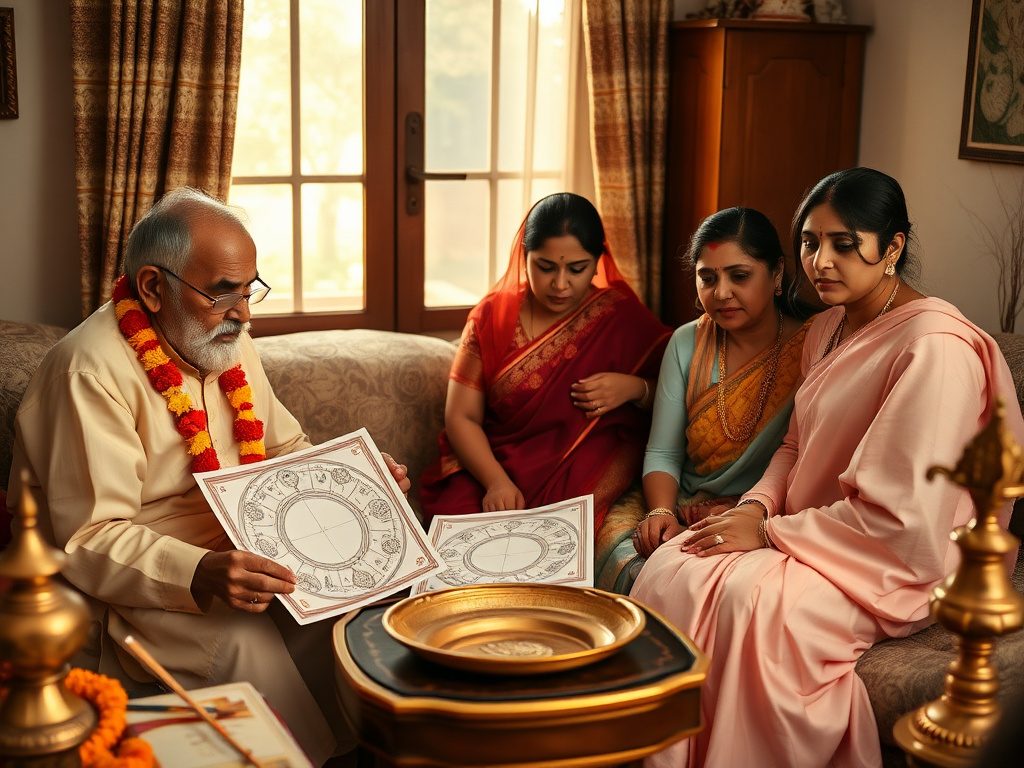
Two people can share the same Rashi and still be a terrible fit. Two people with "opposing" Nakshatras can build a forty-year marriage. The truth about Rashi and Nakshatra in compatibility is messier and far more interesting than the score sheet your family pandit hands over. Your Rashi is your Moon sign - where the Moon sat at your birth. Your Nakshatra is the specific lunar mansion inside it, one of 27. Together they shape temperament, emotional rhythm, and how you handle a fight at 11pm. That is what guna milan is really trying to read.
So what is the difference between Rashi and Nakshatra anyway?
Short answer: Rashi is the wide brushstroke, Nakshatra is the fine detail. The zodiac belt is divided into 12 Rashis of 30 degrees each. But astrologers in India have always trusted a finer map - the same belt split into 27 Nakshatras of about 13 degrees each. So one Rashi holds roughly two and a quarter Nakshatras.
Why does the detail matter? Because two people can both be Vrishabha (Taurus) Rashi yet belong to Krittika, Rohini, or Mrigashira Nakshatra - and those three personalities barely resemble each other. Rohini is sensual and home-loving. Krittika is sharp, blunt, almost surgical. A bride and groom matched on Rashi alone might still clash hard, which is exactly why the Ashtakoota system leans so heavily on Nakshatra-level data.
How much does Rashi and Nakshatra actually decide compatibility?
Short answer: a lot of the emotional 36, but not your whole future. The classic guna milan score out of 36 points is built almost entirely from Nakshatra and Rashi positions of the two Moons. Of the eight kootas, the heavyweight is Nadi (8 points, linked to health and lineage), followed by Bhakoot (7 points, the Rashi-to-Rashi relationship) and Gana (6 points, temperament drawn from your Nakshatra).
Here is the honest part most families skip: a high number measures emotional and physiological harmony between two Moons. It does not measure whether he respects your career, whether her parents will let her breathe, or whether you both want kids. A 32/36 with a controlling in-law setup is a worse bet than a 22/36 between two kind, communicative adults. If you want the real arithmetic rather than a rumour from a relative, run both birth charts through our Kundli Match and guna milan tool and read what each koota is actually flagging.
A Guna Milan score tells you how two Moons get along. It says nothing about whether two families will.
Why do astrologers panic about Nadi and Bhakoot dosha?
Because these two carry the most weight - and the most fear. Nadi dosha happens when bride and groom share the same Nadi (Aadi, Madhya, or Antya), the three categories your Nakshatra falls into. Traditional belief ties same-Nadi matches to health and progeny concerns, which is why it costs all 8 points when it strikes. Bhakoot dosha comes from certain Rashi distances - the 6-8 (Shadashtak) or 2-12 (Dwirdwadash) positions - and is read as friction in finance, health, or harmony.
But context cancels chaos. Both doshas have well-known exceptions: same Rashi but different Nakshatra, same Nakshatra but different pada, or shared lords can dissolve a Bhakoot or Nadi flag. A Tamil Iyer family and a Marwari family may weigh these doshas very differently - one obsesses over Nadi, the other waves it off if the Rashi lords are friendly. So before anyone cancels a good match over a single word, get a second reading.
Is Manglik dosha as scary as everyone makes it sound?
Short answer: usually no. Manglik (or Mangal) dosha - Mars in the 1st, 4th, 7th, 8th, or 12th house - gets blamed for everything from delayed marriage to bad tempers. Reality check: a huge slice of the population is technically Manglik, and most marry perfectly happily. When both partners are Manglik, the dosha is widely considered cancelled. Mars in certain signs, or aspects from benefics like Jupiter, soften it too.
The trap is treating one Sanskrit label as a verdict. A genuine astrologer reads the whole chart - Rashi, Nakshatra, house lords, dasha periods - not a single red box. Use the analysis as a conversation starter with your family, not a wall to slam the door on someone you actually like.
- Get the birth time right to the minute. Nakshatra and pada shift fast; a 20-minute error can flip your entire match reading.
- Read the kootas, not just the total. Ask which points were lost - a low Maitri (mental harmony) matters more day-to-day than a perfect Varna.
- Treat doshas as flags, not full stops. Always ask about cancellation rules for Nadi, Bhakoot, and Manglik before reacting.
- Cross-check temperament against real life. If Gana says "clashing" but you've talked for months without a single ugly fight, trust the lived evidence too.
- Honour your community's norms. Reddy, Nair, Bengali, and Khatri families read the same chart with different priorities - know which doshas yours takes seriously.
Should compatibility start with the kundli or the conversation?
Short answer: ideally, both at once. The smartest families I've watched do not pick a person off a score sheet, nor do they ignore the chart entirely. They shortlist humans they could actually live with, then check the kundli to understand the texture of the bond - where they'll click, where they'll need patience. That is the sane order. Find people whose values, goals, and lifestyle line up first; you can start that on our Smart Match profiles where you filter by community, education, and intent before a single astrology question comes up. And when you put your own profile out there, a clear, well-formatted marriage biodata - with your Rashi, Nakshatra, and a real photo - saves everyone a dozen awkward back-and-forth calls.
Here's where I'll plant my flag: the biggest mistake families make is letting a Guna Milan number override a gut feeling. The score is a fantastic map of two emotional landscapes. It is not a guarantee, and it never was meant to be. A great Rashi and Nakshatra compatibility reading should make you ask better questions on the next call - not stop you from making it. So learn what your kundli is whispering, weigh it against how this person treats you on an ordinary Tuesday, and then decide like the thoughtful adult you are. Run the chart, have the conversation, and trust yourself with both.