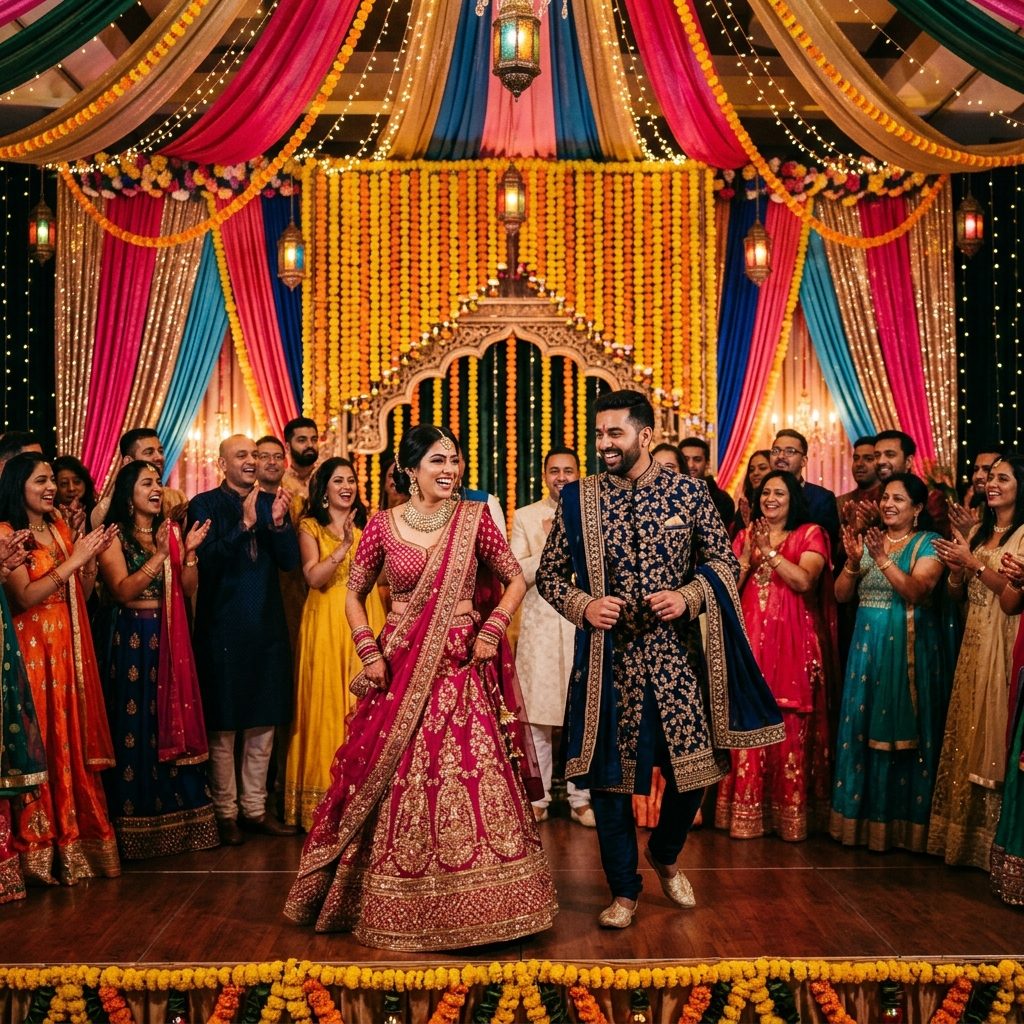
The Sangeet ceremony holds a unique and irreplaceable place in Indian weddings. What historically began as an intimate gathering where female relatives gathered to sing traditional folk songs to the rhythmic beat of a dholak has evolved into the definitive entertainment centerpiece of modern Indian wedding festivities. It is the one evening where formal wedding protocols step aside, spontaneous laughter takes center stage, and two families authentically bond through music, storytelling, and dance.
1. Curating an Inclusive Musical Flow Across Generations
An unforgettable Sangeet balances deep cultural nostalgia with contemporary energy. To keep every guest from grandparents to toddlers thoroughly engaged, structure your musical programming thoughtfully. Begin the early evening with soulful traditional songs—such as Punjabi tappe, Rajasthani maand, or classic regional wedding folk—giving elders a cherished platform to share blessings and set a warm, sacred tone for the celebration.
As the evening transitions, move into curated family medleys, friendly competition dances between the bride and groom sides, and ultimately the couple's spotlight performance. Limiting individual routines to under three minutes keeps the energy high, avoids audience fatigue, and allows the schedule to move smoothly into an open dance floor.
2. Choreography Planning and Stage Logistics
Smooth execution requires careful organization, especially when coordinating multiple extended family groups across different cities. Commencing virtual or in-person dance rehearsals four to six weeks before the event ensures every participant feels prepared and relaxed.
"The magic of a Sangeet night lies not in flawless professional precision, but in the heartfelt joy, playful banter, and spontaneous happiness shared by loved ones on stage."
To prevent behind-the-scenes chaos on the big night, adopt these essential logistical practices:
- Rehearse in Formal Attire: Have dancers practice at least once in their actual wedding shoes and heavy attire, such as embellished lehengas or sherwanis, to adjust to movement and weight.
- Audio Track Redundancy: Store final edited audio tracks on multiple offline drives as well as cloud storage to protect against unexpected tech delays.
- Appoint Stage Runners: Designate reliable family members or coordinators to cue up the upcoming dance group while the active performance is taking place on stage.
- Lighting and Stage Safety: Ensure non-slip flooring and adequate stage lighting so elderly performers can move confidently without risk of tripping.
3. Interactive Guest Experiences Beyond the Stage
To make the evening truly memorable for those not performing on stage, incorporate interactive touchpoints throughout the venue. Lighthearted award ceremonies with categories like "Best Thumka," "Most Dramatic Choreography," or "Unsung Hero of the Family" add delightful entertainment between dance blocks.
Additionally, pairing live dhol players during transition sets, setting up interactive photo booths with custom props, and offering live street food counters keep the crowd energized and involved before the DJ opens the floor for non-stop dancing.
4. Streamlined Organization and Guest Communication
Executing a large-scale Sangeet involves coordinating schedules, dress code guidelines—such as vibrant Indo-Western, regal velvet, or mirror-work attire—and real-time timing updates for all attendees. Keeping your guest list synchronized prevents last-minute confusion and allows hosts to focus on enjoying the night.
To track guest RSVPs, communicate event themes, and manage your entire attendee list seamlessly, use Shubh Muhrat's Guest Manager to make your Sangeet planning completely stress-free.