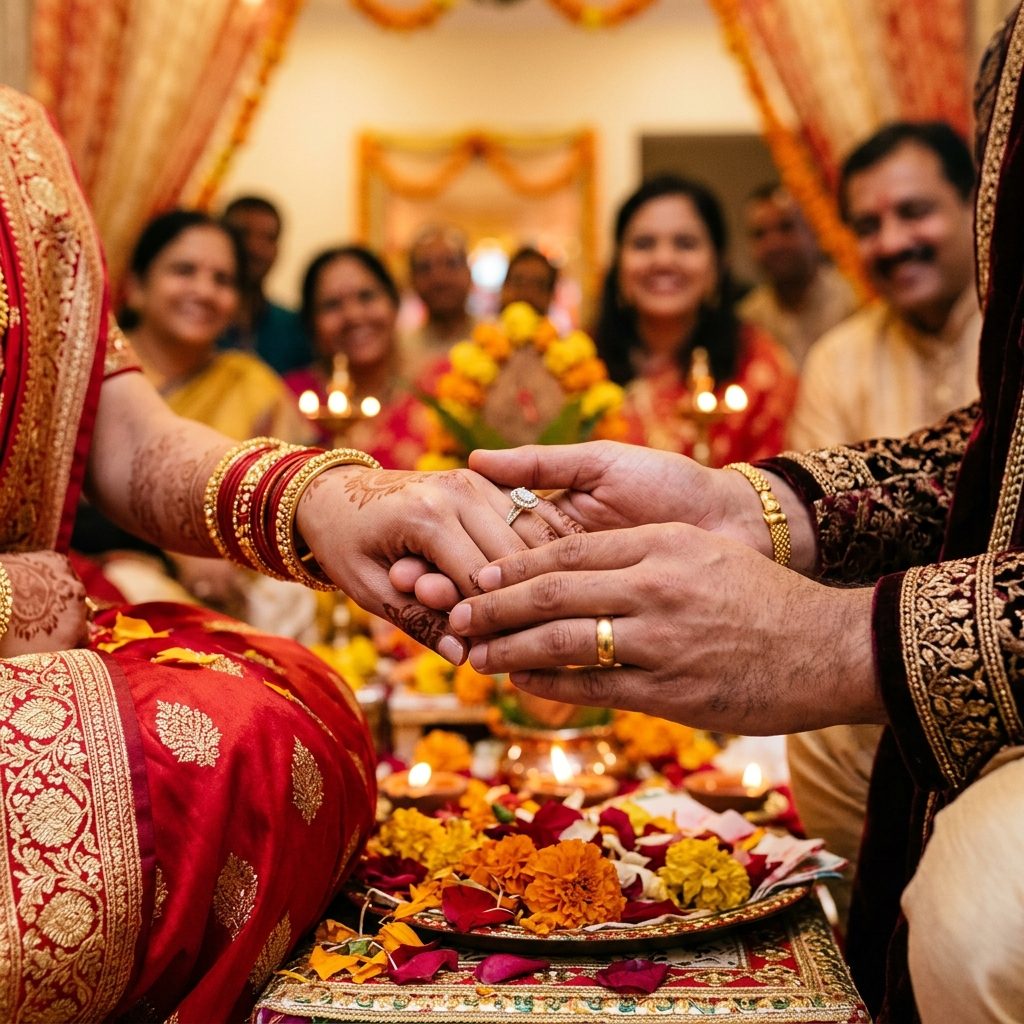
The engagement ceremony, universally known as Sagai, Roka, or Nischitartham across India, marks the official union of two families. While modern celebrations often resemble a grand ring ceremony, the core of the Sagai remains rooted in sacred vows, familial blessings, and the formal announcement of the upcoming wedding. Planning this milestone requires a delicate balance between honoring age-old regional traditions and organizing a seamless event for your guests.
Understanding Regional Sagai Customs
In India, the engagement ceremony takes many beautiful cultural forms. In Northern states, the Roka secures the alliance, often followed by a formal Tilak ceremony where the bride's family visits the groom's home with gifts, sweets, and a sacred vermillion mark for the groom's forehead. In Western India, Gujarati families celebrate the Gol Dhana (meaning jaggery and coriander seeds), symbolizing the sweet and healthy beginning of a relationship, while Maharashtrians perform the Sakhar Puda, where the bride is gifted sugar to sweeten her journey ahead.
Down South, the Telugu and Tamil communities perform the Nischitartham, a formal event where the wedding date is officially announced by reading the Patrika (marriage invitation script) written by family priests. Understanding these nuances ensures that your ceremony respects the heritage of both families and sets a harmonious tone for the wedding festivities.
Key Rituals of the Engagement Day
While regional customs vary, a few essential rituals form the heart of every Sagai. The day typically begins with a small Ganesh Puja to invoke blessings and remove obstacles. Following the prayers, families exchange traditional gifts. The groom's family presents the bride with a Shagun bridal trousseau, including jewelry, sarees, and dry fruits, while the bride's family offers gifts to the groom and his immediate relatives.
The Sagai is not merely the exchange of rings; it is the sacred alignment of two families promising to support, respect, and cherish each other through a lifelong journey.
The ceremony reaches its culmination with the exchange of rings. This act represents an unbroken circle of love and commitment, witnessed by close family members and elders who shower the couple with flower petals and blessings (Akshata) for their future.
A Practical Checklist for Sagai Planning
A successful Sagai requires careful coordination, as it is often the first time many extended family members will meet. To ensure the day goes smoothly, focus on these critical planning elements:
- Finalize the Shubh Muhurat: Consult a family priest or use astrological matching to find an auspicious date and time for the ring exchange and pujas.
- Choose the Right Venue: Depending on your guest count, select a venue that accommodates traditional seating for rituals as well as space for dining. Banquets or intimate garden lawns work best.
- Curate the Menu: Keep the food menu diverse but light, incorporating classic regional sweets like Kaju Katli, Ladoos, or local delicacies that represent both families.
- Plan the Gift Packing: Use elegant, sustainable trousseau packaging for the shagun baskets, as presentation is a key aspect of respect in Indian gifting.
As you begin planning this beautiful milestone, sharing the details with your loved ones in a timely manner is essential. To create beautiful, culturally themed digital invitations that reflect your family's unique traditions, you can use the Shubh Muhrat Invite Studio. Designing custom invites will help you set the perfect tone for your Sagai and keep your guests informed about the auspicious timings.