
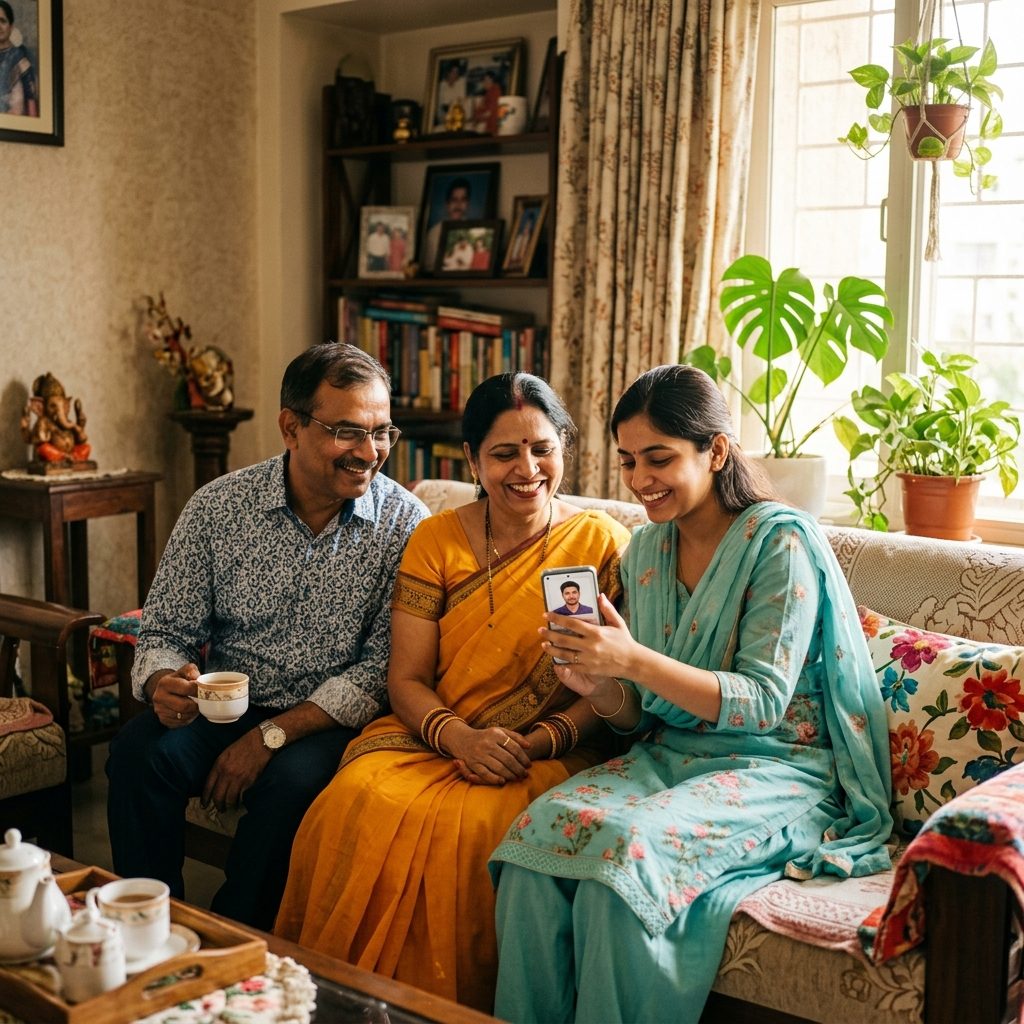
The longest wish-list rarely finds the shortest path to marriage. If you've ever handed your parents a list of 28 "must-haves" - 5'10", IIM degree, vegetarian, no in-laws nearby, salary in crores, loves trekking AND Carnatic music - and then wondered why six months of matchmaking produced nothing, this is for you. Setting realistic expectations in modern matchmaking isn't about settling. It's about knowing the difference between a deal-breaker and a daydream, so you stop swiping past the person you'd actually be happy with.
So why does my checklist keep failing me?
Short answer: it's measuring the wrong things. Most family wish-lists are stacked with surface filters - height, complexion, an MBA, a metro posting - and almost nothing about temperament, conflict style, or what the person wants out of a Tuesday. A Marwari aunty once told me her nephew rejected eleven "perfect" rishtas and married the twelfth because she laughed at his terrible jokes. The checklist never had a column for that.
Filters are useful for the first cut. They're terrible at predicting whether you'll like waking up next to someone for forty years. The real question modern matchmaking should answer isn't "does this person tick my boxes" - it's "can I build a life with this person." Those are not the same search.
What's a fair expectation versus a fantasy?
Blunt verdict: a fair expectation is something you'd defend to a stranger; a fantasy is something you can't explain without saying "I just want the best." Wanting a partner who is kind, financially responsible, and shares your values around family and faith - fair. Wanting someone who earns more than you, is taller than you, more educated than you, AND younger than you, all at once, in your exact community - that's four scarce traits multiplied together, and the math quietly deletes 95% of real humans.
This is where Indian families get tripped up most. Each individual ask sounds reasonable. Stacked together, they describe roughly nine people in the country. A Tamil Brahmin family I know spent two years insisting on a Iyer groom, same sub-sect, government job, and Chennai-based - then happily blessed a Bengaluru software engineer the day they let one of those four go. Loosen one variable and the pool triples.
A deal-breaker is something that would end the marriage. Everything else is a preference wearing a deal-breaker's clothes.
How do I separate deal-breakers from nice-to-haves?
Start by writing your list, then ruthlessly sort it into three columns. Be honest - most things you think are non-negotiable are simply familiar.
- True deal-breakers (keep to 3-4): shared faith or comfort with an interfaith path, attitude toward children, financial honesty, no history of abuse or addiction. These can genuinely break a marriage.
- Strong preferences (flex if everything else fits): same mother tongue, a particular city, vegetarian household, similar education level. Lovely to have, survivable without.
- Cosmetic wants (let these go first): height beyond a basic comfort range, "fair" complexion, a specific designation, a glamorous wedding budget.
- Test each one with a question: "Would I divorce over this?" If no, it's not a deal-breaker - move it down a column.
- Ask your parents to do the same exercise separately. The gaps between their list and yours are the real conversation you need to have before any rishta arrives.
When you're ready to put a sensible, honest profile in front of people - one that leads with who you actually are, not a polished avatar - a clean AI biodata maker helps you say more with less, the right photos and the real you instead of a wall of credentials.
Where does kundli matching fit in all this?
Short answer: as a filter, not a verdict. Guna Milan is a beautiful tradition and for many families it's non-negotiable, and that's completely valid. But here's the honest take most won't say out loud: a 32/36 score and a kind, communicative partner beats a 36/36 score with someone who won't talk to you when they're upset. The chart describes compatibility tendencies; it doesn't describe whether they'll show up for you when your mother is in hospital.
Use it as one input among many. If horoscope alignment matters to your family - manglik status, rashi, nakshatra, the works - run a proper kundli match and guna milan check early so it informs the shortlist instead of derailing a connection you've already built. Get the astrology question answered up front, then spend your energy on the human one.
How do I actually meet realistic matches without lowering my standards?
Verdict: you don't lower standards, you sharpen them. Lowering means accepting less of what matters. Sharpening means stopping the wastage on what never did. Once your deal-breakers are tight and your cosmetic filters are loose, the pool you're searching is full of people you could genuinely be happy with - and that's where matchmaking stops feeling like rejection roulette.
Modern tools make this far less exhausting than the old phone-tree of relatives. You can quietly browse compatible profiles, read someone's actual words before any family gets involved, and send a thoughtful first message on your own timeline. Our Smart Match discovery tool surfaces people whose values, community, and life stage line up with yours, so the very first conversation already has somewhere to go. Fewer mismatches, less heartbreak, more real talk.
One last thing the most successful families understand: expectations should evolve as you meet real people. The trekking-and-Carnatic-music fantasy often softens into "someone who makes me feel at home" after you've actually talked to a few humans. Let it. Setting realistic expectations in modern matchmaking is really just learning to recognise a good life when it's standing in front of you - not the one on the list. Start with your three real deal-breakers, build an honest profile, and have one open conversation with your family this week. The right person is usually closer than your checklist let you see.