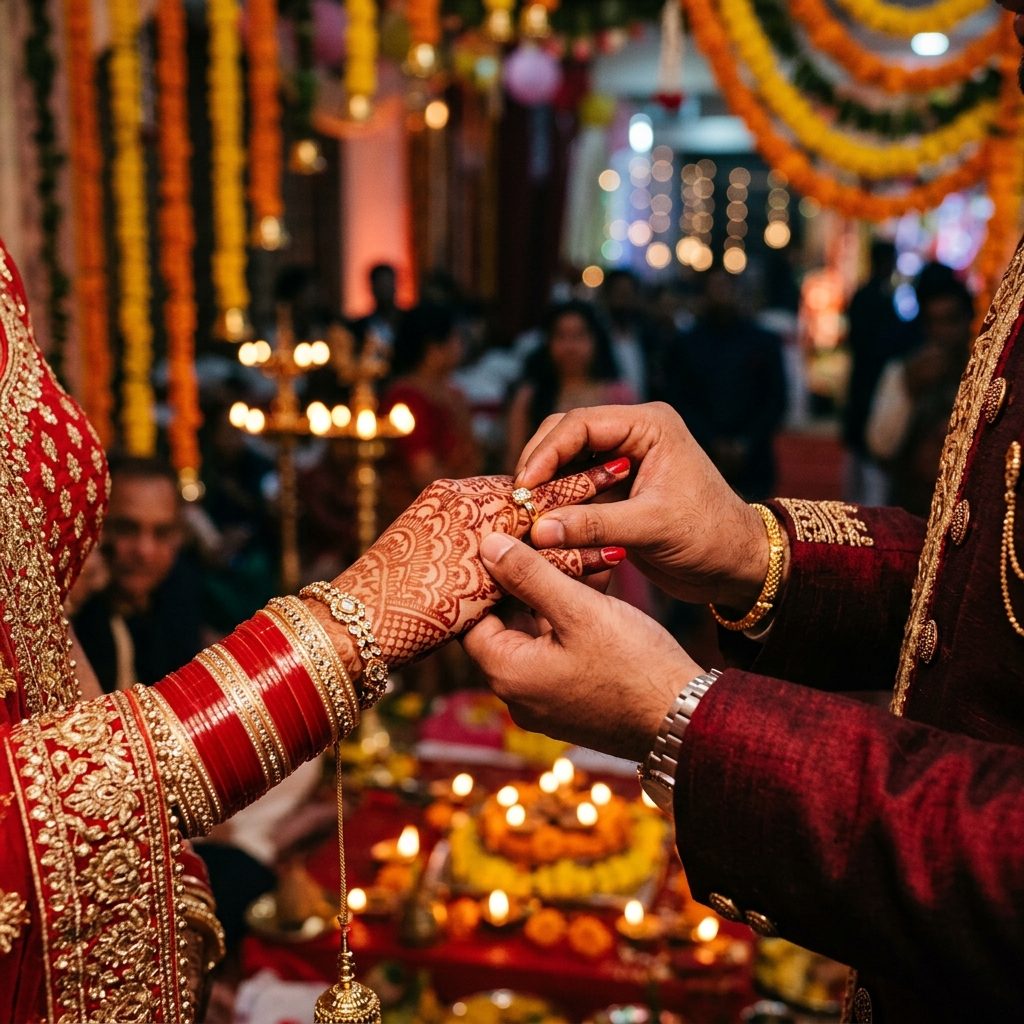
The Sacred Significance of Sagai
The engagement ceremony, widely known as Sagai, Mangni, or Roka, is the first formal step toward a traditional Indian wedding. It is much more than a mere exchange of rings; it represents the official union of two families. Historically, this ritual served as a binding social contract, securing the alliance in the presence of close relatives and community elders. Today, while the celebrations have evolved to reflect modern tastes, the core spiritual value remains unchanged. It is a sacred moment of seeking blessings from the deities and elders for a harmonious life journey ahead.
Navigating Regional Customs and Traditions
Across different regions of India, the engagement ceremony takes on unique names and beautiful, diverse customs. Understanding these subtle differences helps families honor their heritage while planning the event:
- Roka and Thaka: Popular in Northern India, this intimate ritual secures the alliance. The groom's family visits the bride with gifts, sweets, and dry fruits, officially marking that the search for a partner is complete.
- Vagdan: In traditional Maharashtrian weddings, the groom's parents visit the bride's home to formally ask for her hand, reciting Vedic slokas to solemnize the promise.
- Nischayathartham: In South Indian households, this ceremony involves the exchange of written agreements, along with traditional gifts like silk sarees, betel leaves, and coconuts, to finalize the wedding date.
- Tilak or Sagai: A highly structured ceremony where the bride's family applies a sacred vermilion mark on the groom's forehead and offers gifts, symbolizing his acceptance into their family.
"An engagement is not just the promise of a marriage between two individuals, but the respectful merging of two distinct family histories into a single shared future."
Crucial Planning Steps for the Perfect Ceremony
Planning a successful Sagai requires balancing traditional sanctity with modern hospitality. To ensure the day proceeds smoothly, families must coordinate several moving parts. First, consulting a priest to determine an auspicious Shubh Muhurat is vital, as the ring exchange should ideally take place during a highly positive astrological window. Next, curate the gift trays (Sagan) with care, ensuring they include traditional items such as dry fruits, seasonal sweets, and clothing for the close family members.
Additionally, pay close attention to the venue layout. Since the ring exchange and the subsequent blessing ceremony require the couple to sit for extended periods, ensure there is a beautifully decorated stage with comfortable seating. Arrange for a dedicated family coordinator to manage the flow of guests wishing to photograph themselves with the couple, keeping the schedule on track.
Simplifying Your Modern Sagai Planning
While the emotional and spiritual core of the Sagai remains traditional, modern technology can greatly ease the logistical burden of planning. Communicating dates, venues, and dress codes to extended family members across different time zones doesn't have to be stressful. To simplify your coordination, you can design stunning, culturally resonant digital invitations. Using the Invite Studio on Shubh Muhrat allows you to create elegant digital invites that reflect your specific regional customs and share them instantly with all your guests.