
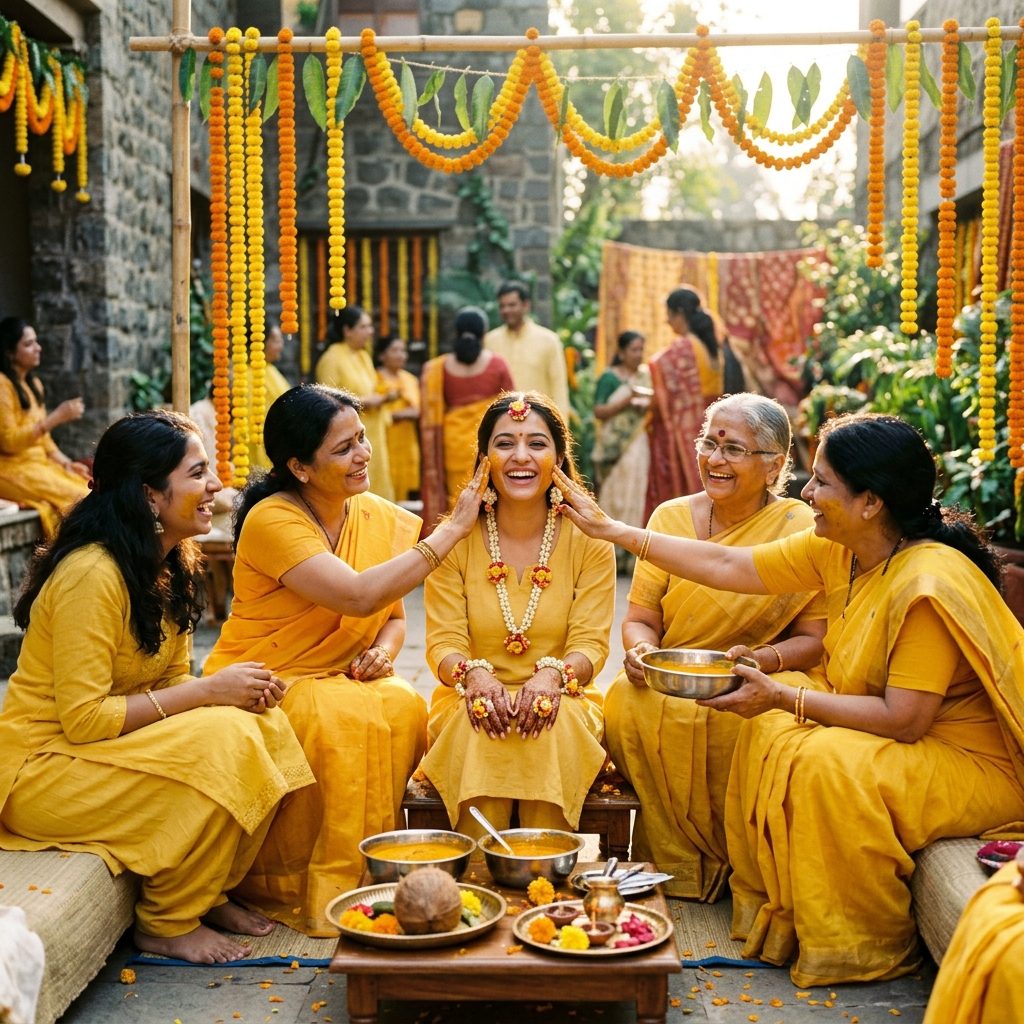
The fastest way to blow your wedding budget isn't the venue. It's treating one guest list as if it covers every function. Managing event-specific headcounts means the Haldi gets its 40 close family, the Mehendi gets its 80 cousins-and-college-friends, and the Reception gets its 400 of-everyone-your-parents-have-ever-met. Mix those up and you've either fed 200 strangers turmeric paste or seated half your office at a backyard ceremony. The trick is simple once you stop thinking in one number.
Most families plan a wedding like it's a single event with a single count. It is not. A typical North Indian shaadi has five to seven functions, and almost nobody is invited to all of them.
Why does one guest list never work for the whole wedding?
Short answer: because no two functions have the same crowd. The Haldi is intimate and messy by design. You want people who'll happily smear you with turmeric and not the boss who came in a starched shirt. The Mehendi is the cousins-and-besties function. The Sangeet swells with extended family. The Reception is the grand, formal, invite-the-whole-circle finale.
If you keep one master count of, say, 350 people and order food for 350 at every event, you'll overspend wildly on the small functions and possibly fall short at the big one. A Marwari family I know ordered Haldi catering for their full reception list out of habit. Forty people actually came. The other 310 plates of breakfast went to the staff and the street dogs.
So how do you actually split one big list into per-event lists?
Start with the biggest list and subtract down. The Reception is your widest circle. From there, each smaller function is a tighter cut of the same people.
- Tag every guest by closeness, not just name. Use three buckets: inner circle (immediate family, the people who'll do Haldi), warm circle (extended family, close friends, Sangeet and Mehendi), and outer circle (colleagues, neighbours, acquaintances, reception only).
- Build the Haldi list first, not last. It's your smallest and most personal. Usually 30-60 people. If you can't picture them laughing in old clothes, they don't belong here.
- Let the Mehendi and Sangeet share a core but flex at the edges. Many families combine these or invite roughly the same warm circle, adding a few extra friends for the Sangeet.
- Keep a separate "plus-one" rule per event. Reception plus-ones are normal. Haldi plus-ones are rarely a thing. Decide once, apply it consistently.
- Track confirmations per function, never a single yes. A cousin saying "I'll be there" might mean Reception only. Ask which days.
- Reconcile your headcount with the caterer 72 hours before each event, not once for the whole wedding. Per-function final counts are how you stop paying for empty chairs.
This is exactly the chaos a proper Guest Manager is built to tame: one master guest list where you group each person by Family and Owner (who is responsible for them) and track every RSVP — Contacted, Coming, Not Coming, Follow-up — plus seating and thank-you notes, in one place. You stop running five spreadsheets and start running one.
You don't invite 400 people to a wedding. You invite 40 to your Haldi, 80 to your Mehendi, and 400 to your Reception - and the magic is keeping those numbers honest.
How do regional traditions change who's on which list?
Hugely, and pretending otherwise is how feelings get hurt. Among Tamil Iyer families, the Nichayathartham (engagement) and the morning muhurtam are deeply ritual events where elders and close kin dominate - the wider social crowd shows up for the reception dinner. Bengali weddings split sharply between the Gaye Holud (their Haldi equivalent, family and very close friends) and the Bou Bhaat reception thrown by the groom's side. Marwari and Khatri families often run the largest Sangeet of all, sometimes bigger than the reception, because the music night is the social event.
Among Nair and Reddy families, the muhurtham itself can be modest while the reception goes big. The lesson is the same everywhere: your community decides which function is "the big one," and your headcounts should follow that, not a generic template. Ask your parents and your in-laws which event each side considers the main show. The answer reshapes your lists instantly.
What's the one mistake almost every family makes here?
Short answer: padding the small functions out of guilt. Here's the honest take most planners won't say out loud - it is not rude to leave someone off the Haldi list. Intimacy is the whole point of the smaller functions. Your father's golf friend does not need to be at your Mehendi, and inviting him "so he doesn't feel bad" is how a cosy 50-person event becomes a stressed 130-person one with no parking.
Give people the function that matches your relationship with them. A warm reception invite is a real invitation, not a consolation prize. The families who get this right have calmer mornings and happier budgets. The ones who don't spend the Haldi apologising for the crowd.
And while you're sorting who comes to what, send the right invite for each tier too - a heartfelt animated card or video for the inner circle, a clean digital save-the-date for the wider list. You can spin those up in the Invite Studio and match the invitation to the function instead of blasting one design at everyone.
How do you keep the counts from drifting once invites go out?
Short answer: collect RSVPs per event and update in real time. The drift always comes from "maybe" people and last-minute additions. Lock in a confirmation deadline for each function - Haldi confirmations close earlier because the count is small and the catering is precise.
Re-check the totals 48 to 72 hours before each event and share that exact number with your caterer and venue. If you're also using the wedding as a chance to introduce families, keeping clean per-event lists makes it far easier to seat new in-laws thoughtfully - the same care you'd put into helping two people find a compatible match applies to seating two families together for the first time.
Get your event-specific headcounts sorted early - separate lists, honest tiers, per-function RSVPs - and the whole wedding gets lighter. Pull up your guests, group each person by family and closeness, mark who is coming, and use those groups (and a quick CSV export) to build each function's count. Do that this week, before a single invite goes out, and you'll spend your Haldi morning laughing instead of counting plates.