
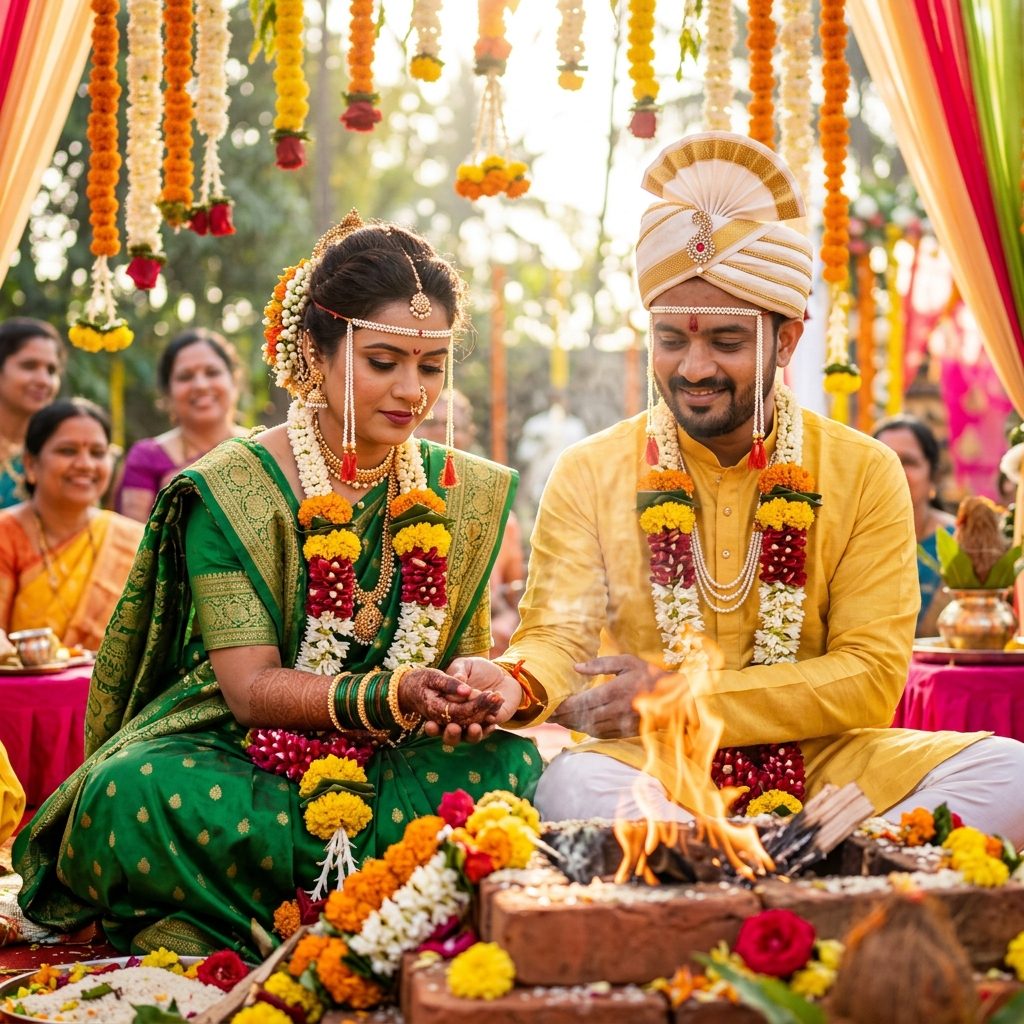
Maharashtrian weddings, or 'Lagna', are celebrated for their elegant simplicity, deep-rooted Vedic traditions, and spiritual significance. Free from excessive opulence, these weddings focus on meaningful rituals that bind two souls and their families. From the distinctive pearl forehead ornaments called Mundavalya to the chanting of sacred verses, every element of a Marathi vivah has a profound cultural purpose designed to usher the couple into a harmonious householder life.
Pre-Wedding Milestones: Sakhar Puda and Seeman Puja
The wedding journey begins with the Sakhar Puda, which literally translates to 'a packet of sugar'. This is the formal engagement ceremony where the groom's family gifts the bride a cone of sugar, symbolizing a sweet beginning to their relationship. Rings are exchanged, and the alliance is formalized in the presence of close family members.
On the eve of the wedding or the morning of the ceremony, the Seeman Puja takes place. Traditionally, this ritual was performed when the groom and his family crossed the boundary of the bride's village. Today, the bride's mother welcomes the groom's family at the wedding venue. She washes the groom's feet, applies a tilak of kumkum and ashada, and performs an arati. This ritual sets a tone of mutual respect and hospitality between the two families before the main wedding rites begin.
The Sacred Nuptials: Antarpat and Mangalashtaka
The core wedding ceremony begins with the bride and groom sitting opposite each other, separated by a silk shawl called the Antarpat. Because they cannot see each other, this symbolizes their individual lives before marriage. The priests chant the Mangalashtaka—eight auspicious blessings—while the guests hold akshata (consecrated colored rice).
The Maharashtrian wedding is a beautiful testament to the idea that grandeur lies in simplicity. Every ritual, from the tying of the Mundavalya to the steps of the Saptapadi, is designed to bind two families, not just two individuals, in a lifetime of mutual respect.
As the final verse of the Mangalashtaka ends and the auspicious shubh muhurat is reached, the Antarpat is lowered amidst the sounding of traditional shehnai music. The couple exchanges garlands and the guests shower them with akshata, marking their official union in the eyes of society.
Core Rituals: Kanyadaan, Lajahoma, and Saptapadi
Following the garland exchange, several key Vedic rituals are performed to seal the marriage vows:
- Kanyadaan: The bride's parents entrust their daughter to the groom, asking him to love and protect her throughout their lives. The groom promises to uphold his duties in dharma, artha, and kama.
- Lajahoma: The bride offers puffed rice to the sacred fire, guided by her brother and husband. This ritual invokes the blessings of Agni, the fire god, for the groom's longevity and the couple's prosperity.
- Saptapadi: The couple takes seven steps together around the sacred fire. With each step, they make a solemn promise to support each other through life's joys and challenges, ensuring they walk as equals.
Planning a traditional Maharashtrian wedding involves carefully coordinating these sacred rituals and ensuring your loved ones are there to witness them. To share the joy of your upcoming Lagna, you can design beautiful, culturally authentic digital invitations using the Shubh Muhrat Invite Studio, making it simple to invite guests near and far with elegance and ease.