
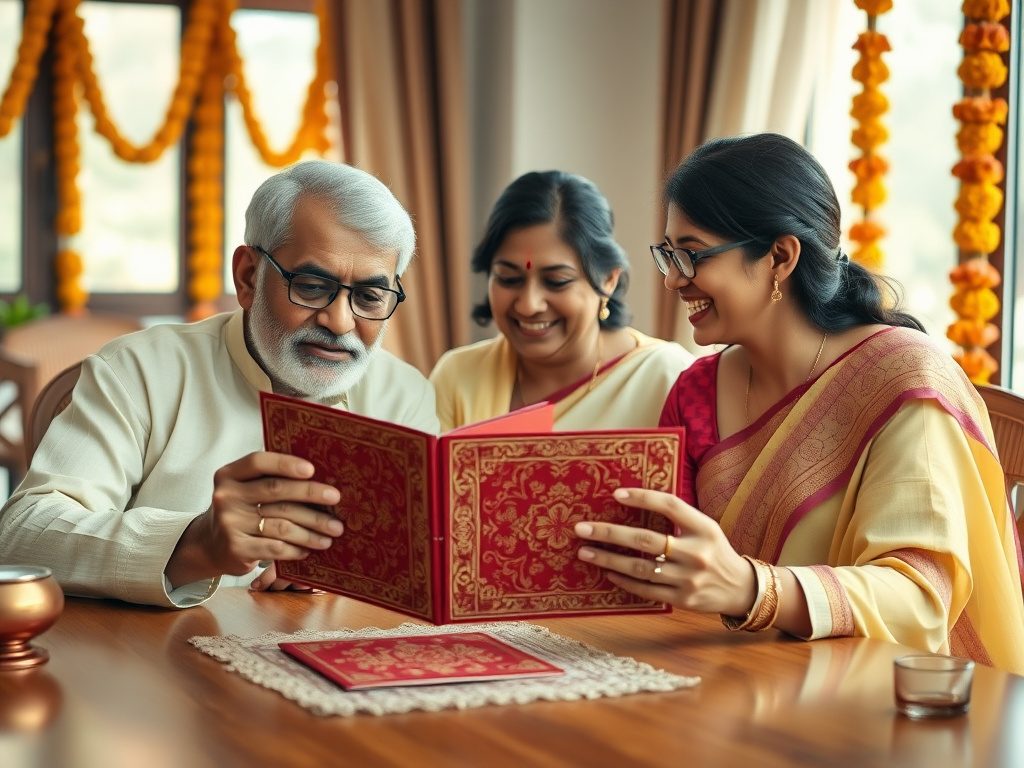
The exact wording that makes your college WhatsApp group reply with fifteen fire emojis is the same wording that makes your Tauji put the card down and go quiet. That's the whole problem with wedding invitation etiquette in an Indian family: one invite is being read by an 82-year-old grandfather and your trekking buddy from Manali, and they do not want the same thing. Good invitation wording isn't about being formal or fun. It's about knowing which version goes to whom.
Most families write one card, blast it to everyone, and quietly annoy half their guest list. You can do better in about ten minutes.
Why can't one invite work for both elders and friends?
Short answer: because they're reading completely different documents. An elder reads a wedding card the way they read a legal notice. Whose name comes first? Are the parents and grandparents named with respect? Is the family lineage acknowledged? To a 70-year-old Marwari aunt, "Mr. & Mrs. Suresh Agarwal request the honour of your presence" isn't stiff. It's correct. It tells her she's been invited by the family, not just by the couple.
Your friend reads the same line and feels like they got a summons.
A friend wants the date, the venue, the vibe, and a clear answer to "is there a sangeet I need to learn a dance for?" They want "we're getting married and you HAVE to be there." Warmth over hierarchy. The elder wants hierarchy as a form of warmth. Both are right. The trick is to stop forcing one tone to carry both jobs.
How do I word the invitation for elders without sounding like a court summons?
Lead with the hosts, name the family, and keep the request humble. In most North Indian and Gujarati families, the bride's or groom's parents "request the pleasure" or "solicit your gracious presence." Among Tamil Iyer and Iyengar families, the card often opens with a Ganesha or kuladeivam invocation and lists the gotra and the names of grandparents. A Bengali invite carries "Sri Sri" honorifics and frequently names the dadu and thakuma. A Nair family card may foreground the maternal lineage.
This isn't decoration. Skipping a living grandparent's name on the card is the kind of thing that gets discussed for years.
To an elder, the wedding card isn't an announcement. It's a public record of who your family chose to honour - and who they forgot.
So for the elder version: use full names with prefixes, name both sets of parents, name surviving grandparents, mention the muhurat or auspicious time, and keep the language gracious. "Together with their families" is your safest, most modern-yet-respectful host line when both sides want equal billing.
So how casual can I actually go for friends?
Go as casual as your friendship - but never drop the four facts. The mistake people make is thinking a casual invite means a vague invite. Your friends will forgive "come get drunk and watch us cry at the pheras." They will not forgive you for never telling them the actual sangeet date, the dress code, or whether plus-ones are welcome.
Casual buys you tone, not laziness. A fun invite still needs the venue, the function-by-function timeline, and a real RSVP nudge. This is exactly where a separate friends-version e-card earns its keep - you can drop the formality and add a cheeky one-liner, a couple photo, and a countdown without your Nani ever seeing it. Building a second, looser version takes minutes in our wedding Invite Studio, where one design can spin into a formal card for elders and a playful video invite for the group chat.
And once both versions are out, you'll have two RSVP streams to track. Keeping those headcounts, dietary notes, and the sangeet-vs-reception split straight is genuinely painful on a spreadsheet, which is why people lean on our Guest Manager to merge replies from both invites into one clean list.
What lines should I never put in either version?
Some wording is a landmine regardless of audience. A few honest rules, learned from real family fallout:
- "No boxed gifts." In English on the main card it reads cold to elders; if you must say it, soften it to "Your blessings are the only gift we seek" and put it discreetly.
- Whose name goes first. In many communities the bride's family is named first on their card and the groom's on theirs - get this wrong and someone notices. When in doubt, "together with their families" sidesteps the whole ego battle.
- Forgetting a deceased parent's name. The respectful convention is "(Late) Shri" - omitting it entirely is read as erasing them.
- A dress code on the elders' card. "Strictly cocktail attire" belongs on the friends' invite, not the one going to your Chacha-Chachi.
- Spelling a relative's name wrong. Triple-check every honorific and surname. A misspelt Bua's name is a multi-year grievance.
- Burying the RSVP. Both versions need a clear way to reply - just phrase it warmly for elders ("Kindly confirm your presence") and bluntly for friends ("RSVP or you're dead to me").
Should the digital invite and the printed card say the same thing?
Almost - but not exactly. The printed card is the formal record that goes to elders, relatives, and your father's old colleagues, so it stays gracious and complete. The digital version is where you can fork by audience: a dignified PDF for the family WhatsApp groups, and a separate, livelier e-card or video for friends. Same wedding, two voices, zero offence.
If your friend circle overlaps with people you're still getting to know - say you met your partner through a matchmaking platform and their crowd is new to you - lean slightly formal for that subset until you've read the room. The first impression a new community forms of you often starts the way the first respectful message does: warm, clear, and not presumptuous.
Here's the truth nobody tells you: nailing your wedding invitation etiquette isn't about impressing anyone. It's the first thing your two worlds - the elders who raised you and the friends who get you - will judge before they ever reach the venue. Write the elder version with care, write the friends' version with joy, send each to the right list, and you've already started the wedding on the right note. Go draft both today. The group chat can wait ten minutes; your Tauji's good opinion can't.