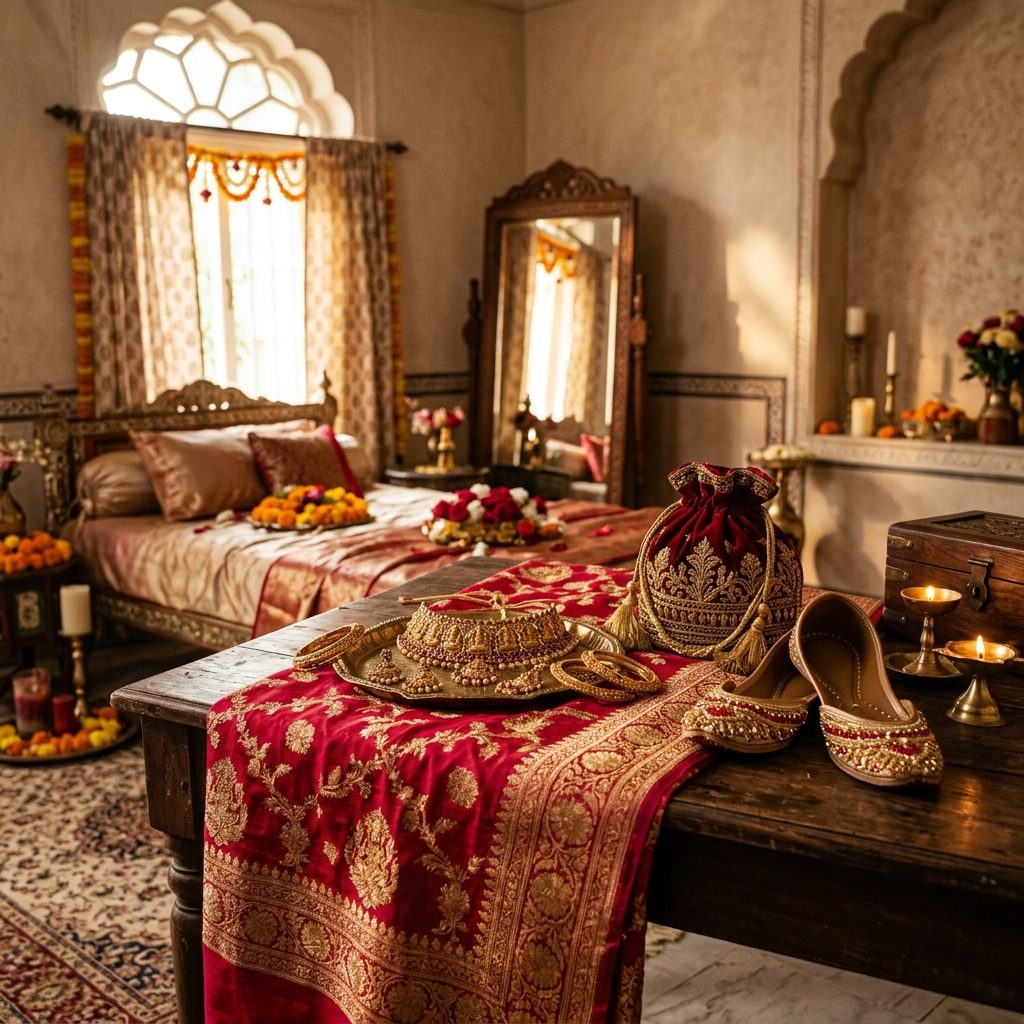
The tradition of building a wedding trousseau—or 'peeti' and bridal luggage—holds deep emotional and cultural significance across Indian households. Far beyond a mere collection of new clothes and ornaments, a trousseau represents a mother's blessings, ancestral heritage, and the beginning of a bride’s new chapter. Historically handed down in wooden trunks adorned with brass locks, today's trousseau balances timeless heirloom pieces with modern, functional wardrobe essentials suitable for post-wedding functions, family visits, and festive gatherings.
Understanding the Essence of an Indian Wedding Trousseau
Across regional customs, whether it is the silk-rich bridal trunk of a South Indian bride featuring pure Zari Kanjeevarams or the gold-embroidered Zardozi ensembles of a North Indian bridal wardrobe, the trousseau reflects a rich cultural legacy. Every saree, suit, and piece of jewellery packed into the trousseau serves a designated purpose during the weeks following the main nuptials. From the sacred Griha Pravesh and initial Satyanarayan Puja to post-wedding dinners hosted by extended family, each occasion demands outfits that convey grace, respect, and celebration.
Essential Categories for Your Bridal Trunk
Curating a well-thought-out trousseau requires balancing tradition with practical usability. Rather than buying excessive heavy garments that remain packed away, modern Indian brides focus on versatile, high-quality ensembles that can be worn across different functions and seasons.
- Heritage Handlooms: At least three to four timeless handloom sarees—such as Banarasi silk, Kanjeevaram, Paithani, or Chanderi—that showcase regional craftsmanship and remain stylish across generations.
- Occasion Suit Sets & Anarkalis: Versatile silk or georgette suit sets, shararas, and floor-length Anarkalis in jewel tones like ruby red, deep green, mustard yellow, and royal blue for family get-togethers and festive pujas.
- Statement Jewellery & Accessories: A balanced mix of fine heirloom jewelry, classic Kundan or temple sets, stackable bangles, silver anklets (payal), and versatile potli bags that pair easily across multiple outfits.
- Comfortable Footwear: Embellished leather juttis, cushioned block heels, and casual slides to handle long standing hours during post-wedding home visits.
- Daily Loungewear & Linens: Premium cotton nightwear, comfortable indoor suit sets, and luxurious silk stoles that add warmth and elegance to everyday wear.
Preserving Heritage While Planning Modern Celebrations
When assembling your bridal trousseau, remember to involve your elders to understand specific family customs, preferred colors for auspicious ceremonies, and sentimental pieces that have been saved for your big day. Preserving vintage silk sarees with proper muslin wraps and neem leaves keeps precious fabrics safe for decades to come, ensuring your daughter or niece can one day inherit these treasures.
A wedding trousseau is not merely a collection of fine clothes; it is a tangible thread of memories and blessings connecting a bride’s roots to her new home.
While building your trousseau requires thoughtful attention, organizing the logistics of your wedding functions and managing your guest list shouldn't add to your stress. You can easily streamline your guest lists, track RSVPs, and manage event schedules seamlessly using the Shubh Muhrat Guest Manager, giving you more peace of mind to cherish every ritual.