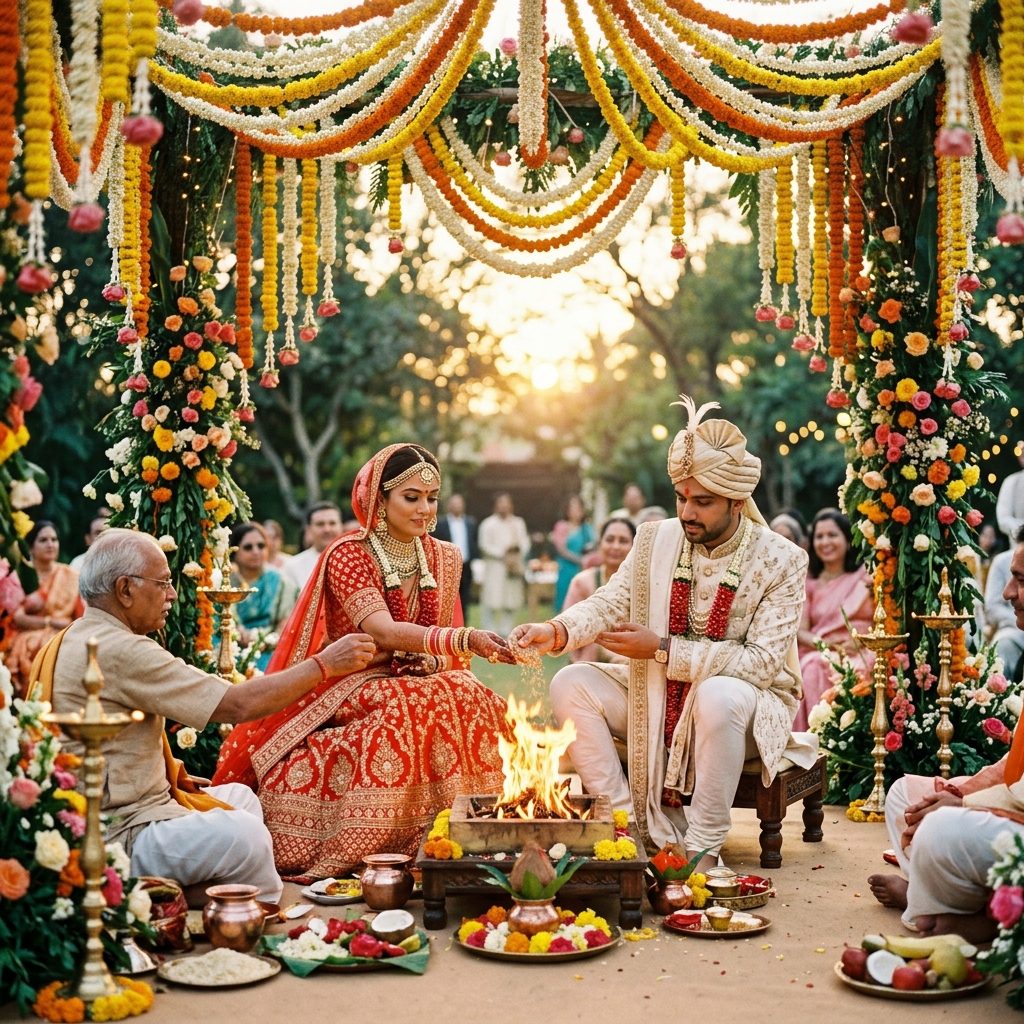
In Indian culture, a wedding is not merely a social celebration but a sacred union of two souls, families, and destinies. Known as Vivah Samskara, this sacred event relies heavily on cosmic alignment to bestow lifelong happiness, health, and prosperity upon the newlyweds. Selecting an auspicious wedding muhurat—or Shubh Vivah Muhurat—is the fundamental first step in planning any traditional Indian wedding.
Key Vedic Factors in Determining Vivah Muhurat
Vedic astrology evaluates five core elements of the calendar system, known as the Panchang: Tithi (lunar day), Vara (day of the week), Nakshatra (lunar mansion), Yoga, and Karana. An ideal Vivah Muhurat requires a harmonious combination of these elements tailored specifically to the bride and groom's birth charts (Janmapatrika).
Astrologers carefully analyze planetary transits to avoid unfavorable phases. For instance, auspicious wedding dates are strictly paused during periods like Shukra Aast (combustion of Venus) and Guru Aast (combustion of Jupiter), as these deities govern love, marital happiness, and wisdom. Similarly, seasons such as Kharmas, Pitru Paksha, and the period of Devshayani Ekadashi (when Lord Vishnu enters cosmic sleep) are universally avoided across traditional Indian communities.
Navigating Regional Customs and Panchang Systems
While fundamental astrological rules remain consistent, regional traditions alter how muhurats are observed. North Indian weddings often favor late-night Lagna timings, Tamil traditions focus on early morning Brahma Muhurtam slots, Bengali ceremonies align with specific evening Godhuli Bela hours, and Maharashtrian weddings prioritize the afternoon Sthanic timings.
When selecting your wedding date, consider these crucial checklist items with your family priest:
- Tarabala and Chandrabala: Ensure positive lunar and planetary strength relative to both the bride's and groom's birth Nakshatras.
- Auspicious Nakshatras: Look for favorable stars such as Rohini, Mrigashirsha, Magha, Uttara Phalguni, Hasta, Swati, Anuradha, Uttara Ashadha, and Uttara Bhadrapada.
- Favorable Tithis: Select auspicious lunar days in the Shukla Paksha (waxing phase), particularly Dwitiya, Tritiya, Panchami, Saptami, Ekadashi, and Trayodashi.
- Avoiding Malefic Windows: Double-check that the chosen window is completely free from Rahu Kalam, Bhadra Tithi, and solar or lunar eclipses.
Choosing a wedding muhurat is not merely about finding an open date on the calendar; it is about seeking cosmic harmony for a sacred lifelong union.
Balancing Sacred Timing with Practical Planning
In modern wedding planning, balancing an ideal astrological window with venue availability and guest travel can feel overwhelming. Late-night muhurats require careful guest management, while morning rituals demand precise vendor coordination. It is wise to consult your family astrologer early to obtain a shortlist of three to four valid muhurats across your desired season.
Before settling on a wedding date, validating horoscope compatibility remains the bedrock of traditional Indian marriages. You can easily analyze Guna Milan and planetary harmony using Shubh Muhrat's Kundli Match tool to ensure a blessed and harmonious beginning to your journey together.