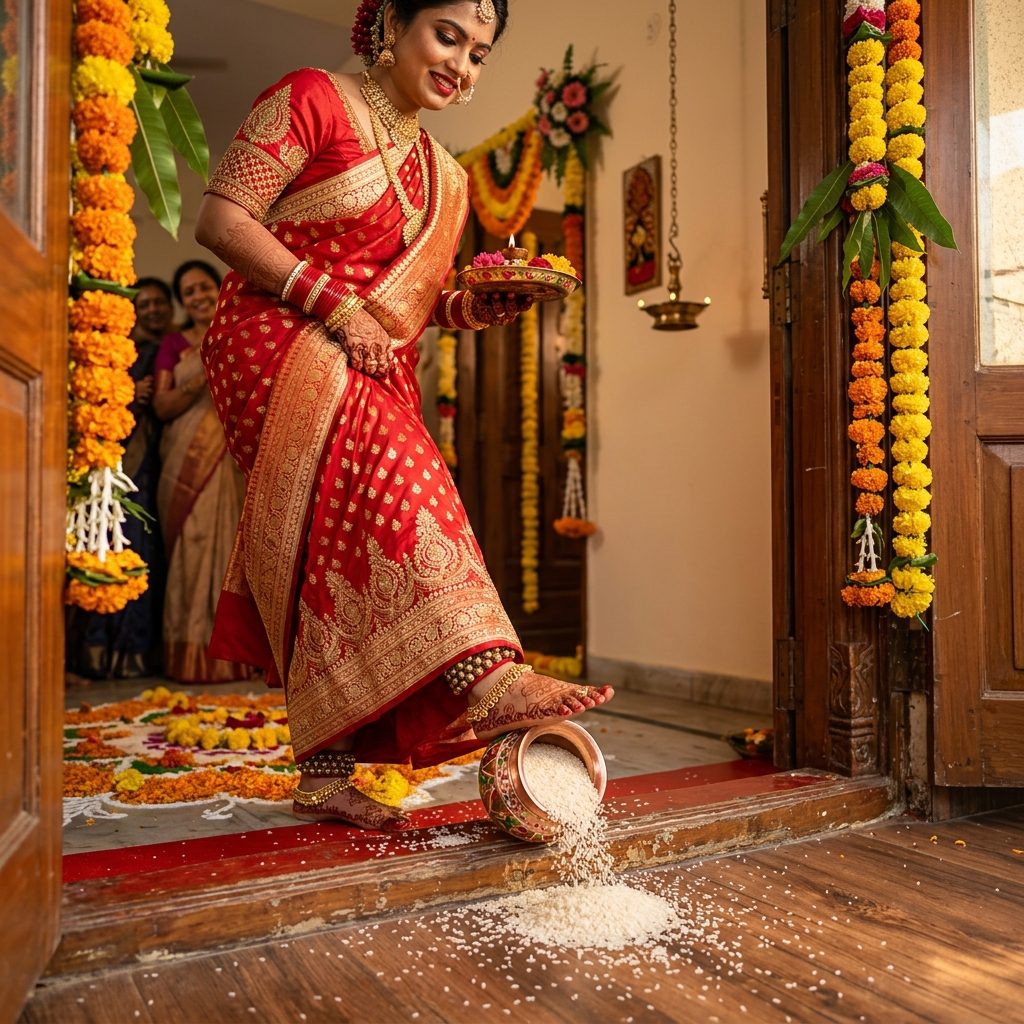
In Indian tradition, a bride is welcomed into her matrimonial home not just as a new family member, but as the living embodiment of Goddess Lakshmi. The Griha Pravesh—specifically the Vadhu Griha Pravesh—is the sacred threshold ritual where the bride takes her first steps into her new life. This ceremony is deeply rooted in Vedic philosophy, symbolizing the arrival of prosperity, harmony, and auspiciousness. It acts as a formal and spiritual transition, establishing her role as the co-guardian of the household's future.
The Symbolic Steps of the Threshold Ritual
The actual entry into the house involves a series of highly symbolic acts designed to invite positive energy and dispel negativity. Before the bride crosses the threshold, the groom's mother typically performs an aarti to welcome the couple and ward off any lingering negative vibrations.
- Pushing the Kalash: A small copper or brass pot filled with raw rice is placed at the entrance. The bride gently pushes this pot inward with her right foot, spilling the rice to symbolize the entry of endless wealth and food security into the home.
- Leaving the Auspicious Footprints: Next, the bride steps into a shallow plate filled with vermilion paste (alta) mixed with milk or water. As she walks across the threshold and onto a clean white sheet, her red footprints mark the path, symbolizing the physical descent of Lakshmi.
- The Salt and Sugar Welcome: In many North Indian households, the couple is also asked to hold handfuls of salt or sugar, transferring them to each other without spilling, demonstrating their commitment to sharing responsibilities and maintaining sweetness in their relationship.
"A home does not become a home because of its walls; it becomes a home when the grace of a woman enters it. The Griha Pravesh is the physical manifestation of this divine transformation."
Regional Variations of the Homecoming
Every Indian community infuses this ritual with its own unique cultural flavor. In Maharashtra, the ceremony is incomplete without the groom writing a new name for his bride on a plate of raw rice using a gold ring. This symbolizes a fresh start and mutual respect. In Bengali weddings, the ritual is called the 'Bou Baran,' where the mother-in-law feeds the bride sweet curd and sandesh, followed by a custom where the bride must hold a live fish, representing luck and fertility.
Down south, the Tamil 'Griha Pravesham' focuses heavily on the boiling of milk. The new bride is given the honor of boiling milk in a new clay pot until it overflows, which symbolizes a life overflowing with happiness, good health, and material abundance. This milk is then sweetened and served as prasad to the deities and family members.
Planning the Perfect Welcome
Because the Griha Pravesh usually takes place immediately after the exhausting main wedding ceremony, the groom's family needs to plan the logistics meticulously. The timing must align with the shubh muhurat calculated by the family priest. Keeping the home decorated with fresh marigold garlands and mango leaves, preparing the puja thali in advance, and organizing the welcoming committee are crucial steps.
Gathering close family and friends to bless the couple during this intimate moment is essential. To ensure your homecoming guest list is flawlessly managed and organized without any last-minute stress, you can easily plan and coordinate using Shubh Muhrat's Guest Manager. This tool helps you handle RSVPs and arrivals, letting you focus fully on welcoming the new bride with warmth, love, and traditional grace.