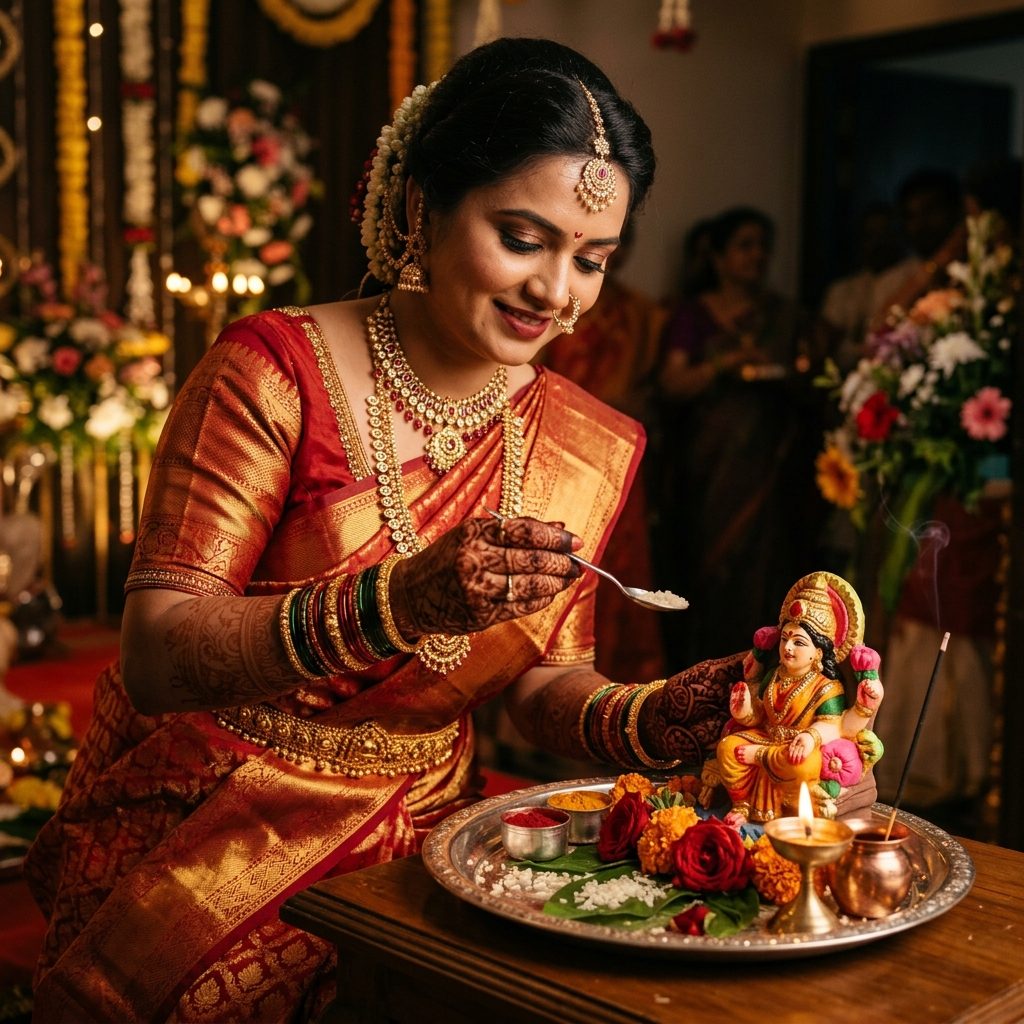
Among the multitude of pre-wedding ceremonies that dot the vibrant landscape of Indian weddings, the Gauri Puja holds a deeply spiritual and emotional significance. Performed by the bride on the morning of her wedding day, this ritual invokes the blessings of Goddess Gauri—an incarnation of Goddess Parvati representing marital bliss, fertility, and strength. It is a quiet, meditative moment for the bride before she enters the bustling wedding mandap.
The Spiritual Significance of Gauri Puja
Goddess Gauri is revered as the epitome of the perfect wife and mother. According to Hindu mythology, Parvati performed intense penance to win Lord Shiva as her husband. By performing this puja, the bride seeks the goddess's determination, grace, and blessings for a harmonious married life. Traditionally, the bride worships an idol of Gauri made of clay or turmeric, symbolizing purity and the nurturing aspects of nature.
Regional Variations Across India
While the core essence of the ritual remains the same, different regions in India observe Gauri Puja with unique local customs:
- Maharashtra: Known as Gauri Hara Puja, the bride sits in a quiet room, worshiping a small clay idol of Goddess Parvati placed on a mound of rice. She keeps a vow of silence during the ritual.
- Karnataka and Andhra Pradesh: In South Indian families, the bride performs Gowri Pooja using a decorated clay idol. She is often gifted a sacred thread dipped in turmeric, which is tied to her wrist for protection.
- Tamil Nadu: The bride performs the puja to a traditional brass or clay idol of the goddess, offering handmade sweets like kozhukattai and seeking blessings from the elders in the family.
The Gauri Puja is not just a ritual; it is a sacred transition where the bride embodies the strength, patience, and devotion of Goddess Parvati as she prepares to start her own family.
How the Ritual Unfolds
The puja is usually arranged in the bride's maternal home or dressing chamber just before the wedding ceremony begins. The altar is decorated with fresh marigold flowers, mango leaves, and rangoli. Guided by the family priest, the bride bathes the idol with milk and water, applies vermilion and turmeric, and offers fresh fruits, flowers, and sweets. In many communities, the maternal uncle gifts the bride the traditional silk sari and jewelry worn during this ceremony, symbolizing the support of her maternal family as she steps into her new life.
As you prepare to celebrate these beautiful, age-old traditions with your loved ones, managing your guest list and sharing details becomes essential. You can design elegant, traditional digital cards for your pre-wedding rituals using the Shubh Muhrat Invite Studio, ensuring your family and friends are part of every sacred moment.