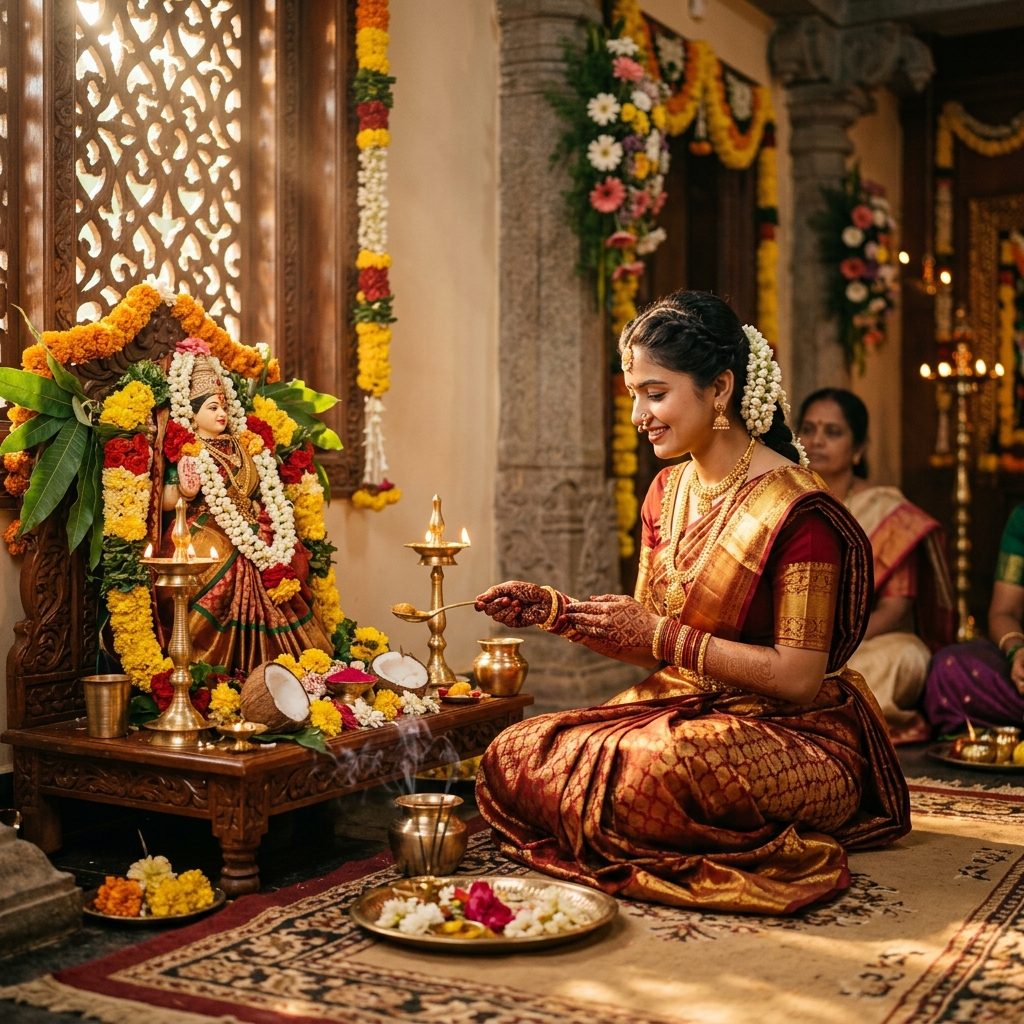
Indian weddings are rich with ancient customs, each carrying deep spiritual significance and emotional weight. Among the most cherished pre-wedding rituals for the bride is the Gauri Puja. Performed shortly before the wedding ceremony, this sacred ritual allows the bride to seek blessings from Goddess Gauri—an avatar of Parvati known for her divine devotion, strength, and grace. It serves as a moment of quiet reflection, gratitude, and spiritual alignment before she embarks on her marital journey.
The Sacred Significance of Gauri Puja
Goddess Gauri symbolizes the ultimate ideal of marital togetherness, modeled after her eternal union with Lord Shiva. According to Hindu sacred texts, Goddess Sita performed Gauri Puja prior to her wedding to Lord Rama, praying for a harmonious and enduring bond. When an Indian bride sits for Gauri Puja, she prays for the long life, health, and prosperity of her future husband, as well as the wisdom to build a nurturing household.
Beyond its spiritual depth, the ritual acts as a serene sanctuary for the bride amidst the fast-paced energy of wedding celebrations. It offers a rare pause to connect with her maternal roots, family traditions, and her own inner intentions.
Regional Customs Across India
While the spiritual core of Gauri Puja remains universal, its traditional execution varies beautifully across different Indian regions and communities:
- Maharashtrian Gauri Pujan: In Maharashtra, the bride wears a traditional Shalu or Paithani saree and prays to an idol of Goddess Gauri installed inside a secluded room at the venue. She sits on a traditional wooden stool (pat) and offers holy rice grains (akshata) while repeating sacred mantras.
- South Indian Gauri Hara Puja: Common in Kannada, Telugu, and Tamil traditions, the bride performs Mangala Gauri Puja. A turmeric idol of the goddess is sculpted and invoked with fresh flowers, betel leaves, and holy water, while a sacred yellow thread (kaappu) is tied around the bride's wrist for divine protection.
- North and Central Indian Customs: In many North Indian households, Gauri-Ganesh Pujan is conducted at the mandap before the primary wedding rituals commence, ensuring all obstacles are removed and auspicious energy fills the space.
A bride's worship of Goddess Gauri is not merely a traditional rite; it is a timeless invocation of inner grace, emotional resilience, and lifelong devotion as she steps into her new life.
Essential Puja Samagri and Ritual Preparation
To perform Gauri Puja smoothly, families typically prepare a dedicated sacred space adorned with fresh marigold flowers, mango leaves, and a beautifully decorated altar. The essential items (samagri) required for the ceremony include:
- An idol or handcrafted turmeric sculpture of Goddess Gauri
- Fresh bilva leaves, red hibiscus, and fragrant jasmine garlands
- Turmeric (haldi), vermilion (kumkum), and holy unbroken rice (akshata)
- Betel leaves, betel nuts, coconuts, and dried fruits
- Traditional prasad such as modak, kheer, or fresh fruits
- Ghee lamps (diyas) and natural incense sticks (agarbatti)
It is recommended that elder family members or a qualified priest guide the bride through the specific steps according to your family's lineage (kula-achara). Choosing an auspicious muhurat for the ritual ensures divine alignment and peace of mind.
Planning Sacred Moments Seamlessly
As you coordinate event timelines for sacred ceremonies like Gauri Puja alongside your Haldi and Sangeet, keeping your extended family and guests well-informed is key to a smooth celebration. Share ritual schedules, muhurat timings, and elegant digital invitations with your loved ones using the Invite Studio at Shubh Muhrat, ensuring everyone joins in honoring your sacred traditions.