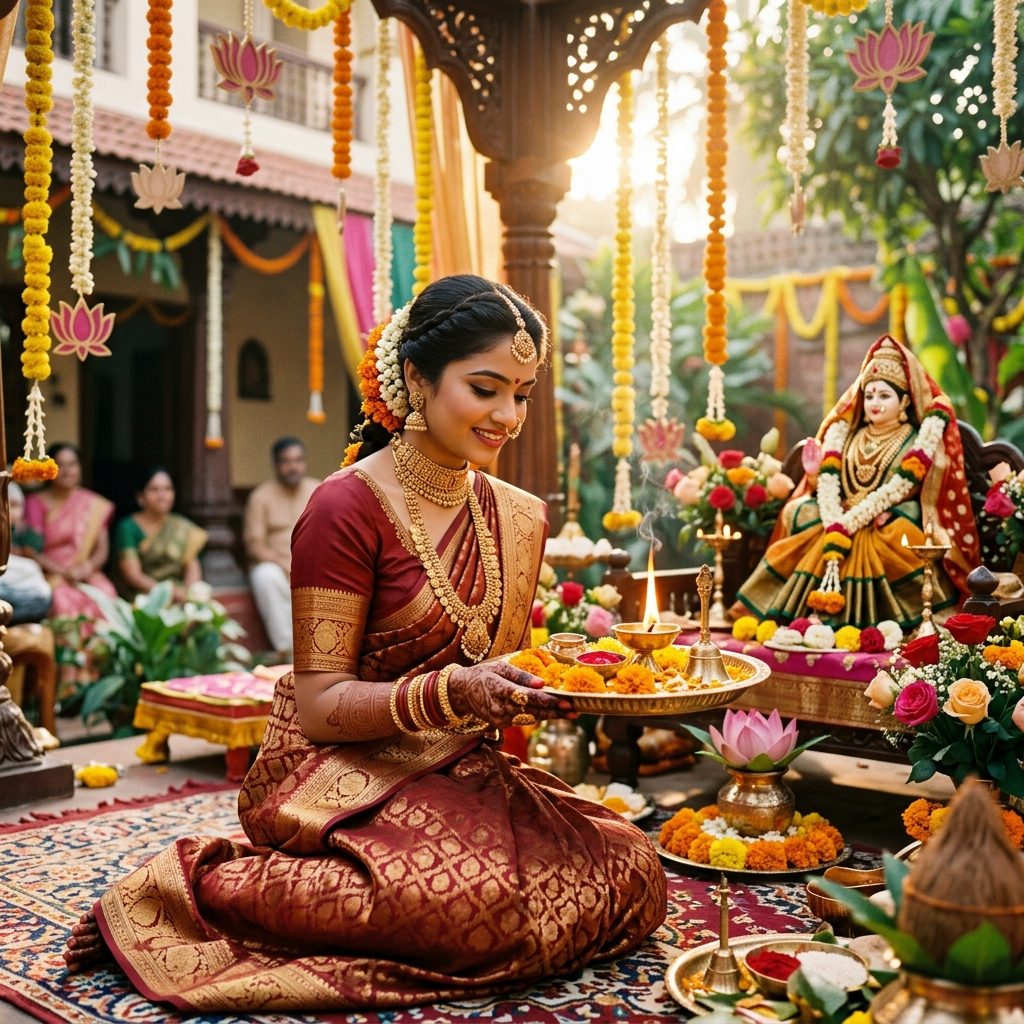
Among the vibrant kaleidoscope of traditions that define an Indian wedding, few rituals match the quiet grace, spiritual depth, and emotional intimacy of Gauri Puja. Performed traditionally by the bride prior to the main wedding ceremony, this sacred ritual invokes Goddess Gauri—an auspicious incarnation of Goddess Parvati—who symbolizes eternal marital devotion, prosperity, purity, and inner strength. Celebrated variously as Mangala Gauri in Maharashtrian households, Gauri Vratam in South Indian homes, or as part of the Matrika Pujan across Northern and Western India, Gauri Puja marks a deeply reflective bridge between a daughter's youth and her upcoming marital journey.
The Deep Cultural Significance of Gauri Puja
At its spiritual core, Gauri Puja is a bride's personal prayer for long-lasting harmony, the health and longevity of her groom, and the prosperity of her future family. According to Hindu scriptures, Goddess Parvati undertook severe penance to win Lord Shiva as her beloved consort. By worshipping Goddess Gauri, the bride seeks to embody that same unwavering fortitude, grace, and divine devotion. Culturally, this ceremony offers a calm, introspective sanctuary for the bride amidst the fast-paced momentum of wedding preparations, surrounding her with maternal elders, sisters, and aunts who share warm wisdom and lifelong blessings.
Essential Samagri and Sacred Ritual Steps
While regional customs introduce beautiful localized variations, the core sacred vidhi remains remarkably consistent across different Indian communities. The home mandap or puja room is decorated with fresh mango leaf torans, vibrant marigolds, and intricately drawn rangoli patterns.
- Devi Sthapana: A sacred idol or symbolic form crafted from pure turmeric paste, silver, or brass is placed upon a clean wooden platform covered with unpolished rice grains (Akshata).
- Saubhagya Offerings: The bride presents auspicious items representing marital bliss (Saubhagya dravya), including green glass bangles, fresh kumkum, whole turmeric roots, red silk cloth, scented sandal paste, and betel leaves.
- Lighting of the Deepa: A traditional brass lamp fueled with pure cow ghee is lit to disperse negative energies, accompanied by Vedic mantras and soft recitation of the Gauri Stotram.
- Prasadam and Aarti: The ritual culminates in a heartwarming Aarti, followed by offering sweet prasadam such as homemade kheer, coconut sweets, or panjiri to family members.
Gauri Puja is far more than a ceremonial routine; it is a sacred bridge where generations of family matriarchs pass down silent blessings, emotional strength, and time-honored wisdom.
Harmonizing Sacred Muhurat and Event Logistics
To honor the sanctity of Gauri Puja, Vedic priests emphasize conducting the vidhi during a favorable Shubh Muhurat. Often scheduled during the serene Brahma Muhurta or early morning hours before the main phere, adhering to precise astrological timings creates a tranquil atmosphere for the bride's devotions. Ensuring that family members gather punctually for these intimate morning rituals prevents unwanted rush and maintains spiritual focus.
Managing multi-day wedding functions alongside solemn family pujas requires thoughtful planning. As you structure your wedding itinerary and organize guest arrival schedules for every auspicious ceremony, utilize the Shubh Muhrat Guest Manager to coordinate invitations, track RSVPs, and streamline your wedding celebrations effortlessly.