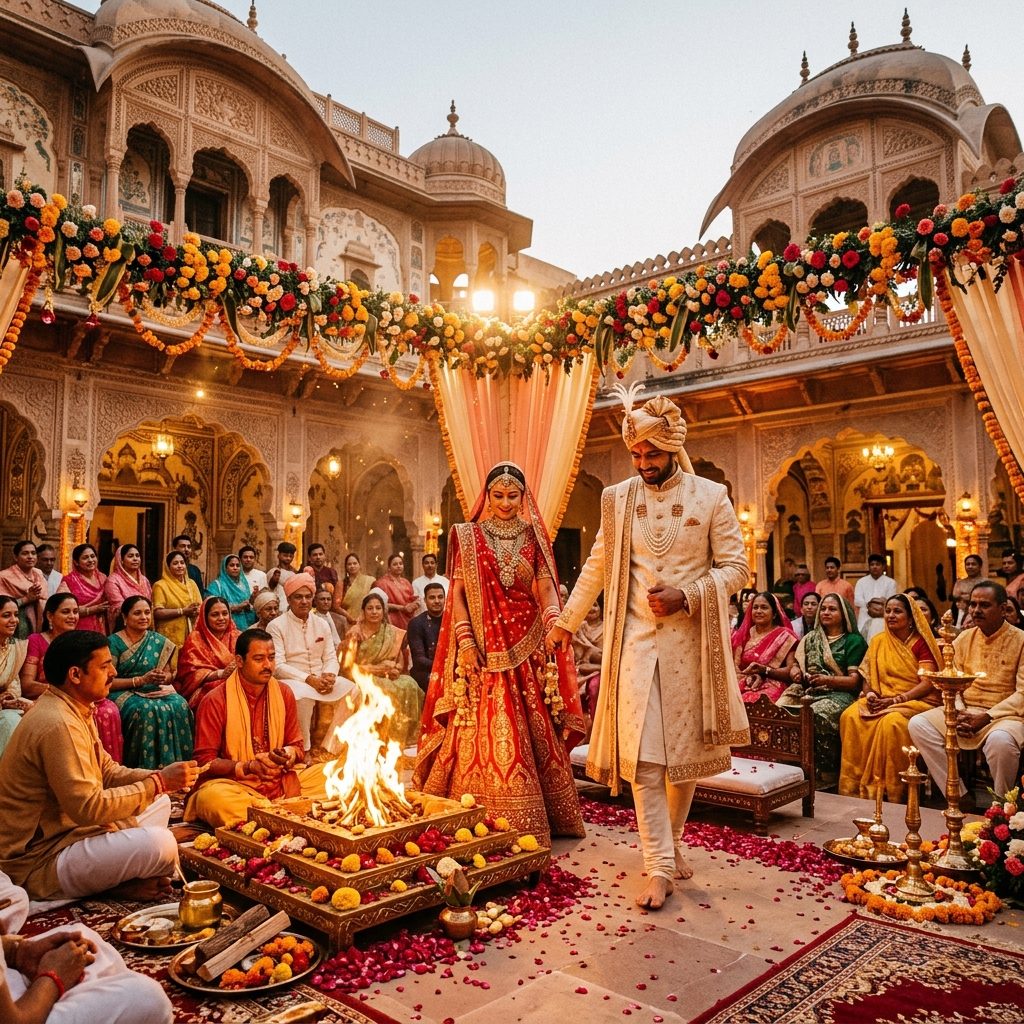
Marwari weddings, deeply rooted in the rich cultural heritage of Rajasthan, are celebrated for their unmatched opulence, traditional values, and elaborate rituals. Spanning several days, these ceremonies are a beautiful blend of solemn customs and joyous festivities that bring two families together in a lifelong bond. Understanding these customs helps families plan and appreciate every nuance of the grand celebration.
Pre-Wedding Celebrations: Setting the Auspicious Tone
The festivities begin long before the wedding day with ceremonies that prepare the bride and groom for their new journey. The Mudda Tikka or engagement ceremony formalizes the alliance, where the bride's family visits the groom's home with gifts, sweets, and the auspicious tikka. Following this is the Byaah Haath, a ritual where married women prepare traditional sweets like mangodi, symbolizing prosperity. The Pithhi Dastoor (haldi ceremony) involves applying a paste of turmeric, sandalwood, and herbs to the bride and groom at their respective homes, accompanied by traditional folk songs sung by women of the family. Another significant ritual is the Mehndi, where the bride's hands and feet are adorned with intricate henna patterns, representing love and strength in her marriage.
The Grand Wedding Day: Rituals of Union
On the wedding day, the groom's arrival is marked by the Korath, where the bride’s family formally invites the groom and his procession (baraat). At the entrance, the groom performs the Toran ritual, hitting a decorative wooden arch hanging at the doorway with a neem stick to ward off evil energies. The wedding ceremony itself is deeply spiritual, featuring the Kanyadaan (giving away of the bride) and the Phere. Unlike many other Hindu communities that perform seven rounds, Marwari weddings traditionally feature four phere around the sacred fire, representing the four pillars of life: Dharma, Artha, Kama, and Moksha. This is followed by the Jaimala, where the couple exchanges floral garlands, symbolizing their mutual acceptance.
"A Marwari wedding is not just a union of two individuals, but a sacred covenant between two families, sealed with timeless rituals and witnessed by the entire community."
Post-Wedding Customs and Essential Items
After the wedding, the bride is welcomed into her new home with the Griha Pravesh. She gently knocks over a pot filled with rice using her right foot, symbolizing the arrival of wealth and auspiciousness. This is followed by the Pag Phera, where the newlyweds visit the bride’s parental home for a grand feast, marking her first official visit back as a married woman.
To successfully execute a traditional Marwari wedding, several essential items and preparations are required:
- Auspicious Toran: A beautifully crafted wooden arch hung at the entrance of the wedding venue.
- Pithhi Paste: Freshly ground turmeric, sandalwood powder, and herbs prepared by the family elders.
- Traditional Attire: A vibrant Rajasthani poshak for the bride and a royal sherwani with a safa (turban) for the groom.
- Sweets and Mangodi: Traditional delicacies prepared during the Byaah Haath ceremony.
Planning these multi-day ceremonies requires careful attention to detail, especially when coordinating with guests across different cities. To make your wedding preparations seamless, you can design stunning, culturally authentic digital invitations using the Shubh Muhrat Invite Studio, ensuring your guests are well-informed about every ritual and venue.