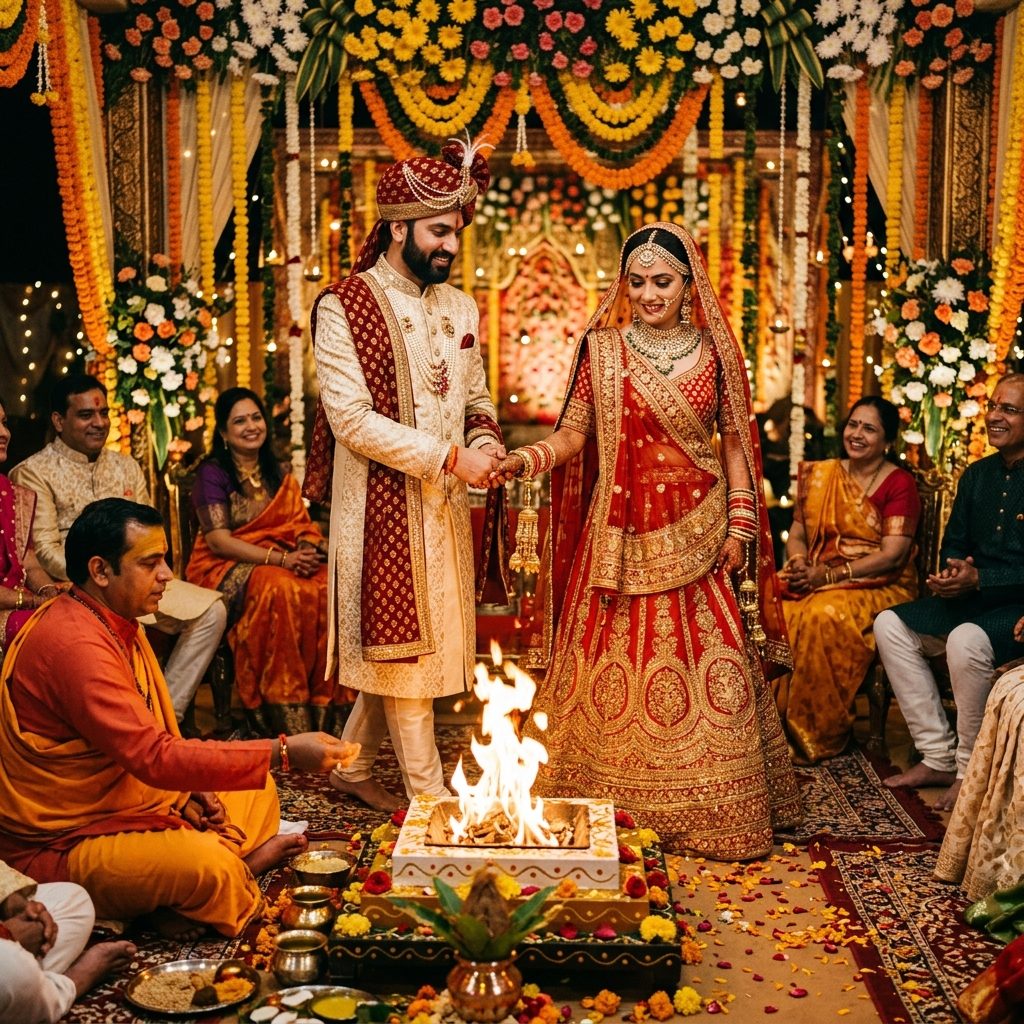
Marwari weddings, originating from the culturally rich Marwar region of Rajasthan, are legendary for their opulence, deep spiritual roots, and warm hospitality. These celebrations are a brilliant tapestry of colorful traditions, ancient Vedic rites, and close-knit family gatherings. Understanding these customs helps families appreciate the profound meaning behind every gesture and ceremony, ensuring that the legacy of these sacred rituals is preserved for generations to come.
The Sacred Pre-Wedding Preparations
The wedding journey begins weeks in advance with rituals that sanctify the alliance and invite the blessings of ancestors and deities. One of the earliest customs is the Byah Haath, which marks the formal commencement of wedding preparations. Women of the family gather to sing traditional folk songs while preparing handmade sweets like mangodi, symbolizing prosperity and the sweet beginning of the festivities.
This is followed by the crucial Bhaat Nyootana, where the mother of the bride or groom visits her maternal home to officially invite her brothers to the wedding. In response, the maternal uncle (Mama) and his family arrive for the Mamera or Bhaat ceremony. They bring generous gifts of wedding attire, jewelry, and sweets for the bride or groom and their parents, signifying the maternal family's vital support and lifelong commitment to the couple's happiness.
Another joyful ritual is the Pithi Dastoor, the Marwari version of the Haldi ceremony. The bride and groom, in their respective homes, are anointed with a cooling paste of turmeric, sandalwood, and oil. Traditionally, once the Pithi Dastoor begins, the bride and groom do not leave their homes until the wedding day, symbolizing their transition into a sacred, protected state of preparation.
"A Marwari wedding is not just a union of two individuals, but a grand alliance of two families, where every ritual from the Toran to the Pag Phera reflects deep familial respect, community bonding, and timeless Vedic wisdom."
Key Rituals of the Wedding Day
The wedding day itself is packed with dramatic and symbolic events. The grand entrance of the groom is marked by the ancient Toran ceremony. The groom, arriving on a decorated mare, strikes a wooden arch (Toran) hung at the entrance of the venue with a sword or a neem stick to ward off evil eyes and demonstrate his readiness to protect his bride. The bride's mother then performs a welcoming aarti, playfully pulling the groom's nose to remind him of humility.
The core wedding rituals are highly structured and include several key milestones:
- Jaimala: The exchange of floral garlands, signifying mutual acceptance and respect.
- Granthi Bandhan: The symbolic tying of the knot between the groom's shawl and the bride's dupatta.
- Kanyadaan: The emotional handing over of the bride by her parents, invoking the blessings of the cosmos.
- Pheras: The seven rounds around the sacred fire. Uniquely in Marwari custom, the groom leads the first three pheras, and the bride leads the remaining four, representing her leading role in household management and spiritual matters.
Welcoming the Bride: Post-Wedding Customs
After the emotional farewell during the Vidaai, the bride is welcomed into her new home with the Griha Pravesh. She gently knocks over a pot filled with rice with her right foot and steps into a tray of vermilion paste, leaving red footprints as she walks inside, symbolizing the arrival of Goddess Lakshmi. This is followed by fun ice-breaking games like finding a ring in a bowl of milk and rose petals, and eventually the Pag Phera, where the newlyweds visit the bride's paternal home for a lavish feast and blessings.
Planning a Marwari wedding involves managing a multitude of events, guest lists, and cultural nuances. To simplify your preparation and ensure your guests receive beautifully designed, traditional digital invites for all these ceremonies, you can use the Shubh Muhrat Invite Studio to customize invitations that match the grandeur of your celebrations.