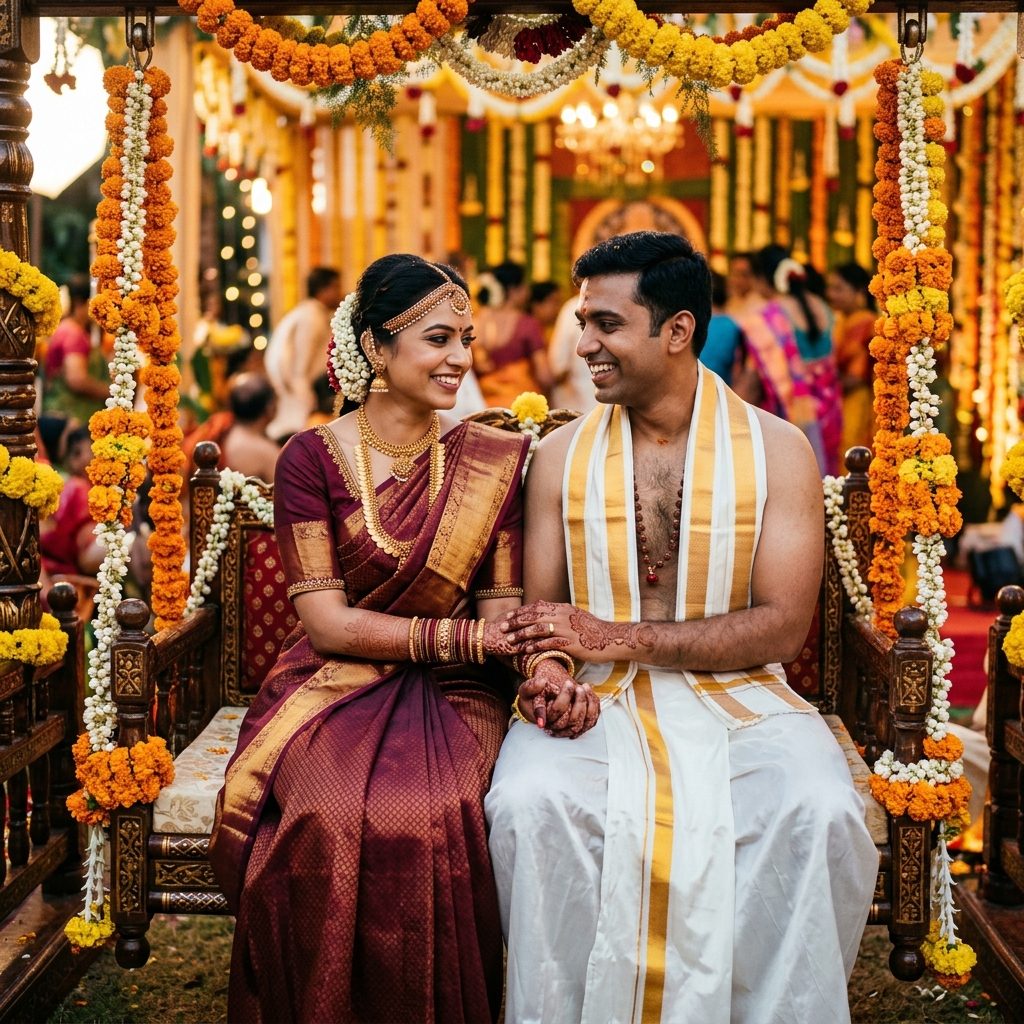
A traditional Tamil Brahmin wedding, often spanning two to three days, is a beautiful blend of Vedic rituals, deep-rooted family traditions, and joyful social gatherings. Known for its distinct Carnatic music backdrop, vibrant Kanchipuram silk sarees, and the resonant sounds of the Nadaswaram, a TamBrahm wedding is both a spiritual journey and a grand celebration. Understanding these ancient customs helps families appreciate the profound meaning behind every chant and gesture.
Pre-Wedding Sanctity: Vratham and Kasi Yatra
The festivities begin with the Vratham, performed separately by the bride and groom to seek blessings from their ancestors and celestial bodies. The groom transitions from the Brahmacharya stage of life to the Grihastha (householder) stage. This transition is playfully enacted in the Kasi Yatra ritual. The groom, holding an umbrella, a wooden walking stick, and a holy book, pretends to leave for Kashi (Varanasi) to pursue spiritual learning. The bride's father intercepts him, advising him of the virtues of domestic life and offering his daughter's hand in marriage, successfully persuading him to return.
The Heart of the Ceremony: Oonjal and Kanyadaan
One of the most visually beautiful rituals is the Oonjal (swing ceremony). The couple sits on a decorated wooden swing while married women sing traditional songs (Oonjal Pattu), feed them milk and bananas, and wave colored rice balls (Alarthi) to ward off the evil eye. This represents the couple's ability to ride life's ups and downs together. Following this is the solemn Kanyadaan, where the bride sits on her father's lap as he gives her away to the groom. She wears the traditional nine-yard Madisar saree, usually in a rich mustard or maroon shade, gifted by the groom's family.
The exchange of garlands during the Malai Maatral signifies the official union of two souls, symbolizing their shared journey through life's triumphs and challenges.
The Sacred Vows: Saptapadi and Beyond
The climax of the wedding involves the tying of the Mangalyam (Thali) during the auspicious Muhrat. Following this, the couple takes seven steps around the sacred fire in the Saptapadi ritual. Each step represents a specific vow of mutual respect, prosperity, and companionship. Later in the evening, the groom points out the Arundhati and Vashishta stars in the sky to the bride, symbolizing the ideal of marital fidelity and partnership. To ensure all your loved ones are present to witness these sacred vows, creating a beautifully themed digital invitation is essential.
- Pidi Sutrul: Warding off negative energy with colored rice balls.
- Ammi Midhithal: The bride steps on a grinding stone to symbolize firmness in adversity.
- Laja Homam: The bride's brother offers puffed rice to the sacred fire for the couple's prosperity.
Planning a multi-day Tamil Brahmin wedding involves coordinating numerous rituals, from the early morning Vratham to the evening reception. To share these detailed schedules and keep your guests informed, use the Shubh Muhrat Invite Studio to design elegant, culturally resonant digital invitations that capture the essence of your sacred traditions.