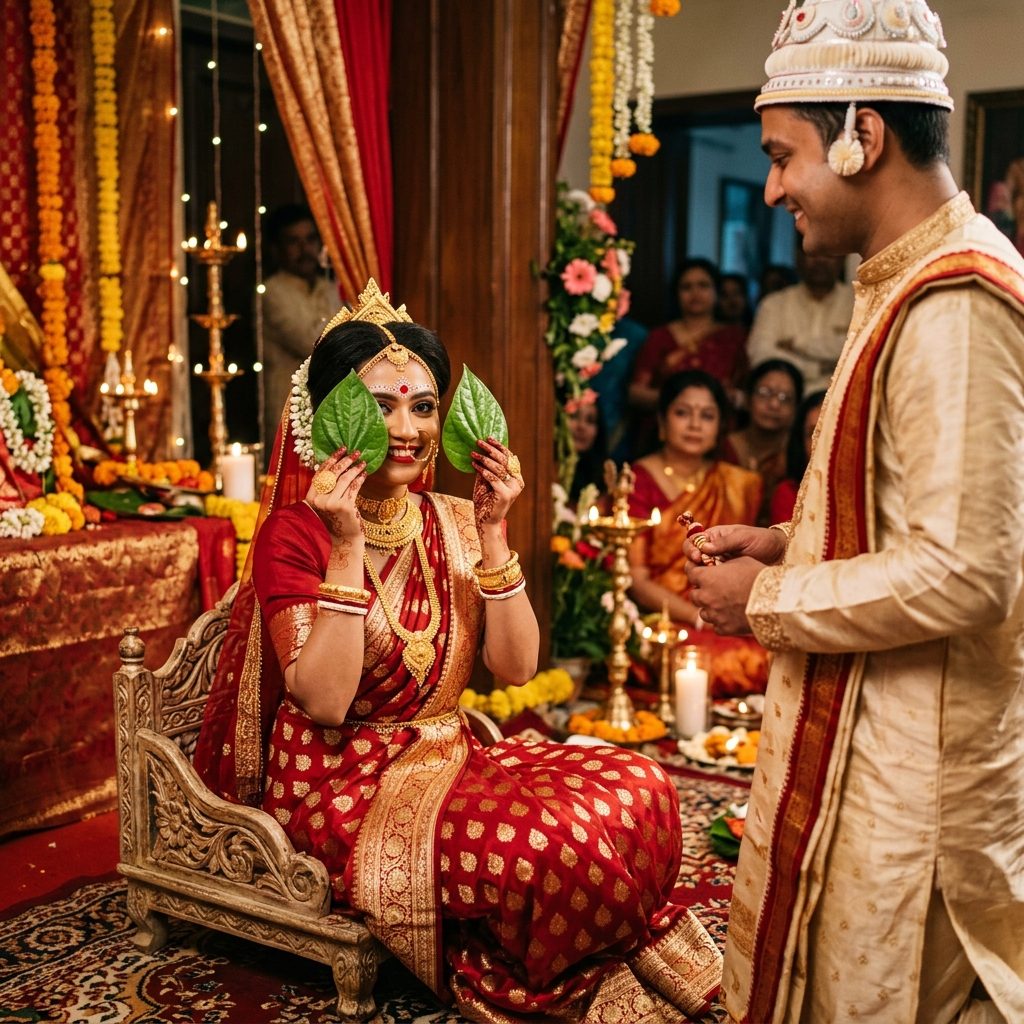
Bengali weddings, affectionately known as 'Biye', are a beautiful tapestry of Vedic rites and unique regional customs. Far from being just social gatherings, these rituals are designed to spiritually bind the couple while honoring their families and ancestors. From the resonant sound of the conch shell (Shankha) to the vibrant ululations (Uludhvani) by the women of the house, every element is rich with symbolic meaning.
The Sacred Pre-Wedding Rituals
The journey begins with Aiburo Bhaat, which translates to the final meal as a bachelor or bachelorette. Prepared by close relatives, this feast features the bride or groom’s favorite traditional dishes, symbolizing the transition from youth to domestic responsibility. This is closely followed by the Gaye Holud, or the turmeric ceremony. Here, turmeric paste sent from the groom’s family is applied to the bride’s skin. Turmeric is celebrated for its purifying and antibacterial properties, spiritually cleansing the couple and bestowing a natural, radiant glow for their big day.
Saat Paak and Shubho Drishti
The main wedding ceremony features some of the most visually stunning and emotionally charged rituals in Indian culture. During Saat Paak, the bride sits on a low wooden stool called a piri and is carried around the groom seven times by her brothers. The bride keeps her face hidden behind two betel leaves, which symbolize modesty and protection from negative energies. This leads directly to Shubho Drishti, the auspicious first glance, where the bride removes the leaves to look into the groom’s eyes. This moment represents the official emotional connection of the couple, immediately followed by the Mala Bodal, or the exchange of garlands, signifying mutual acceptance.
A Bengali wedding is not merely a contract between two individuals, but a sacred sensory experience where the fragrance of sandalwood, the sound of the dhak, and the warmth of the holy fire seal a lifetime commitment.
The Final Union: Sindoor Daan and Kanakanjali
The culmination of the wedding is marked by Sindoor Daan, where the groom applies vermilion (sindoor) on the bride’s hair parting using a small wooden container called a Gachh Kouto, a symbol of prosperity. The emotional farewell is marked by Kanakanjali, where the bride throws a handful of rice over her shoulder into her mother’s outstretched hands, symbolically repaying her debt to her parental home before stepping into her new life. To bring these beautiful traditions to life for your guests, you can design stunning, culturally themed invitations reflecting these motifs using the Shubh Muhrat Invite Studio.
- Shankha and Pala: Conch-shell and coral bangles worn by the bride to signify her marital status and bring health and prosperity.
- Gachh Kouto: A wooden accessory containing sindoor and a coin, carried by the bride as a symbol of Lakshmi, the goddess of wealth.
- Piri: The decorated low wooden stool used to carry the bride, representing the support of her family.