
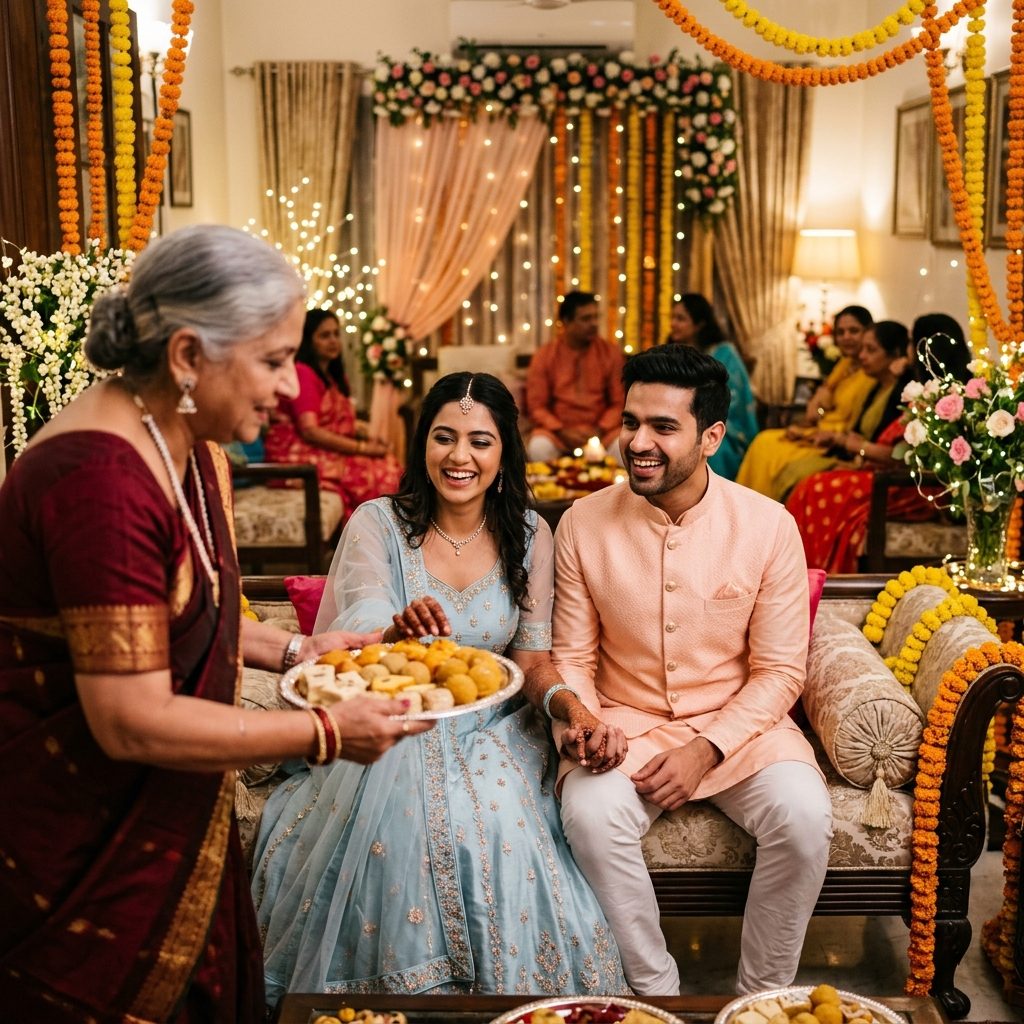
The Roka ceremony stands as the official starting point of an Indian wedding journey. Derived from the Hindi word 'Rokna,' which literally means to stop or prevent, the ceremony symbolically announces that the search for a partner is over. While historically it was a simple, private announcement, today's Roka has evolved into a celebratory event that balances deep-rooted cultural values with modern social expectations.
Understanding the Sacred Meaning of Roka
Traditionally, the Roka serves as an informal consent from both families. It marks the moment the bride and groom are officially secured in their alliance, preventing further match-making efforts. Unlike the formal engagement or Sagai, the Roka is traditionally an intimate affair held at the bride's home or a cozy venue. The rituals involve the exchange of 'shagun'—gifts comprising sweets, dry fruits, clothes, and occasionally cash or jewelry. The groom's family blesses the bride-to-be, putting a red vermilion (tilak) on her forehead and offering her gifts, followed by the bride's family doing the same for the groom. This exchange signifies mutual acceptance and respect between the two houses.
The Roka is no longer just about securing an alliance; it is the gentle, joyful merging of two distinct family histories into a shared future filled with mutual respect.
Modern Etiquette for the Contemporary Roka
As modern couples take charge of their wedding planning, the etiquette surrounding the Roka has shifted. Today's celebrations focus on comfort, intimacy, and open communication. Here are a few modern rules of etiquette to keep in mind:
- Keep the guest list intimate: The Roka is traditionally meant for immediate family members and close maternal or paternal uncles and aunts. Keeping the guest list small helps maintain the warmth of the first official meeting.
- Clarify financial expectations early: Traditionally, the hosting is done by the bride's family, but modern couples often split the expenses or host it jointly at a neutral boutique venue.
- Set boundaries on gifting: Heavy gifting can sometimes overwhelm either side. It is perfectly acceptable to specify a "no gifts, only blessings" policy or stick to symbolic exchanges like a single box of premium sweets.
- Define the dress code: Since it is the first joint function, specify the dress code. Semi-formal Indian wear, like a light pastel saree or a simple kurta-pyjama, works best.
Planning a Seamless Celebration
Hosting a flawless Roka requires thoughtful planning, starting with coordinating the dates and managing your guest invitations. Since this event acts as the icebreaker between both families, keeping the ambiance relaxed and welcoming is key. If you are inviting extended family or close friends to share in this milestone, sending elegant digital invites can set the perfect tone for the festivities. You can easily design and share customized digital invitations using the Shubh Muhrat Invite Studio, ensuring your guests receive all the event details with a touch of traditional warmth.