
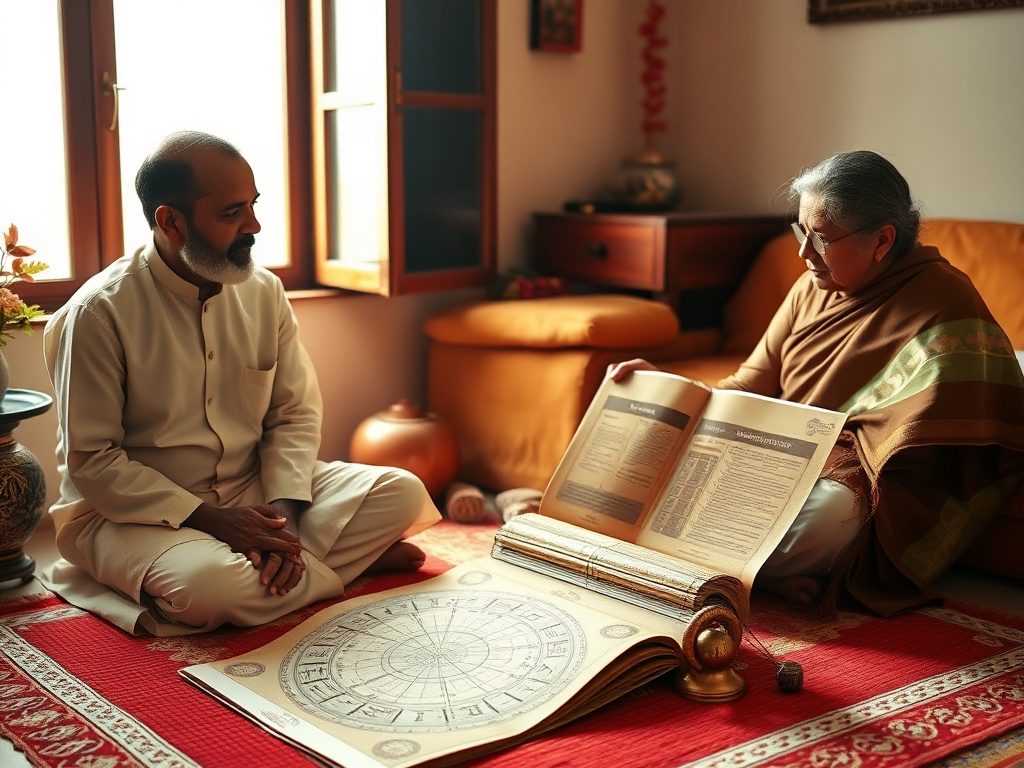
Manglik Dosh has broken off more proposals than any salary mismatch ever did. And here's the part most families never hear: a huge chunk of those rejections were based on a misread chart, an overcautious pandit, or a rule that cancels itself out a few houses over. So before anyone says no to a perfectly good match, let's get the facts straight on what Manglik Dosh (also called Mangal Dosh or Kuja Dosha) actually is, when it matters, and when it's pure fiction dressed up as tradition.
So what is Manglik Dosh, really?
Short answer: it's about where Mars sits in your birth chart, not whether you're cursed. In Vedic astrology, when Mars (Mangal) occupies the 1st, 4th, 7th, 8th, or 12th house from the Lagna, a person is said to be Manglik. Mars is the fiery, impatient, hot-blooded planet, and these houses touch marriage, the home, and longevity. The old logic was simple: pair a hot temper with the wrong partner and the marriage runs rough.
That's it. No demon, no doom. Just a planetary placement that traditional astrologers flag for closer reading. Some texts also count Mars from the Moon and from Venus, which is exactly why two astrologers can look at the same kundli and disagree on whether someone is even Manglik at all.
Is Manglik Dosh as dangerous as everyone says?
Short answer: no, and the math behind the panic is wilder than the panic itself. By the standard 1-4-7-8-12 rule, Mars lands in one of those five houses for a sizeable slice of the population - roughly a third of all charts, depending on which reference points you count. Stop and sit with that. If Manglik Dosh were the marriage-ending curse it's made out to be, a third of every Iyer, Marwari, Khatri, and Bengali family would be in permanent crisis. They aren't.
Here's the honest opinion most families won't say out loud: the real damage from Manglik Dosh isn't the planet. It's the panic. A father hears "your daughter is Manglik" and quietly drops a kind, stable, well-matched boy because someone in the extended family whispered that Mars means widowhood. The proposal dies. The girl marries later, into a worse fit, and everyone blames her stars instead of the fear that made the call.
Manglik Dosh doesn't end marriages. The fear of it, acted on without a second opinion, quietly ends good proposals before they ever begin.
When does Manglik Dosh actually cancel out?
Short answer: more often than people realise, which is why a flat "she's Manglik" tells you almost nothing. Classical astrology is full of cancellations - what the texts call Dosh Bhanga. A few of the well-known ones:
- Both partners are Manglik: when both the bride and groom have Mars in those houses, the dosh is widely held to neutralise itself. This is the single most common cancellation in real matchmaking.
- Mars in its own or exalted sign: Mars in Aries, Scorpio, or Capricorn behaves very differently from a weak, afflicted Mars, and many astrologers downgrade or dismiss the dosh entirely.
- Mars with or aspected by Jupiter: Jupiter's benefic influence is treated as a calming hand on Mars's fire.
- Age over 28: several traditions hold that the intensity of Mangal Dosh fades naturally as a person matures, especially past their late twenties.
- Mars in specific signs per house: there's a detailed grid where Mars in a particular sign in a particular house simply doesn't count. A good astrologer checks this; a lazy one skips it.
This is the whole reason a real kundli matching and guna milan check goes far beyond a one-word verdict. Manglik status is one input in a much bigger compatibility picture - rashi, nakshatra, the strength of each planet, the all-important 8th house for longevity. Reading "Manglik" in isolation is like rejecting a candidate after reading only their blood group.
Do regional traditions handle it the same way?
Short answer: not even close, and pretending otherwise causes real heartbreak. In many North Indian Marwari, Agarwal, and Khatri families, Mangal Dosh is taken seriously and an astrologer's clearance is near-mandatory before the families meet. In parts of the South - among Iyers, Iyengars, and several Reddy and Naidu communities - the calculation of Kuja Dosha can differ in which reference points are used, so the same chart may be read as clean in Chennai and flagged in Jaipur.
Bengali matchmaking often leans more heavily on overall guna count and the bride and groom's nakshatra harmony than on Mangal alone. Maharashtrian and Gujarati families sit somewhere in between. The point isn't that one tradition is right - it's that "Manglik" is not one fixed, universal label. So if you're meeting someone from a different community, don't assume their family reads the chart the way yours does. Ask, gently, early.
What should you actually do if a match is flagged Manglik?
Short answer: slow down, get a real reading, and judge the human first. One pandit's offhand "she's Manglik" is a starting point, not a verdict - get a second astrologer to check for cancellations before anyone decides anything. If the dosh holds even after that, classical remedies range from a Kumbh Vivah or Vishnu Puja to simpler observances, and most communities have a familiar path for it.
But here's the gentle nudge: the strongest predictor of a happy marriage isn't a clean Mars. It's two people who actually like and respect each other. When you're shortlisting, lead with shared values, temperament, and family fit - the chart is the safety check, not the search engine. If you're still building your shortlist, our smart match tool lets you filter for genuinely compatible profiles by community, values, and lifestyle first, so astrology becomes the final confirmation rather than the first fence. And when you do reach out, a well-made marriage biodata that puts your real personality forward will tell a family far more than any single line about your stars.
So the next time someone in the family says "but the boy is Manglik," you'll know the right next question isn't "how do we say no?" It's "has anyone actually read the full chart?" Demystifying Manglik Dosh comes down to one habit: treat it as one careful data point among many, get a proper kundli reading instead of a corridor rumour, and never let an unverified Mangal Dosh quietly cancel a match that your heart and your head both said yes to. Get the facts first. The marriage decision deserves nothing less.