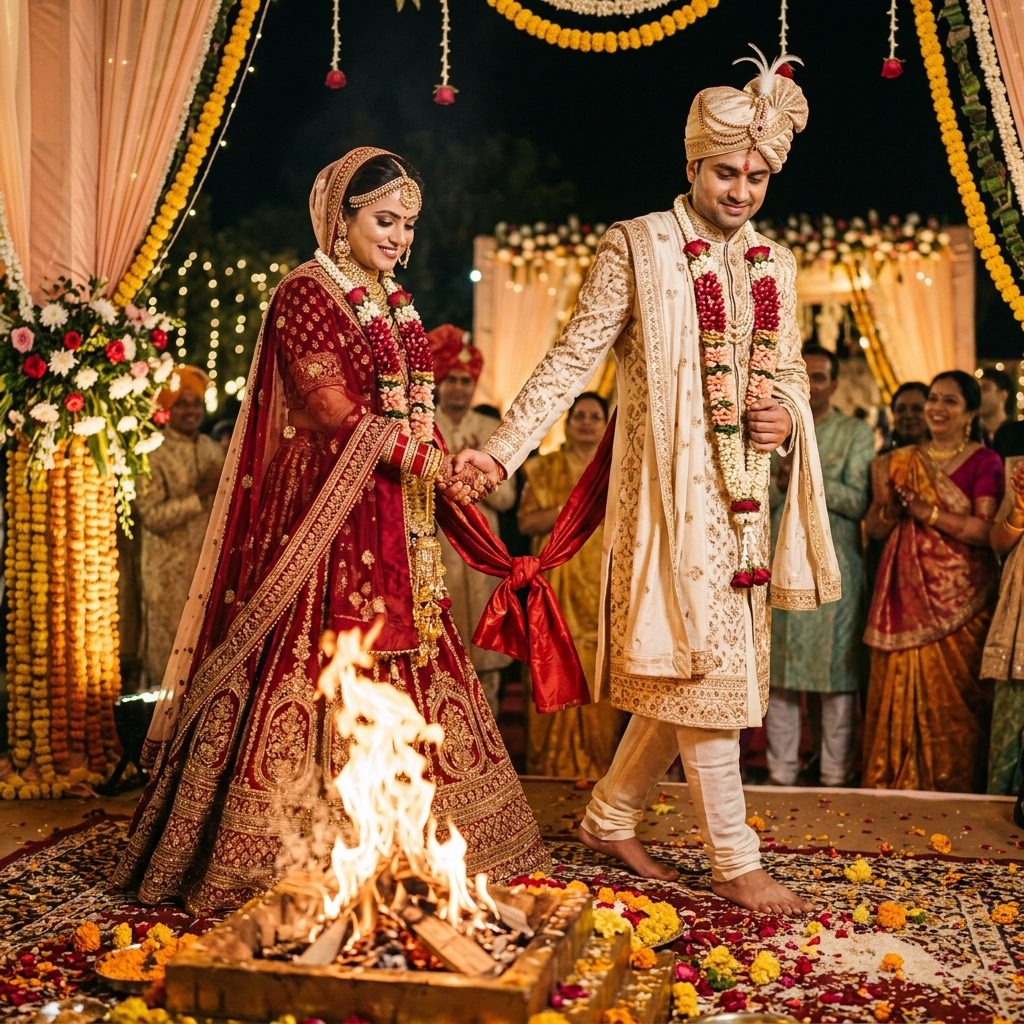
The centerpiece of a traditional Hindu wedding ceremony is the Agni Pradakshina, popularly known as the Saat Phere. Walking around the sacred fire seven times is not merely a ritual; it is the legal, spiritual, and emotional cornerstone of a Hindu marriage. As the bride and groom take these seven steps around the holy fire, they make seven lifelong promises to each other, witnessed by Agni Dev—the fire god—and their loved ones. Understanding the deep, symbolic meaning of these vows can help modern couples connect more profoundly with their wedding ceremony.
The First Three Vows: Nourishment, Strength, and Prosperity
The first step, or phera, focuses on the basic sustenance of life. The groom promises to provide food, shelter, and nourishment for the family, while the bride promises to share this responsibility and manage the household. Together, they pray that they never lack the resources to live a comfortable life. In the second step, the couple prays for physical and mental strength. They vow to support each other through life's trials and tribulations, standing as a united front against any external challenges. The third vow shifts the focus to prosperity. The couple seeks the blessings of wealth, wisdom, and right action (Dharma). They pledge to earn their livelihood through honest means and to manage their wealth responsibly, ensuring a secure future for their family.
The Middle Vows: Family, Children, and Mutual Trust
The fourth vow marks a transition into deeper familial responsibilities. Here, the couple pledges to foster love, respect, and harmony within their extended families. The groom acknowledges the bride's role as the anchor of the household, while the bride promises to respect the groom's parents and relatives as her own. The fifth vow is a prayer for noble, healthy, and righteous children. The couple promises to be responsible parents, nurturing their future offspring with good values, education, and love. This vow emphasizes the continuation of the family lineage and the duty of raising the next generation to be upright citizens.
"With the seventh step, our friendship becomes eternal. We have become one in spirit. May we never drift apart, and may we always remain best friends."
The Final Vows: Lifelong Companionship and Friendship
- The Sixth Vow (Health and Seasonality): The couple prays for physical health, mental peace, and a long life together. They vow to stand by each other through all the seasons of life, sharing joy and sorrow equally.
- The Seventh Vow (Eternal Friendship): The final step is the ultimate culmination of the marriage ceremony. The couple declares their eternal friendship (Sakhya). They promise to remain companionate partners, bound not just by societal duty, but by genuine love, mutual understanding, and respect.
As you plan your wedding and prepare to take these sacred vows, aligning your stars and checking compatibility is an essential first step in Indian traditions. To ensure a harmonious and blessed union, you can use the Shubh Muhrat Kundli Match tool to analyze compatibility and start your marital journey on the right note.