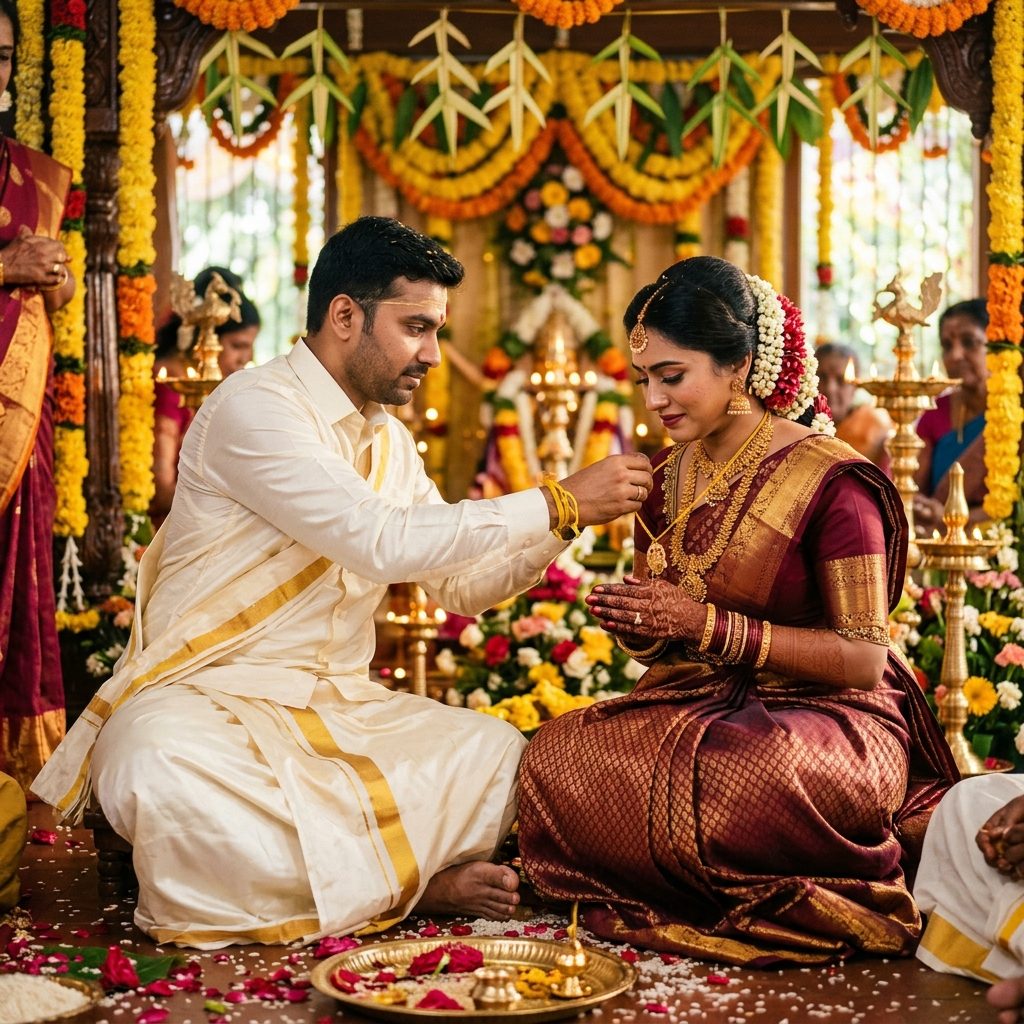
In South Indian traditions—whether Tamil, Telugu, Kannada, or Malayalam—the wedding date and the exact minute of the marriage ceremony are dictated by the traditional calendar, or Panchangam. The alignment of the stars, the bride and groom's nakshatras (birth stars), and the lunar phase are analyzed to find the most auspicious window, known as the Subha Muhurtham. Unlike other regions where weddings might extend late into the night, South Indian weddings traditionally favor the early morning hours, often aligned with the Brahma Muhurtham, which is considered the most spiritually pure time of the day.
Key Rituals Leading to the Auspicious Minute
The hours preceding the muhurtham are filled with deep symbolic rituals. It begins with the Vratham, performed separately by the bride and groom to seek blessings from their ancestors. This is followed by the playful yet symbolic Kashi Yatra, where the groom pretends to leave for a spiritual pilgrimage, only to be stopped by the bride's father who offers his daughter's hand in marriage. Once the groom agrees, the exchange of garlands, or Maalai Maatral, takes place, followed by the Oonjal ceremony where the couple sits on a swing while married women sing traditional songs to ward off evil eyes.
The core of the wedding ceremony culminates in the Kanyadaanam and the tying of the Mangalsutra (or Thaali) during the precise muhurtham minute, signifying a union that transcends lifetimes.
Essential Puja Items and Altar Setup
The physical setup of the mandapam plays a critical role in finalizing the muhurtham rituals. Traditional items like the brass Kuthuvilakku (standing lamps), fresh coconut, mango leaves, banana stems at the entrance, and kolam (rice flour patterns) must be laid out perfectly. For Telugu weddings, the Jeelakarra Bellam (a paste of cumin and jaggery) must be prepared fresh, as it is placed on the couple's heads at the exact microsecond of the muhurtham. Having these materials organized prevents any last-minute delays that could risk missing the auspicious planetary alignment.
Ensuring a Seamless Early Morning Function
Because South Indian muhurthams are often scheduled between 4:30 AM and 6:30 AM, planning requires meticulous coordination. Here are a few essential tips to keep in mind:
- Coordinate with the Priest: Confirm the arrival time of the Sashtrigal or Pujari the night before to ensure all puja samagri (ritual items) are arranged.
- Advise Guests on Timings: Clearly communicate the morning schedule, making sure transport is arranged for elderly relatives who wish to witness the core rituals.
- Plan for Early Morning Catering: South Indian wedding breakfasts (featuring traditional items like idli, pongal, and filter coffee) must be ready immediately after the muhurtham.
Before finalizing your auspicious date, it is crucial to ensure that the planetary charts of the bride and groom are in harmony. You can easily check compatibility and run a detailed analysis using the Shubh Muhrat Kundli Match tool, which helps you find the most harmonious dates for your union.