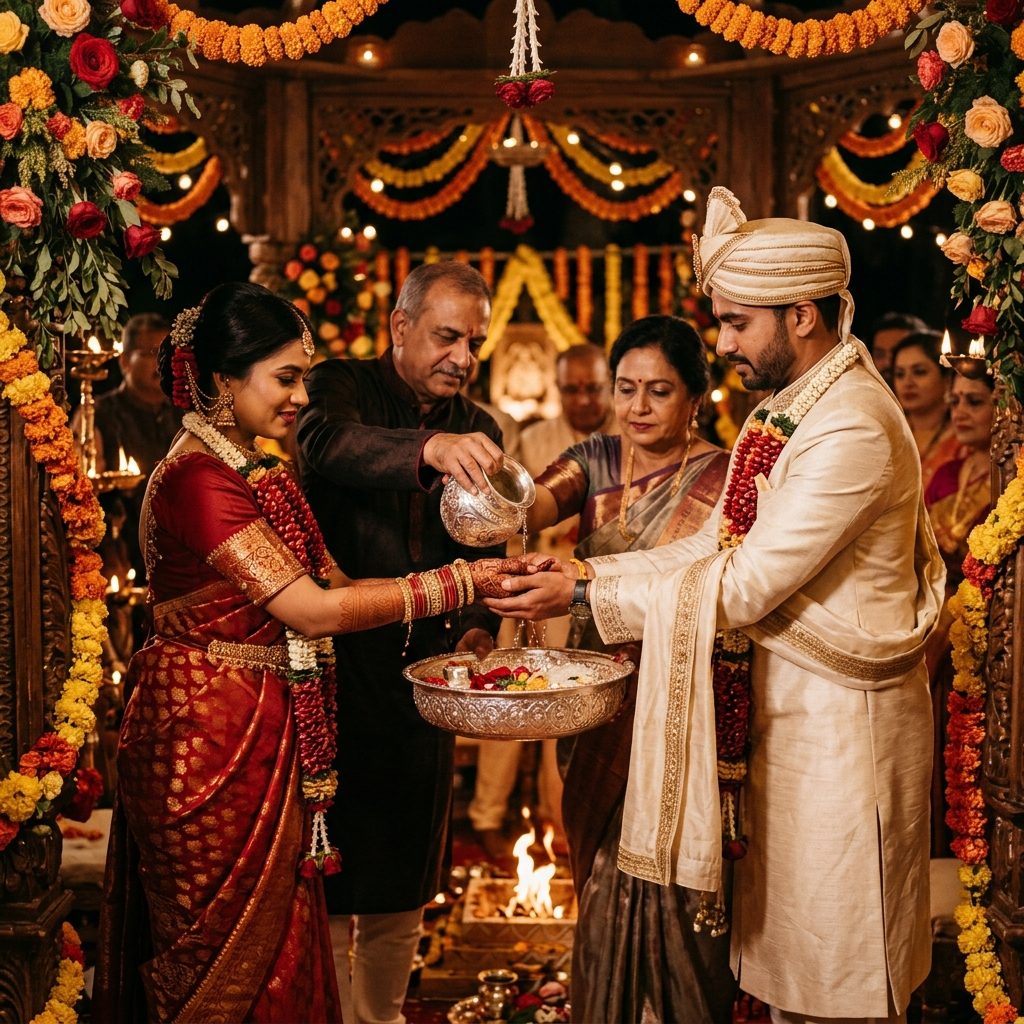
Among the sacred rituals that define a traditional Hindu wedding, few evoke as much emotion and spiritual reverence as Kanyadaan. Performed amidst the chanting of Vedic mantras and the fragrance of sacrificial incense, this central ceremony marks the pivotal moment where a bride’s parents formally entrust their daughter to the groom. Far from being a mere symbolic handoff, Kanyadaan is rooted in deep Vedic philosophy, symbolizing the highest form of sacrifice, unconditional love, and mutual trust between two families.
The Origins and Literal Meaning of Kanyadaan
The term is derived from two Sanskrit words: Kanya (meaning maiden or young daughter) and Daan (meaning sacred gift or act of selfless giving). In Vedic scriptures, performing a Daan without expecting anything in return is considered one of the highest acts of spiritual merit. Therefore, entrusting one's cherished daughter—who represents prosperity, warmth, and Lakshmi in the household—to a new family is regarded as Mahadaan, the supreme offering of love and trust.
The Ritual Step-by-Step: Hastamelap and Sacred Water
The physical ceremony of Kanyadaan is intricate and deeply symbolic across regional traditions in India, whether in North Indian Vivah, South Indian Kalyanam, or Bengali Biye:
- Hastamelap (Joining of Hands): The bride's father places her right palm into the groom's right palm, signifying the joining of two lives, lineages, and destinies.
- Pouring of Sacred Water: The bride's mother pours holy Ganga water or milk over the joined hands, letting it stream through their fingers into a copper or brass vessel. Water symbolizes purity, fluidity, and the eternal binding nature of their vows.
- Placement of Auspicious Items: Betel leaves, raw turmeric, sacred grass, and coins are placed between their palms to invoke health, fertility, and prosperity.
- Vedic Vows: The priest chants mantras where the groom solemnizes his commitment by accepting three fundamental promises: to stand by his bride in Dharma (duty), Artha (financial prosperity), and Kama (love and emotional fulfillment).
In Vedic philosophy, Kanyadaan is not the transfer of ownership, but the ultimate act of trust and selfless love—where parents hand over their sacred responsibility to a partner who vows to honor, cherish, and protect.
Evolving Perspectives in Modern Indian Weddings
In contemporary times, educated families and modern couples often reflect upon the language of traditional rituals. While historical interpretations sometimes misconstrued daan as a physical transfer, modern Vedic scholars and families emphasize the spiritual essence of entrustment and blessing. Many progressive couples today reframe the ceremony as Kanya Aashirvaad (blessing the bride) or participate in mutual parental blessings, ensuring that the ritual reflects equality while honoring timeless heritage.
Understanding the deep symbolism of every custom helps couples embrace their heritage with pride and clarity. As you plan your wedding ceremonies and look forward to auspicious beginnings, present your cultural background seamlessly to prospective families using Shubh Muhrat's Biodata Maker, designed to highlight your traditions, values, and lifestyle with elegance.