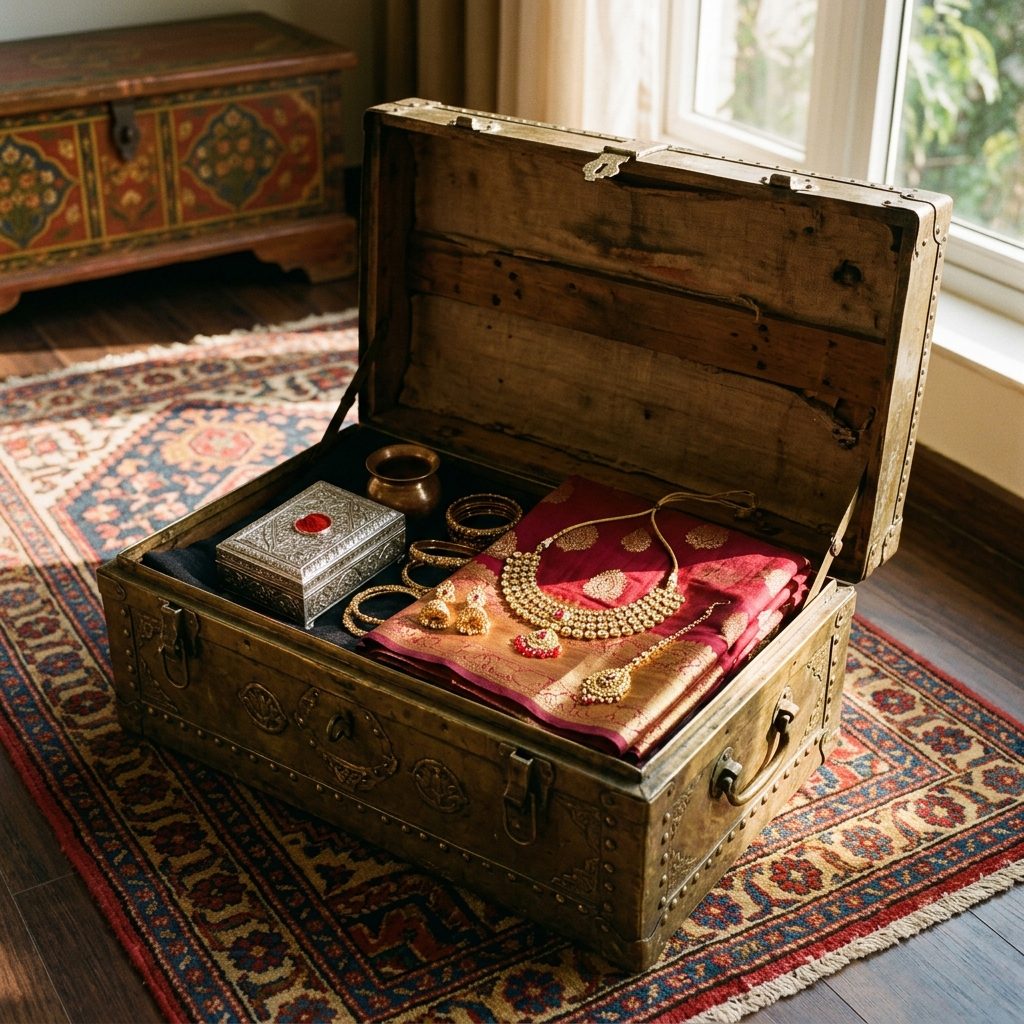
The bridal trousseau, historically known as the Peti or Patra in various Indian communities, is far more than a collection of new clothes and jewelry. It is a tangible representation of a bride's heritage, carrying the love, blessings, and traditions of her maternal home into her new life. In Indian culture, compiling the trousseau is a cherished ritual in itself, often starting months before the wedding day as maternal grandmothers, aunts, and mothers come together to select fabrics, handlooms, and heirlooms.
The Sacred Ritual of Handloom Heirlooms
Every Indian region dictates its own essential trousseau garments, usually rooted in local weaving traditions. In East India, a Bengali bride's trousseau is incomplete without a red Baluchari or a fine Jamdani sari. In the South, the lustrous Kanjeevaram silk, blessed during a small prayer ceremony, forms the cornerstone of the collection. Meanwhile, brides in Gujarat and Rajasthan treasure the Patola and Bandhani tie-dye drapes, which are believed to bring good fortune and fertility. These garments are not merely fashion choices; they are sacred textiles passed down through generations, carrying the distinct scent of sandalwood and nostalgia.
Beyond Attire: The Traditional Essentials
A traditional trousseau extends beyond garments to include symbolic items essential for post-wedding rituals and daily life. This typically includes a silver sindoor daan (vermilion box), a small silver bowl for the bride's first kitchen ritual, and ancestral jewelry pieces like a nath (nose ring) or traditional silver anklets. In Punjabi households, the trousseau is incomplete without embroidered phulkaris gifted by the maternal family, symbolizing warmth and welcome.
"A bridal trousseau is not just a wardrobe; it is a beautifully curated bridge of memories, weaving together the heritage of the home a bride leaves behind with the promises of the home she is about to build."
Curating the Modern Trousseau Checklist
While honoring age-old traditions is vital, the modern Indian bride needs a balance of heritage wear and practical, versatile pieces. Setting up your trousseau requires thoughtful organization to ensure every item serves a purpose in your new life. Here is a curated checklist of essentials for the contemporary bride:
- Heritage Handlooms: At least two classic silk saris or hand-embroidered lehengas representing your family's regional roots.
- Occasion Wear: Four to six semi-formal outfits like anarkalis, georgette saris, and fusion coordinates for post-wedding dinners and festivals.
- The Jewelry Box: A mix of heavy bridal sets and versatile, lightweight pieces like gold chains, pearl drops, and classic bangles.
- Traditional Accessories: Embellished potli bags, comfortable embroidered juttis, and a high-quality vanity case for cosmetic essentials.
Preparing for your wedding involves managing countless details, from curating the perfect trousseau to connecting with the right families who value your traditions. If you are starting this exciting journey of finding a life partner, make sure your first impression is as elegant as your heritage. Create a beautifully designed matrimonial profile using the Shubh Muhrat Biodata Maker to share your background, values, and lifestyle preferences with potential matches.