
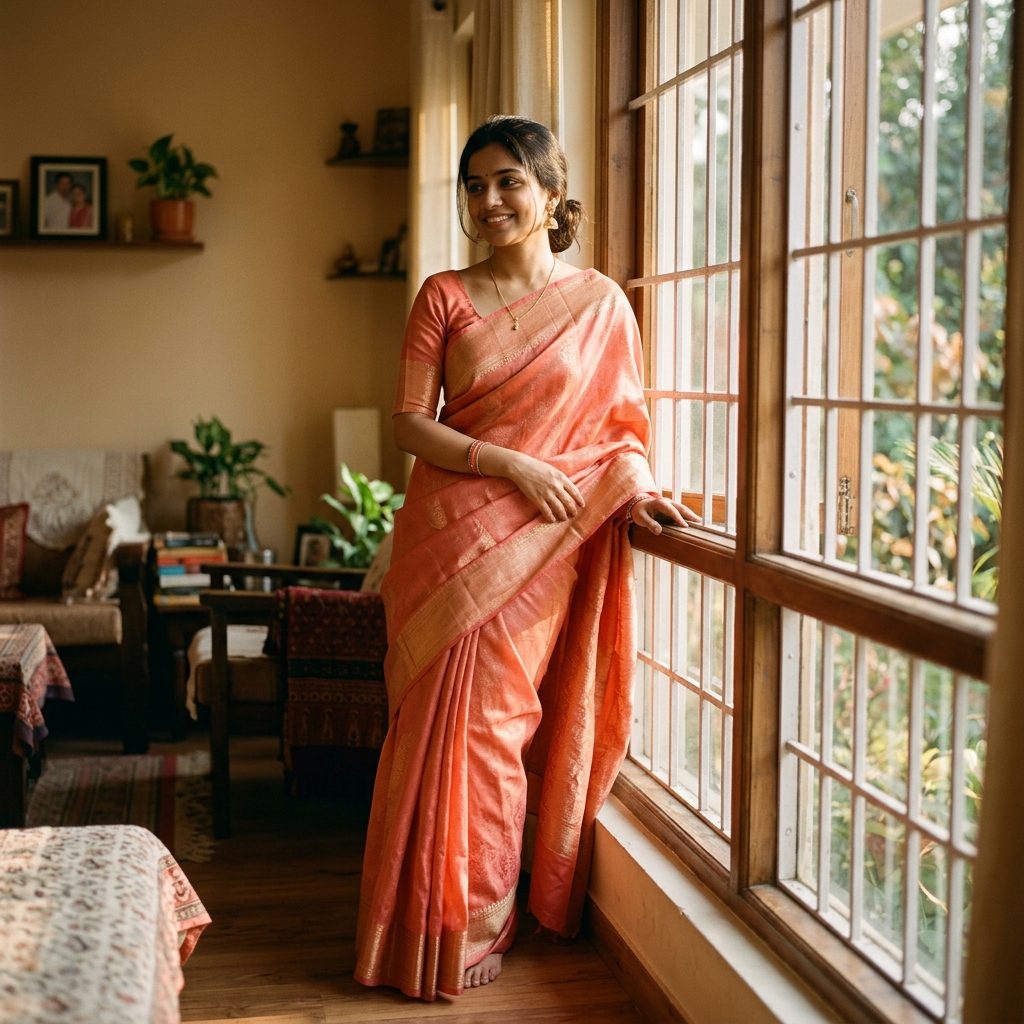
Most marriage profiles get rejected in under four seconds — and it's almost never the salary or the gotra that does it. It's the photo. The right photo for your marriage profile is the single thing that decides whether a family reads your biodata or swipes past it, so before you obsess over wording, fix the picture. A clear, warm, recent face shot does more for your prospects than a perfect 32/36 Guna Milan score ever will.
Aunties judge fast. So do parents, so do the prospective bride and groom. You don't get a fair hearing if the photo is blurry, ten years old, or cropped out of a group shot where someone's hand is still on your shoulder.
What kind of photo actually works on a marriage profile?
Short answer: a recent, sharp, smiling face in natural light. That's it. The photo that performs best on any matrimonial profile is almost embarrassingly simple — you, looking at the camera, in clothes you'd actually wear to a relative's wedding, shot near a window in the morning.
Skip the studio backdrop with the fake Taj Mahal. Skip the heavy beauty filter that smooths your face into a stranger. The goal isn't to look like a model; it's to look like the person who'll walk into the drawing room for the first meeting. When the real you matches the photo, the conversation starts on trust instead of disappointment.
Lead with a head-and-shoulders shot. Then one full-length picture in good ethnic wear — a saree, a kurta, a sherwani — because families genuinely want to see how you carry traditional clothes. That combination answers the two silent questions every parent has: what does the face look like, and how will this person look at the wedding.
How many photos should I put, and which ones?
Short answer: three to four, no more. One clear face, one full-length, one candid where you're naturally happy, and maybe one in formal or office wear if your work matters to the match.
One photo feels like you're hiding something. Twelve photos feel like a modelling portfolio, and Marwari and Khatri families especially read that as showing off. A tight, honest set says you're serious and grounded. When you build your profile on our AI biodata maker, you can slot these photos cleanly beside your details instead of dumping them in a messy WhatsApp forward that nobody can open properly.
A quick test: would your own mother send this photo to a family she respects? If she'd hesitate, it doesn't go in.
What photos should I never put on a biodata?
Short answer: anything that hides your face or borrows someone else's spotlight. The fastest way to get filtered out is a cropped group photo — a Bengali wedding shot with three cousins blurred out, a Reddy reception picture where your face is the size of a thumbnail.
Here are the ones to delete right now:
- Cropped group photos — a stray elbow or half a sister in the frame screams "I had nothing better."
- Sunglasses and caps — families want to see your eyes; covering them reads as evasive.
- Heavy filters and Snapchat ears — cute on Instagram, instant red flag on a biodata.
- Old photos — a picture from your college farewell six years ago invites the worst first meeting: "you look different."
- Photos with an ex or unexplained second person — even a friend's hand on your shoulder raises questions you don't want asked.
- Dark, grainy, or bathroom-mirror selfies — the lighting alone can cost you a yes.
Your biodata photo isn't a glamour shot. It's a promise that the real you will match the person who walks into that first meeting.
Selfie or studio — which is better for a matrimonial photo?
Short answer: neither extreme. A good selfie beats a stiff, over-lit studio portrait, and a relaxed shot taken by a sibling beats both. The Iyer and Nair families I've watched go through dozens of profiles consistently warm to the candid, well-lit picture over the formal one with the painted-cloud background.
If you can, hand your phone to a brother or a cousin and stand facing a window around 9 or 10 in the morning. That soft, indirect light flatters everyone and costs nothing. Take twenty shots, pick the one where your smile reaches your eyes. Here's my one honest opinion, and it'll annoy the photo-studio uncles: most families now trust an authentic phone photo more than a posed studio one, because the filtered studio look has burned too many people at the first meeting. Authenticity has quietly become the new status symbol.
Does a good photo really change who responds to my profile?
Short answer: dramatically, yes. The same biodata with a bright, genuine face photo pulls noticeably more interest than one with a dull or hidden picture — the details didn't change, only the first impression did. A confident, warm photo signals stability and openness, which is exactly what families are scanning for.
It also changes the quality of who reaches out, not just the quantity. When your photo is honest and you, the people who respond are responding to the actual you, which makes that first conversation far easier. Once your profile looks its best, browse thoughtfully and let the right families find you — our Smart Match tool surfaces compatible profiles by community, values, and preference so your good photo lands in front of people who'll genuinely appreciate it. And when things move forward, you can even design the wedding's first impression with our Invite Studio for save-the-dates and e-cards.
So pick the right photo for your marriage profile like it's the first sentence of your story — because to the family reading it, that's exactly what it is. Find a window, wear something you love, smile like you mean it, and let one honest picture do the work. Your next step is simple: choose your best three shots today, drop the filters, and build a profile that finally looks like you.